


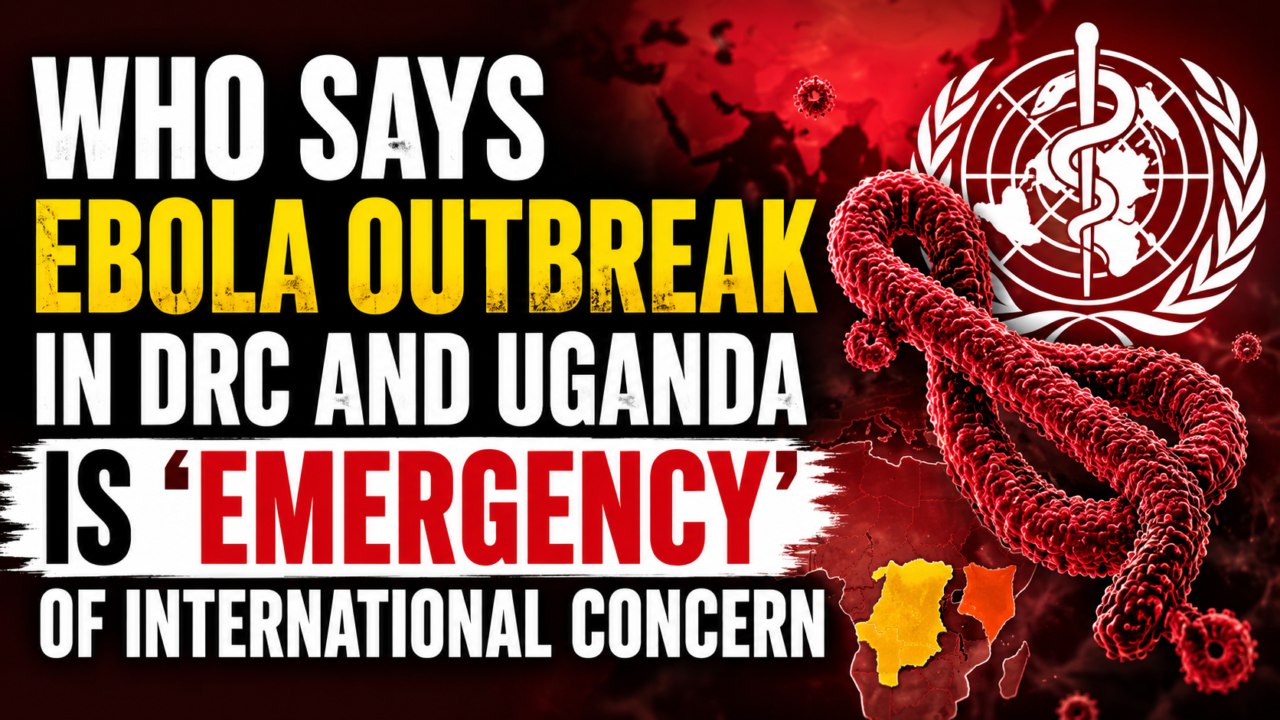

The World Health Organization (WHO) has officially declared the recent Ebola outbreak in the Democratic Republic of Congo (DRC) and Uganda as an “Emergency of International Concern.” This announcement has raised global attention as health agencies worldwide begin emergency monitoring and response efforts.
The outbreak involves the Bundibugyo strain of the Ebola virus, which is considered highly dangerous and currently has no fully approved vaccine specifically designed for this strain.
What is Ebola Virus?
Ebola Virus Disease (EVD) is a rare but severe viral infection that affects humans and animals. The disease spreads through direct contact with infected body fluids such as:
- Blood
- Saliva
- Sweat
- Vomit
- Urine
- Semen
Ebola can cause serious internal bleeding, organ failure, and in severe cases, death.
Why Has WHO Declared an Emergency?
WHO declared the outbreak an international emergency because:
- Cases are increasing rapidly in multiple regions.
- Cross-border transmission risk is high.
- Healthcare systems in affected regions are under pressure.
- The Bundibugyo strain currently lacks a specific approved vaccine.
Health experts fear the outbreak could spread further if immediate containment measures are not taken.
Latest Ebola Outbreak Situation
According to recent health reports:
- Hundreds of suspected cases have been reported in Congo.
- Multiple deaths have already been confirmed.
- Uganda has also reported confirmed Ebola infections.
- WHO and CDC teams are actively working in affected areas.
Authorities are increasing testing, isolation, contact tracing, and awareness campaigns to stop the spread.

Symptoms of Ebola Virus
Symptoms usually appear within 2 to 21 days after infection.
Common Symptoms Include:
- High fever
- Severe weakness
- Headache
- Muscle pain
- Vomiting
- Diarrhea
- Skin rash
- Bleeding from nose or gums
- Internal bleeding in severe cases
Early treatment can improve survival chances significantly.
How Ebola Spreads
Ebola spreads through:
Direct Contact With:
- Infected blood or body fluids
- Contaminated medical equipment
- Dead bodies of infected persons
- Infected wild animals
The virus does not spread through air like common cold or flu.
Is There a Vaccine for Ebola?
Vaccines exist for some Ebola strains, but experts say the current Bundibugyo strain involved in the DRC-Uganda outbreak does not yet have a fully approved targeted vaccine.
Supportive treatment remains the primary medical approach.
Prevention Tips
To stay safe from Ebola infection:
- Wash hands regularly
- Avoid contact with infected persons
- Use protective equipment in healthcare settings
- Avoid contact with body fluids
- Cook animal products properly
- Follow official health advisories
Can Ebola Reach Other Countries?
WHO says the global risk currently remains moderate, but international travel and cross-border movement can increase the possibility of spread. Airports and health agencies are monitoring travelers from affected areas closely.
At present, no fresh Ebola case has been officially reported in India.
Global Health Agencies on Alert
Organizations including:
- WHO
- CDC
- UNICEF
- African CDC
are working together to contain the outbreak through:
- Emergency medical teams
- Awareness campaigns
- Isolation centers
- Rapid testing systems
Conclusion
The Ebola outbreak in DRC and Uganda has become a major global health concern after WHO declared it an international emergency. While the outbreak is currently concentrated in Africa, health authorities worldwide are maintaining strict monitoring.
Public awareness, hygiene, early diagnosis, and rapid medical response are considered the most effective tools to control the spread of Ebola virus.
Recommended Products