

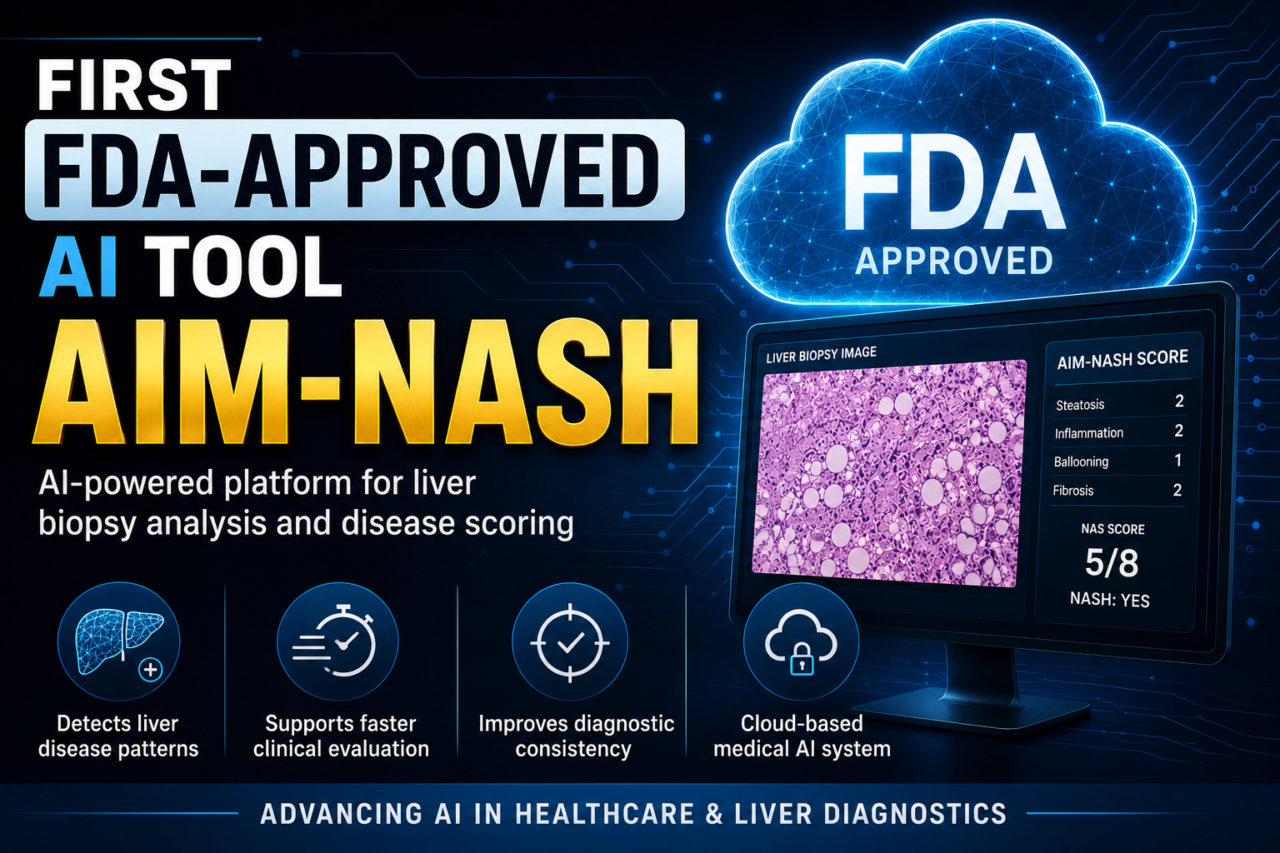
Artificial Intelligence is rapidly transforming healthcare, and a major milestone has now been achieved. The US Food and Drug Administration (USFDA) has approved AIM-NASH, the first AI-powered tool designed to analyze liver biopsy images and assist in diagnosing liver disease with greater speed and accuracy.
This breakthrough marks a new era in medical diagnostics where AI is not just supporting doctors — it is becoming an essential clinical assistant.
What is AIM-NASH?
AIM-NASH is a cloud-based Artificial Intelligence system developed to analyze liver tissue biopsy images. It helps pathologists identify and score disease characteristics related to NASH (Non-Alcoholic Steatohepatitis), a severe form of fatty liver disease.
The system uses advanced machine learning algorithms to examine microscopic liver images and provide standardized assessments that traditionally require expert human interpretation.

Why is This Approval Important?
The approval of AIM-NASH is historic because it is the first AI diagnostic tool of its kind to receive USFDA approval. This signals growing trust in AI technologies within the healthcare industry.
Key Benefits Include:
- Faster Diagnosis
AI can analyze biopsy images in minutes, reducing delays in diagnosis. - Improved Accuracy
The tool minimizes human variability and delivers more consistent results. - Better Clinical Trials
Pharmaceutical companies can use AIM-NASH to evaluate treatment effectiveness more efficiently. - Support for Pathologists
It assists medical professionals by providing data-driven insights rather than replacing them.
Understanding NASH
NASH (Non-Alcoholic Steatohepatitis) is a serious liver condition caused by fat accumulation, inflammation, and liver cell damage. If untreated, it can lead to:
- Liver fibrosis
- Cirrhosis
- Liver failure
- Liver cancer
Millions of people worldwide are affected, but diagnosing NASH accurately has always been challenging because it relies heavily on biopsy interpretation.
This is where AIM-NASH becomes a game changer.
How AIM-NASH Works
The AI system processes digital images of liver biopsy slides uploaded to the cloud. It then:
- Detects disease patterns
- Measures liver inflammation
- Evaluates fibrosis levels
- Scores disease severity
- Generates standardized reports
By automating these assessments, the tool helps reduce diagnostic inconsistencies between different pathologists.
The Future of AI in Healthcare
The approval of AIM-NASH could pave the way for many more AI-driven medical tools in the future. Experts believe AI will soon play a larger role in:
- Cancer detection
- Radiology
- Drug discovery
- Personalized medicine
- Predictive healthcare analytics
Healthcare systems worldwide are increasingly investing in AI technologies to improve patient outcomes and reduce workload pressures on medical professionals.
Challenges and Ethical Considerations
While AI offers enormous potential, there are still important concerns:
- Data privacy and security
- Algorithm transparency
- Dependence on technology
- Regulatory compliance
- Human oversight
Medical experts emphasize that AI should work alongside doctors rather than replace human expertise.
Conclusion
The USFDA approval of AIM-NASH represents a landmark achievement in the integration of Artificial Intelligence into healthcare. By improving the speed, consistency, and accuracy of liver disease diagnosis, AIM-NASH has the potential to transform patient care and accelerate medical research.
As AI continues to evolve, innovations like AIM-NASH demonstrate how technology can empower healthcare professionals and improve lives across the globe.
The future of AI-powered medicine has officially begun.
Recommended Products