

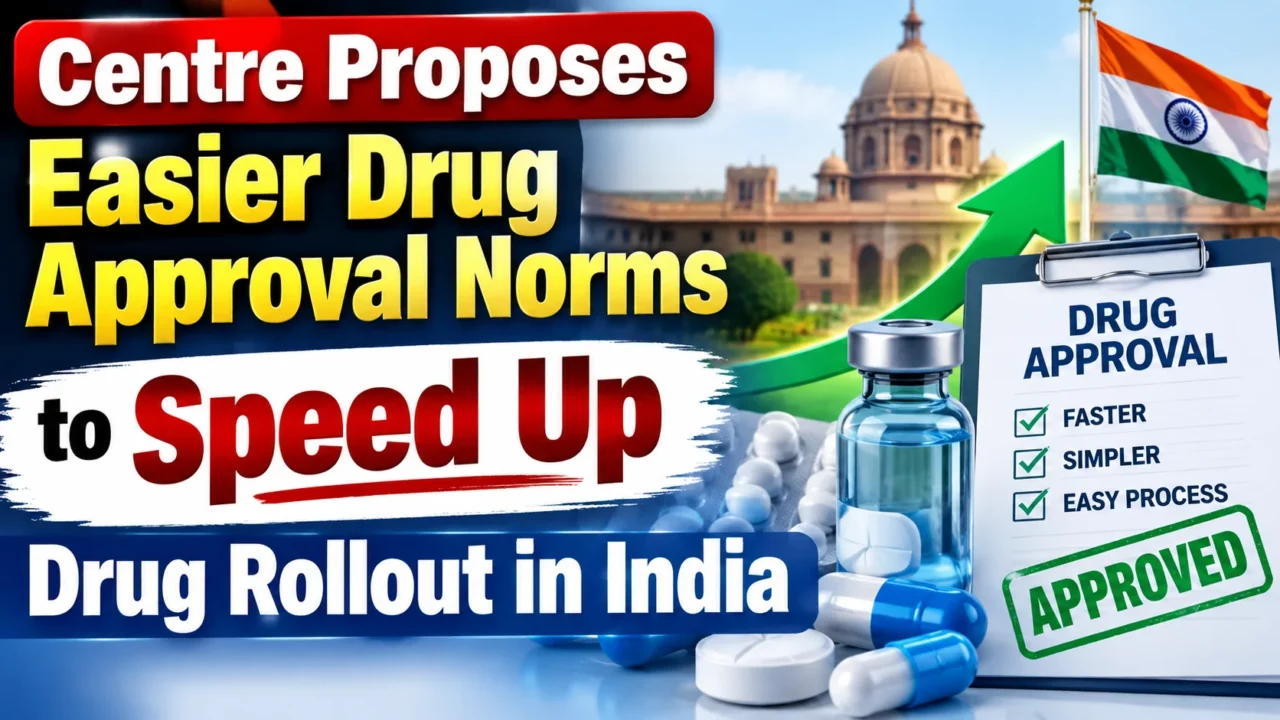

India is considering easier drug approval norms in India to streamline selected regulatory procedures for pharmaceutical companies. The proposed changes focus on Bioavailability (BA) and Bioequivalence (BE) studies for domestic drug approvals and reducing the processing time for certain new-drug import licence applications.
The proposal has been placed before the Drugs Technical Advisory Board (DTAB) for deliberation in September 2026. These changes are proposals at this stage and are not final rules.
Quick Summary
The Centre has proposed simplifying selected drug regulatory procedures in India. Eligible domestic BA/BE studies may be allowed after prior intimation instead of prior permission. The processing time for certain Form CT-17 import licence applications may also be reduced from 90 to 45 working days, while high-risk drug categories would continue under stricter requirements.

Easier Drug Approval Norms in India – Overview
| Particular | Proposed Update |
|---|---|
| Main Focus | Streamlining selected drug approval procedures |
| BA/BE Studies | Prior intimation proposed for eligible domestic studies |
| Form CT-17 Processing | Proposed reduction from 90 to 45 working days |
| Regulatory Body | Drugs Technical Advisory Board (DTAB) |
| High-Risk Products | Stricter requirements to continue |
| Current Status | Proposal under consideration |
Important: The proposed changes should not be treated as final regulatory rules until the required regulatory process is completed.
What Is the Government Proposing?
The proposed changes aim to make selected parts of India’s drug regulatory framework more efficient.
One of the key proposals is to allow applicants conducting eligible BA/BE studies for domestic drug approvals to start the studies after intimating the drug regulator, instead of waiting for prior permission.
A similar prior-intimation mechanism had previously been introduced for specified BA/BE studies conducted for export purposes.
Key Proposed Changes
| Existing/Current Process | Proposed Change |
|---|---|
| Prior permission for eligible BA/BE studies | Prior intimation to the regulator |
| Form CT-17 processing may take up to 90 working days | Proposed reduction to 45 working days |
| Selected regulatory procedures | Simplification for eligible products |
| High-risk drug categories | Stricter regulatory requirements to continue |
Form CT-17 Import Licence Processing May Be Reduced to 45 Days
Another major proposal concerns Form CT-17 applications.
These applications relate to the import of new drugs and reference products required for analytical and non-clinical testing.
Under the proposal, the processing timeline could be reduced from 90 working days to 45 working days.
This would effectively reduce the stated processing period by half and could help reduce administrative delays in selected testing and development activities.

What Are BA and BE Studies?
Understanding Bioavailability (BA) and Bioequivalence (BE) is important for pharmacy and pharmaceutical regulatory studies.
What Is Bioavailability?
Bioavailability (BA) refers to the rate and extent to which an active drug ingredient becomes available in the systemic circulation.
BA studies can provide important information about how a drug is absorbed and becomes available in the body.
What Is Bioequivalence?
Bioequivalence (BE) is particularly important in the development and approval of generic medicines.
It helps establish whether a generic drug performs comparably to the relevant reference product within the applicable regulatory requirements.
Which High-Risk Drugs Are Excluded?
The proposed relaxation would not apply to all drug categories.
The categories excluded from the proposed prior-intimation mechanism include:
- Sex hormones
- Cytotoxic drugs
- Beta-lactam antibiotics
- Vaccines
- Cell and gene therapy products
- Biologics containing live microorganisms
- Narcotic drugs
- Psychotropic drugs
These categories would continue to be subject to stricter regulatory requirements.
Why Are High-Risk Drugs Subject to Stricter Requirements?
Certain medicines and biological products require greater regulatory scrutiny because of their safety, manufacturing or biological characteristics.
Therefore, the proposed simplification is targeted at eligible products rather than being a blanket relaxation for every category of drug.
Role of the Drugs Technical Advisory Board (DTAB)
The Drugs Technical Advisory Board (DTAB) is an important statutory technical advisory body associated with India’s drugs and cosmetics regulatory framework.
The current proposal has been placed before DTAB for deliberation.
Therefore, the proposal represents a regulatory change under consideration, rather than a finalized rule currently applicable to all pharmaceutical companies.
What Could the Proposed Changes Mean for the Pharmaceutical Industry?
If approved and implemented, the proposed changes could potentially:
- Reduce waiting time for eligible BA/BE studies.
- Speed up access to certain testing materials and reference products.
- Reduce administrative delays in selected regulatory procedures.
- Support more efficient development of generic medicines.
- Improve ease of doing business in the pharmaceutical sector.
However, the actual impact will depend on the final provisions, implementation process and products covered.
Why Should Pharmacy Candidates Know About This Update?
This regulatory development is highly relevant for B.Pharm, M.Pharm, Pharm.D and pharmacy competitive-exam aspirants.
It connects with important pharmacy topics such as:
- Pharmaceutical Regulatory Affairs
- Bioavailability
- Bioequivalence
- Generic Drugs
- New Drugs
- Clinical Trials
- CDSCO
- DTAB
- Drug Approval Process
This topic can also be useful for current-affairs preparation for GPAT, Drug Inspector, Pharmacist and other pharmacy-related competitive examinations.
Key Points for Pharmacy Exams
| Topic | Key Point |
|---|---|
| BA | Bioavailability |
| BE | Bioequivalence |
| Regulatory Body | DTAB |
| Import Application | Form CT-17 |
| Proposed CT-17 Timeline | 90 to 45 working days |
| Domestic BA/BE Proposal | Prior intimation instead of prior permission for eligible studies |
| High-Risk Categories | Continue under stricter requirements |
Important: Proposal vs Final Rule
One of the most important points to remember is that these changes are proposed changes.
The proposal has been placed before DTAB for deliberation. Therefore:
Proposal ≠ Final Rule
Pharmaceutical companies and candidates should rely on the final regulatory notification or applicable official instructions once issued.
Frequently Asked Questions (FAQs)
1. What are the easier drug approval norms proposed in India in 2026?
The proposal aims to simplify selected regulatory procedures, including prior-intimation-based commencement of eligible domestic BA/BE studies and faster processing of certain Form CT-17 applications.
2. What is the proposed processing time for Form CT-17 applications?
The processing timeline is proposed to be reduced from 90 working days to 45 working days.
3. What is the proposed change for domestic BA/BE studies?
For eligible domestic BA/BE studies, applicants may be allowed to begin the studies after prior intimation to the drug regulator instead of waiting for prior permission.
4. Will the proposed relaxation apply to all drugs?
No. Certain high-risk categories, including vaccines, cytotoxic drugs, cell and gene therapy products, narcotic drugs and psychotropic drugs, are excluded from the proposed relaxation.
5. What is Form CT-17?
Form CT-17 is associated with applications for importing certain new drugs and reference products required for analytical and non-clinical testing.
6. Why are BA and BE studies important?
BA studies assess the rate and extent of drug availability in systemic circulation, while BE studies help establish comparable performance between a generic product and its relevant reference product.
7. Has the proposed drug approval change become a final rule?
No. The changes are proposals under consideration by DTAB and should not be treated as final rules unless and until officially notified.
8. Why is this update important for pharmacy students?
The topic is relevant to Pharmaceutical Regulatory Affairs, BA/BE, generic drugs, CDSCO and DTAB, making it useful for pharmacy students and competitive-exam aspirants.
Conclusion
The proposed easier drug approval norms in India could streamline selected parts of the pharmaceutical regulatory process. The key proposals include allowing eligible domestic BA/BE studies to proceed after prior intimation and reducing the proposed processing timeline for certain Form CT-17 import licence applications from 90 to 45 working days.
At the same time, high-risk categories such as vaccines, cytotoxic drugs, cell and gene therapy products, narcotic drugs and psychotropic drugs would continue to face stricter requirements.
The proposal is currently under DTAB consideration, so it should not be treated as a final regulatory change. The final outcome will depend on DTAB’s deliberation and subsequent official regulatory action.
Recommended Products