


Quick Summary
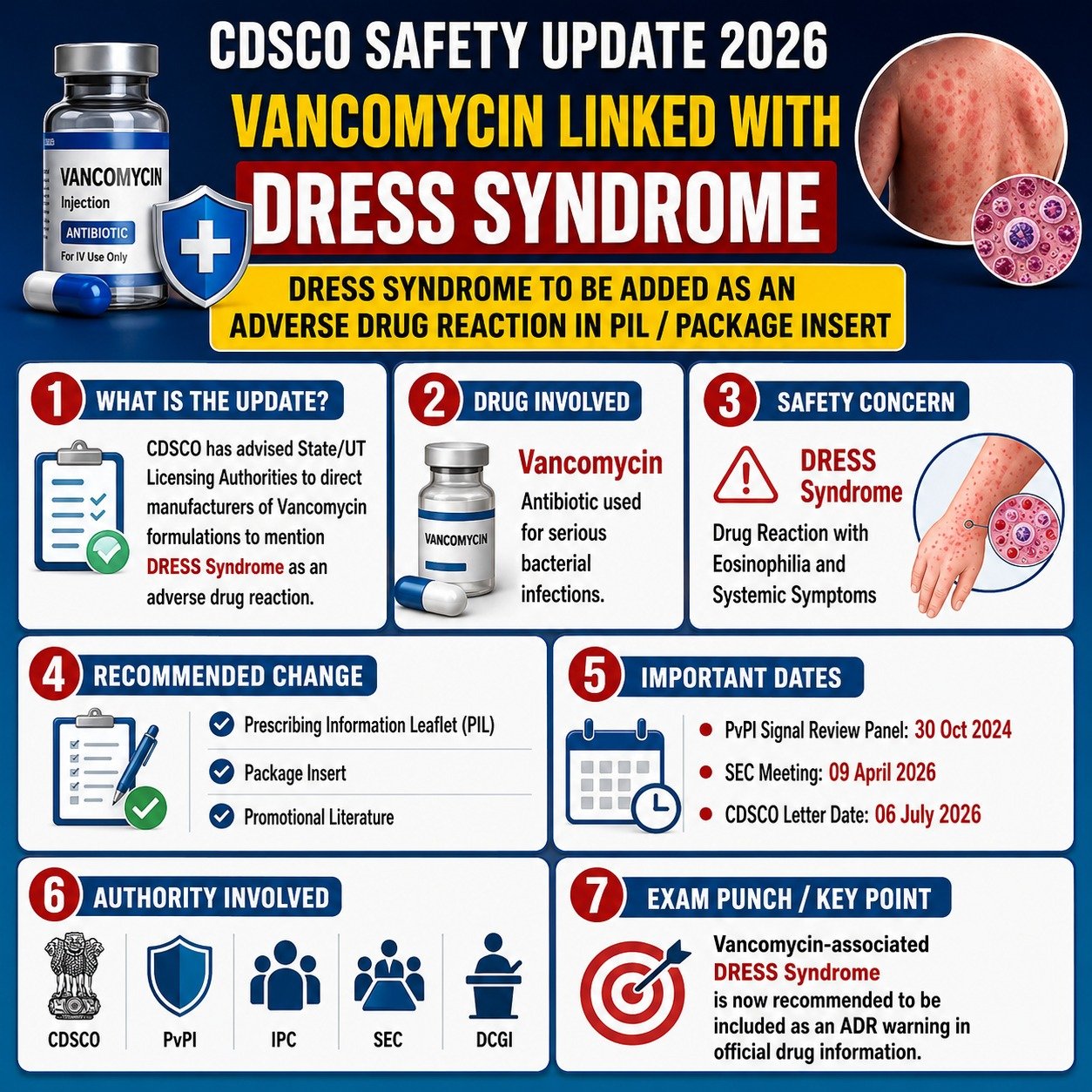
The CDSCO Safety Update 2026 directs manufacturers of Vancomycin formulations to include DRESS Syndrome (Drug Reaction with Eosinophilia and Systemic Symptoms) as an officially recognized adverse drug reaction in prescribing information, package inserts, and promotional literature. This update improves patient safety, strengthens pharmacovigilance, and helps healthcare professionals identify this serious reaction at an early stage.

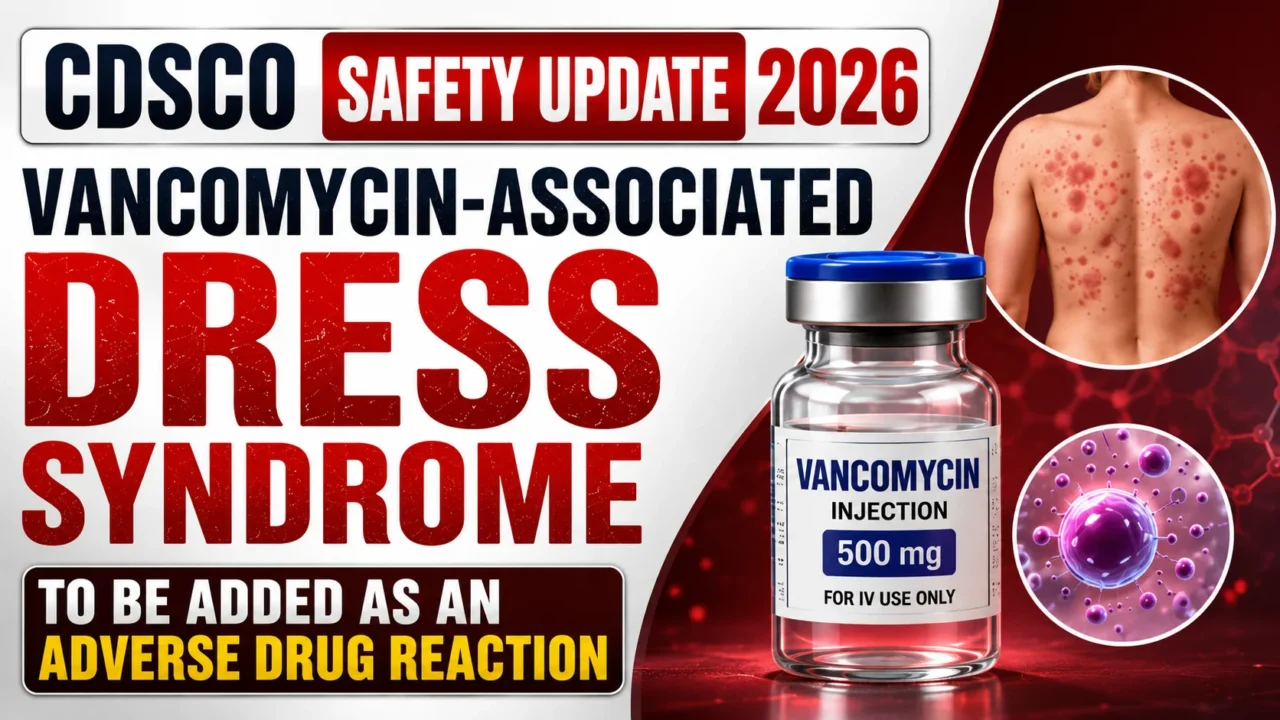
CDSCO Safety Update 2026: Vancomycin-Associated DRESS Syndrome Added as an Adverse Drug Reaction
Introduction
The CDSCO Safety Update 2026 Vancomycin DRESS Syndrome is an important regulatory decision aimed at improving medication safety in India. The Central Drugs Standard Control Organization (CDSCO) has instructed manufacturers of Vancomycin formulations to include DRESS Syndrome (Drug Reaction with Eosinophilia and Systemic Symptoms) as an officially recognized Adverse Drug Reaction (ADR) in the Prescribing Information Leaflet (PIL), Package Insert, and Promotional Literature.
This decision follows recommendations from India’s pharmacovigilance system after reviewing available safety evidence and is expected to improve early diagnosis, patient counseling, and safe use of Vancomycin.
Overview
| Particular | Details |
|---|---|
| Regulatory Authority | CDSCO |
| Drug | Vancomycin |
| Drug Class | Glycopeptide Antibiotic |
| Safety Concern | DRESS Syndrome |
| Type of Update | Addition of ADR Warning |
| Update Issued | 06 July 2026 |
| Affected Documents | PIL, Package Insert, Promotional Literature |
What is the CDSCO Safety Update?
The Central Drugs Standard Control Organization (CDSCO) has advised all State and Union Territory Licensing Authorities to direct manufacturers of Vancomycin-containing formulations to update their official prescribing information.
Manufacturers must now mention DRESS Syndrome as an officially recognized adverse drug reaction in:
- Prescribing Information Leaflet (PIL)
- Package Insert
- Promotional Literature
This regulatory action is based on safety recommendations received through India’s Pharmacovigilance Programme.
What is Vancomycin?
Vancomycin is a glycopeptide antibiotic primarily used to treat serious Gram-positive bacterial infections.
Common Uses of Vancomycin
- Methicillin-resistant Staphylococcus aureus (MRSA)
- Serious bloodstream infections
- Endocarditis
- Bone and joint infections
- Hospital-acquired pneumonia
- Skin and soft tissue infections
Although highly effective, Vancomycin may rarely cause severe hypersensitivity reactions, including DRESS Syndrome.
What is DRESS Syndrome?
DRESS stands for:
Drug Reaction with Eosinophilia and Systemic Symptoms
It is a rare but potentially life-threatening delayed hypersensitivity reaction caused by certain medications.
The syndrome generally develops 2–8 weeks after starting the offending medicine and may involve multiple organs.
Symptoms of DRESS Syndrome
Patients may experience:
- High fever
- Extensive skin rash
- Facial swelling
- Enlarged lymph nodes
- Increased eosinophil count
- Hepatitis (Liver inflammation)
- Kidney injury
- Lung involvement
- Heart complications in severe cases
Early diagnosis and prompt discontinuation of the offending drug are essential to reduce mortality.
Why is This CDSCO Update Important?
Adding DRESS Syndrome to the official prescribing information will help healthcare professionals:
- Improve early diagnosis
- Increase awareness among doctors and pharmacists
- Encourage immediate discontinuation of Vancomycin when suspected
- Reduce severe complications
- Improve patient counseling
- Strengthen India’s pharmacovigilance system
Recommended Changes by CDSCO
Manufacturers of Vancomycin formulations should update the following documents:
| Document | Required Change |
|---|---|
| Prescribing Information Leaflet (PIL) | Add DRESS Syndrome as ADR |
| Package Insert | Include safety warning |
| Promotional Literature | Mention DRESS Syndrome risk |
Important Timeline
| Event | Date |
|---|---|
| PvPI Signal Review Panel | 30 October 2024 |
| Subject Expert Committee (SEC) Meeting | 09 April 2026 |
| CDSCO Safety Letter Issued | 06 July 2026 |
Authorities Involved
The following organizations participated in this regulatory decision:
- Central Drugs Standard Control Organization (CDSCO)
- Pharmacovigilance Programme of India (PvPI)
- Indian Pharmacopoeia Commission (IPC)
- Subject Expert Committee (SEC)
- Drug Controller General of India (DCGI)
What Should Healthcare Professionals Do?
Doctors, pharmacists, and nurses should:
- Recognize early symptoms of DRESS Syndrome.
- Educate patients receiving Vancomycin.
- Stop Vancomycin immediately if DRESS Syndrome is suspected.
- Report suspected adverse reactions to the Pharmacovigilance Programme of India (PvPI).
- Closely monitor patients receiving prolonged Vancomycin therapy.

Key Exam Points (GPAT, NIPER, Drug Inspector, Pharmacist & Nursing Exams)
| Topic | Answer |
|---|---|
| Drug | Vancomycin |
| Drug Class | Glycopeptide Antibiotic |
| Major ADR | DRESS Syndrome |
| Full Form | Drug Reaction with Eosinophilia and Systemic Symptoms |
| Regulatory Authority | CDSCO |
| Safety Update Issued | 06 July 2026 |
| Labeling Requirement | ADR warning in PIL, Package Insert & Promotional Literature |
Why Should Pharmacy Students and Professionals Know This Update?
This regulatory update is important because it:
- Frequently appears in pharmacy competitive exams.
- Improves understanding of pharmacovigilance.
- Helps pharmacists provide better patient counseling.
- Supports safer prescribing practices.
- Enhances knowledge of adverse drug reactions.
Conclusion
The CDSCO Safety Update 2026 represents a significant advancement in medication safety by officially recognizing Vancomycin-associated DRESS Syndrome as an adverse drug reaction. The mandatory inclusion of this warning in prescribing information, package inserts, and promotional literature will improve awareness among healthcare professionals, support early diagnosis, encourage timely intervention, and strengthen pharmacovigilance practices in India. Pharmacy students, pharmacists, doctors, and nursing professionals should stay updated with this important regulatory change, as it is relevant for both clinical practice and competitive examinations.
Frequently Asked Questions (FAQs)
1. What is the latest CDSCO Safety Update 2026?
CDSCO has directed manufacturers of Vancomycin formulations to include DRESS Syndrome as an officially recognized adverse drug reaction.
2. What is DRESS Syndrome?
DRESS stands for Drug Reaction with Eosinophilia and Systemic Symptoms, a rare but serious drug-induced hypersensitivity reaction.
3. Which medicine is involved in this safety update?
The safety update applies to Vancomycin formulations.
4. When does DRESS Syndrome usually occur?
It generally develops 2–8 weeks after starting the offending medication.
5. What are the major symptoms of DRESS Syndrome?
Common symptoms include fever, skin rash, facial swelling, eosinophilia, hepatitis, kidney injury, and lung involvement.
6. Which documents must be updated?
Manufacturers must update:
- Prescribing Information Leaflet (PIL)
- Package Insert
- Promotional Literature
7. When was the CDSCO safety letter issued?
The CDSCO issued the safety communication on 06 July 2026.
8. Why is this update important for GPAT and Drug Inspector exams?
Current drug safety updates and pharmacovigilance topics are commonly asked in pharmacy competitive examinations.
Recommended Products