


Quick Summary
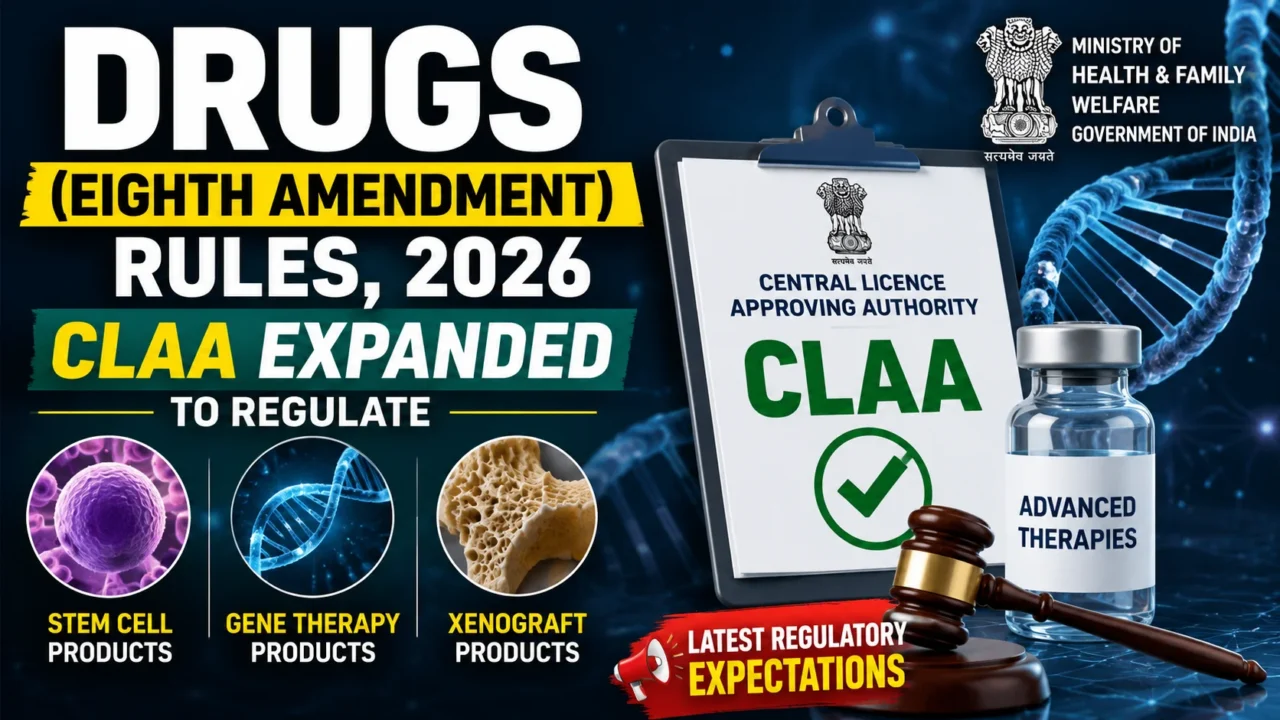
The Drugs (Eighth Amendment) Rules, 2026 expand the scope of the Central Licence Approving Authority (CLAA) to regulate Cell or Stem Cell Derived Products, Gene Therapeutic Products, and Xenografts along with Recombinant DNA (r-DNA) drugs. Effective from 29 June 2026, the amendment strengthens India’s regulatory framework for advanced biological therapies by ensuring centralized licensing, improved quality control, and enhanced patient safety.
Drugs (Eighth Amendment) Rules, 2026
The Drugs (Eighth Amendment) Rules, 2026 have been notified by the Ministry of Health and Family Welfare (MoHFW) to strengthen the regulation of advanced biological therapies in India. Through this amendment, the Central Licence Approving Authority (CLAA) will now regulate Cell or Stem Cell Derived Products, Gene Therapeutic Products, and Xenografts, in addition to Recombinant DNA (r-DNA) derived drugs.
The amendment came into force immediately after its publication in the Official Gazette on 29 June 2026. This move aims to establish a uniform licensing system, improve regulatory oversight, and ensure the safety and quality of advanced biological products.
Overview of the Amendment
| Particular | Details |
|---|---|
| Notification | Drugs (Eighth Amendment) Rules, 2026 |
| Issued By | Ministry of Health and Family Welfare |
| Governing Law | Drugs and Cosmetics Act, 1940 |
| Rules Amended | Drugs Rules, 1945 |
| Effective Date | 29 June 2026 |
| Regulatory Authority | Central Licence Approving Authority (CLAA) |

What Has Changed?
The amendment expands the CLAA licensing framework by including the following advanced therapy products:
- Cell or Stem Cell Derived Products
- Gene Therapeutic Products
- Xenografts
- Recombinant DNA (r-DNA) Derived Drugs (already covered)
These products will now require centralized approval under the revised licensing mechanism.
Why Was This Amendment Introduced?
India is witnessing rapid growth in advanced medical technologies such as:
- Regenerative Medicine
- Gene Therapy
- Stem Cell Therapy
- Tissue Engineering
- Precision Medicine
To ensure these innovative therapies meet national quality and safety standards, the government has expanded the CLAA approval process.
The amendment also provides greater regulatory clarity for pharmaceutical companies, biotechnology firms, research organizations, and healthcare institutions.
Rules Amended Under the Notification
The notification revises the following provisions of the Drugs Rules, 1945:
| Rule | Amendment |
|---|---|
| Rule 75 | Updated |
| Rule 75A | Updated |
| Rule 76 | Updated |
| Rule 76A | Updated |
Wherever the Rules previously referred only to Recombinant DNA (r-DNA) derived drugs, references have now been expanded to include:
- Cell or Stem Cell Derived Products
- Gene Therapeutic Products
- Xenografts
Changes in Application Forms
The amendment also updates several licensing application forms under Schedule A.
| Form | Purpose |
|---|---|
| Form 27D | Updated |
| Form 27DA | Updated |
| Form 28D | Updated |
| Form 28DA | Updated |
These forms now explicitly include applications related to advanced biological therapy products.

Products Covered Under the New CLAA Framework
| Product Category | Covered Under CLAA |
|---|---|
| Recombinant DNA (r-DNA) Drugs | ✔ Yes |
| Cell Derived Products | ✔ Yes |
| Stem Cell Derived Products | ✔ Yes |
| Gene Therapeutic Products | ✔ Yes |
| Xenografts | ✔ Yes |
Impact of the Amendment
The revised framework is expected to benefit the healthcare and pharmaceutical ecosystem by:
- Strengthening regulatory oversight.
- Establishing a centralized licensing mechanism.
- Improving product quality.
- Enhancing patient safety.
- Promoting transparency in licensing.
- Supporting innovation in biotechnology and regenerative medicine.
Who Will Be Affected?
The amendment will directly impact:
- Pharmaceutical Companies
- Biotechnology Firms
- Research Organizations
- Stem Cell Research Centers
- Gene Therapy Developers
- Hospitals Manufacturing Advanced Biological Products
- Academic Research Institutions
These organizations must obtain licences under the revised CLAA framework before manufacturing applicable products.
Why Is This Amendment Important for Pharmacy Students?
This notification is highly relevant for:
- B.Pharm Students
- M.Pharm Students
- Pharm.D Students
- Drug Inspector Aspirants
- GPAT Aspirants
- Regulatory Affairs Professionals
- Pharmaceutical Biotechnology Students
Understanding recent amendments to the Drugs Rules, 1945 is essential for competitive examinations, regulatory affairs careers, and pharmaceutical industry roles.
Key Highlights
| Highlights | Details |
|---|---|
| Amendment Name | Drugs (Eighth Amendment) Rules, 2026 |
| Effective Date | 29 June 2026 |
| New Products Added | Stem Cell Products, Gene Therapy Products, Xenografts |
| Licensing Authority | CLAA |
| Rules Updated | 75, 75A, 76, 76A |
| Forms Updated | 27D, 27DA, 28D, 28DA |
Frequently Asked Questions (FAQs)
Q1. What is the Drugs (Eighth Amendment) Rules, 2026?
It is an amendment to the Drugs Rules, 1945 that expands the scope of the Central Licence Approving Authority (CLAA) to regulate advanced biological therapy products.
Q2. Which new products have been included under CLAA?
The amendment includes:
- Cell or Stem Cell Derived Products
- Gene Therapeutic Products
- Xenografts
Q3. When did the amendment come into effect?
The amendment became effective on 29 June 2026, immediately after publication in the Official Gazette.
Q4. Which rules have been amended?
Rules 75, 75A, 76, and 76A of the Drugs Rules, 1945 have been revised.
Q5. Which forms have been updated?
Forms 27D, 27DA, 28D, and 28DA under Schedule A have been updated.
Q6. Why is this amendment important?
It establishes a standardized national licensing system for advanced biological therapies, ensuring better regulatory oversight, quality assurance, and patient safety.
Q7. Who needs to obtain licences under the revised CLAA framework?
Manufacturers of Cell or Stem Cell Derived Products, Gene Therapeutic Products, Xenografts, and Recombinant DNA (r-DNA) derived drugs.
Q8. Is this amendment important for pharmacy competitive exams?
Yes. It is highly relevant for Drug Inspector, GPAT, Regulatory Affairs, Pharmaceutical Biotechnology, and other pharmacy-related competitive examinations.
Conclusion
The Drugs (Eighth Amendment) Rules, 2026 mark a significant milestone in India’s pharmaceutical regulatory system. By expanding the Central Licence Approving Authority (CLAA) to include Cell or Stem Cell Derived Products, Gene Therapeutic Products, and Xenografts, the government has strengthened the regulatory framework for advanced biological therapies. The amendment promotes standardized licensing, improved patient safety, and greater transparency while supporting innovation in regenerative medicine and biotechnology.
Recommended Products