

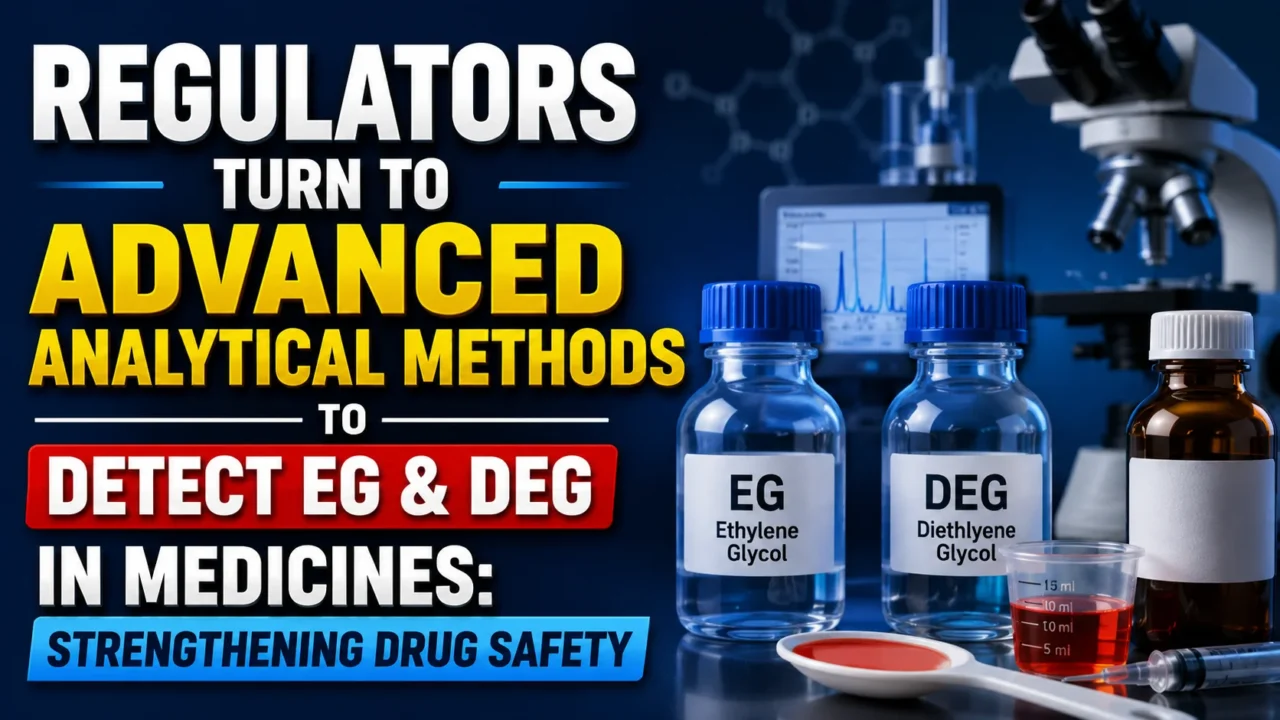

The safety of pharmaceutical products has become a major global concern following multiple incidents of contaminated liquid medicines. Regulatory authorities worldwide are now adopting advanced analytical methods to detect Ethylene Glycol (EG) and Diethylene Glycol (DEG)—two highly toxic chemicals that can accidentally contaminate pharmaceutical ingredients used in oral liquid formulations.
This shift marks an important step toward improving medicine quality, protecting patients, and preventing future public health tragedies.

What Are Ethylene Glycol (EG) and Diethylene Glycol (DEG)?
Ethylene Glycol (EG) and Diethylene Glycol (DEG) are industrial chemicals commonly used in:
- Antifreeze products
- Industrial solvents
- Chemical manufacturing
- Automotive applications
These substances are not intended for use in medicines. However, contamination may occur when pharmaceutical excipients such as glycerin, propylene glycol, polyethylene glycol (PEG), or sorbitol are manufactured or sourced without adequate quality control.
Why Are EG and DEG Dangerous?
Even small quantities of EG and DEG can cause severe poisoning, particularly in children.
Possible health effects include:
- Acute kidney injury (AKI)
- Central nervous system depression
- Metabolic acidosis
- Liver damage
- Respiratory failure
- Coma
- Death
Children are especially vulnerable because toxic doses are much lower than in adults.
Why Are Regulators Increasing Testing?
Several international incidents involving contaminated pediatric cough syrups and oral liquid medicines have resulted in hundreds of reported child deaths. These tragedies prompted health authorities to strengthen quality surveillance and introduce stricter testing requirements for pharmaceutical manufacturers.
Regulators are now emphasizing:
- Better supplier qualification
- Routine screening of high-risk raw materials
- Advanced laboratory testing
- Improved supply chain monitoring
- Stronger regulatory inspections
Advanced Analytical Methods Being Used
Modern pharmaceutical laboratories are adopting sophisticated analytical techniques capable of detecting extremely low levels of EG and DEG contamination.
Common methods include:
Gas Chromatography (GC)
One of the most reliable techniques for identifying glycol contaminants with high sensitivity.
Gas Chromatography–Mass Spectrometry (GC-MS)
Provides highly accurate identification and confirmation of EG and DEG even at trace concentrations.
Thin Layer Chromatography (TLC)
WHO recommends TLC as an affordable screening method for laboratories that do not have access to advanced gas chromatography systems. Suspect samples can then be confirmed using GC or GC-MS.
High-Risk Pharmaceutical Ingredients
Certain pharmaceutical excipients require careful monitoring because they have historically been associated with glycol contamination.
These include:
- Glycerin (Glycerol)
- Propylene Glycol
- Polyethylene Glycol (PEG)
- Sorbitol Solution
- Maltitol Solution
- Hydrogenated Starch Hydrolysates
Manufacturers are encouraged to test every batch before use in medicine production.
Strengthening Pharmaceutical Quality Control
To minimize contamination risks, regulatory agencies recommend:
- Testing all high-risk excipients before manufacturing
- Validating analytical methods
- Auditing raw material suppliers
- Maintaining complete batch traceability
- Implementing Good Manufacturing Practices (GMP)
- Regular regulatory inspections
These measures help ensure that contaminated raw materials never enter the pharmaceutical supply chain.
Global Regulatory Response
Following contamination incidents, health authorities and regulators have intensified surveillance.
Key initiatives include:
- WHO development of standardized analytical methods
- Enhanced quality testing in national laboratories
- Risk-based monitoring of excipient manufacturers
- Improved international collaboration on medicine safety
- Updated regulatory guidance for oral liquid medicines
What This Means for the Pharmaceutical Industry
Pharmaceutical manufacturers are expected to:
- Strengthen quality assurance systems
- Increase testing frequency
- Improve supplier qualification processes
- Invest in advanced analytical technologies
- Maintain stricter documentation and traceability
Although these measures increase manufacturing costs, they significantly improve patient safety and regulatory compliance.
Future Outlook
The adoption of advanced analytical testing represents a major advancement in pharmaceutical quality assurance. As analytical technologies become more accessible, regulators are expected to implement stricter monitoring programs to prevent toxic contamination before medicines reach patients.
Improved laboratory capabilities, stronger supply chain oversight, and international cooperation will play a vital role in restoring public confidence in oral liquid medicines.
Conclusion
The growing use of advanced analytical methods to detect Ethylene Glycol (EG) and Diethylene Glycol (DEG) reflects the pharmaceutical industry’s commitment to patient safety. Given the severe health risks associated with these toxic contaminants, routine testing of high-risk excipients and finished products has become essential.
By combining advanced laboratory technologies with stronger regulatory oversight and quality management practices, health authorities aim to prevent future contamination incidents and ensure that medicines remain safe, effective, and trustworthy for patients worldwide.
Recommended Products