


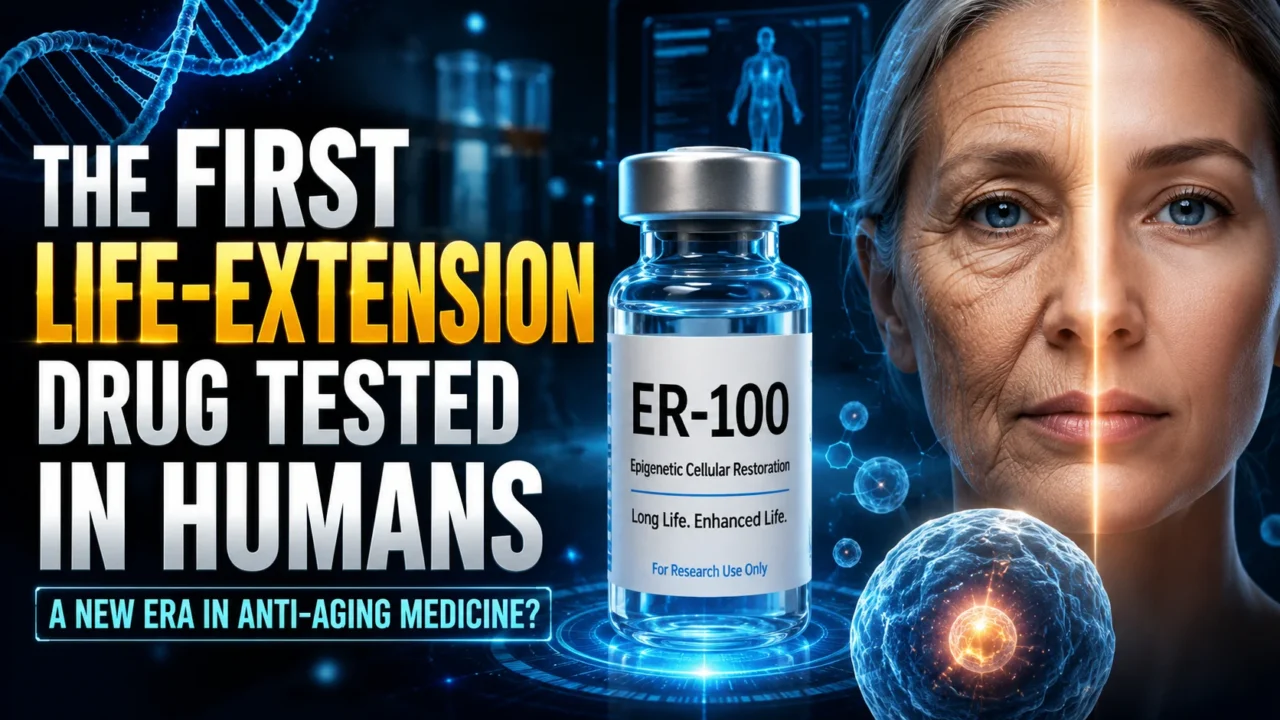

Scientists around the world have long dreamed of developing therapies that could slow down, stop, or even reverse the aging process. That dream may now be one step closer to reality. A groundbreaking experimental drug called ER-100 has reportedly been administered to a human participant for the first time, marking a significant milestone in the field of longevity and regenerative medicine.

What is ER-100?
ER-100, short for Epigenetic Cellular Restoration-100, is an experimental biotechnology therapy designed to restore youthful cellular function. Unlike conventional medicines that target specific diseases, ER-100 aims to address the underlying biological mechanisms associated with aging itself.
Researchers believe that aging is not just a natural process but also a major risk factor for diseases such as:
- Alzheimer’s disease
- Parkinson’s disease
- Cardiovascular disorders
- Type 2 diabetes
- Osteoarthritis
- Certain cancers
By targeting the root causes of cellular aging, scientists hope to improve overall health and extend healthy lifespan.
Why is This Human Trial Important?
The administration of ER-100 to a human participant represents a historic step in longevity research. While many anti-aging therapies have shown promising results in laboratory studies and animal models, very few have advanced to human testing.
Human trials are essential because they help researchers evaluate:
- Safety and tolerability
- Potential side effects
- Effectiveness in restoring cellular function
- Long-term health outcomes
If successful, this research could pave the way for a new generation of therapies focused on healthy aging rather than simply treating age-related diseases.
How Does ER-100 Work?
According to researchers, ER-100 is designed to influence epigenetic mechanisms, which regulate how genes are expressed without changing the underlying DNA sequence.
As people age, cells accumulate epigenetic changes that can impair their normal function. ER-100 aims to:
- Rejuvenate aging cells
- Restore youthful gene expression patterns
- Improve tissue repair mechanisms
- Enhance cellular resilience
This approach is often referred to as cellular rejuvenation or epigenetic reprogramming, one of the most exciting areas of modern biotechnology.
Potential Benefits of Life-Extension Therapies
If proven effective, therapies like ER-100 could potentially:
✅ Extend healthy lifespan
✅ Delay age-related diseases
✅ Improve physical and cognitive function
✅ Enhance quality of life in older adults
✅ Reduce healthcare costs associated with aging populations
However, experts emphasize that these benefits remain theoretical until larger clinical trials are completed.
Challenges and Concerns
Despite the excitement, several challenges remain:
- Human efficacy has not yet been proven.
- Long-term safety data are unavailable.
- Regulatory approval could take years.
- Ethical questions surrounding lifespan extension continue to be debated.
Scientists caution against viewing ER-100 as a “fountain of youth” until substantial clinical evidence becomes available.
What Happens Next?
The next phase of research will involve closely monitoring trial participants to assess safety and biological responses. If early results are promising, larger clinical studies may follow.
The journey from experimental therapy to approved medicine is often long and complex, but this first human administration represents an important milestone in regenerative medicine and longevity science.
Conclusion
The first human testing of ER-100 marks an exciting moment in the quest to understand and potentially modify the aging process. While it is still far too early to know whether ER-100 can truly extend human lifespan, the trial highlights the rapid progress being made in regenerative medicine and epigenetic research.
As scientists continue exploring ways to combat aging at the cellular level, the future of healthcare may shift from treating diseases to preserving health and vitality for longer than ever before.
Recommended Products