


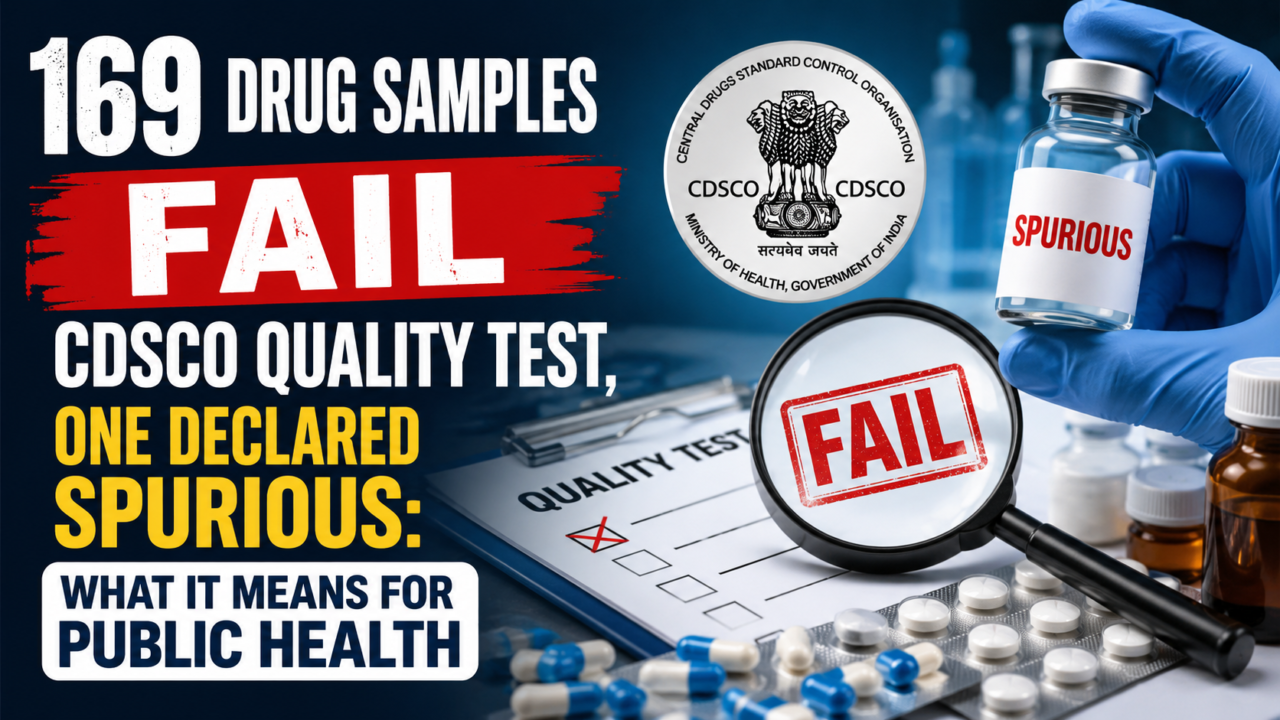

The latest drug quality surveillance report released by the Central Drugs Standard Control Organization (CDSCO) has raised concerns across India’s pharmaceutical sector. According to the report, 169 drug samples were found to be Not of Standard Quality (NSQ), while one drug sample was identified as spurious during routine quality testing conducted across the country.
This development highlights the critical importance of continuous monitoring, strict regulatory oversight, and adherence to quality standards in the pharmaceutical industry.

Understanding the CDSCO Drug Quality Monitoring Program
The CDSCO, India’s national drug regulatory authority, regularly collects and tests drug samples from manufacturers, hospitals, pharmacies, and healthcare facilities. These samples undergo rigorous laboratory evaluation to ensure they comply with the standards prescribed under the Drugs and Cosmetics Act and related regulations.
The primary objectives of this surveillance program are:
- Ensuring patient safety
- Maintaining drug quality standards
- Detecting substandard and counterfeit medicines
- Strengthening public confidence in healthcare products
- Taking regulatory action against non-compliant manufacturers
What Does “Not of Standard Quality” (NSQ) Mean?
A drug is classified as Not of Standard Quality (NSQ) when it fails to meet one or more prescribed quality parameters. These failures may involve:
- Incorrect drug potency
- Failure in dissolution tests
- Poor assay results
- Inadequate uniformity of dosage units
- Stability-related issues
- Labeling discrepancies
NSQ medicines may not deliver the intended therapeutic effect, potentially affecting patient treatment outcomes.
One Drug Sample Identified as Spurious
In addition to the NSQ samples, CDSCO reported that one drug sample was found to be spurious.
A spurious drug may:
- Falsely claim to be manufactured by another company
- Contain incorrect or substituted ingredients
- Imitate a genuine product
- Be deliberately misbranded to deceive consumers
Spurious medicines pose a significant threat to public health because they may be ineffective or harmful.
Why Drug Quality Testing Matters
Quality assurance is a cornerstone of pharmaceutical safety. Every medicine reaching patients must meet strict standards for:
- Safety
- Efficacy
- Purity
- Stability
- Consistency
Regular quality surveillance helps identify problematic products before they can cause widespread harm and ensures accountability among manufacturers.
Impact on the Pharmaceutical Industry
The latest findings serve as a reminder that pharmaceutical companies must maintain robust quality management systems. Manufacturers are expected to:
- Follow Good Manufacturing Practices (GMP)
- Conduct regular internal quality audits
- Ensure proper documentation and validation
- Monitor raw material quality
- Implement corrective and preventive actions (CAPA)
Failure to comply with regulatory standards can result in product recalls, license suspensions, legal action, and reputational damage.
What Should Healthcare Professionals and Consumers Do?
Healthcare professionals should:
- Stay informed about CDSCO quality alerts
- Report suspected quality issues through pharmacovigilance channels
- Verify medicines from authorized sources
Consumers should:
- Purchase medicines only from licensed pharmacies
- Check packaging, labeling, and expiry dates
- Avoid products with suspicious appearance or labeling
- Report adverse events or suspected counterfeit medicines to authorities
Strengthening India’s Drug Quality Ecosystem
India is one of the world’s largest pharmaceutical producers, supplying medicines to numerous countries. Maintaining high-quality standards is essential not only for domestic healthcare but also for preserving India’s reputation as a global pharmaceutical hub.
The CDSCO’s ongoing surveillance efforts demonstrate the regulator’s commitment to ensuring that only safe, effective, and quality-assured medicines reach patients.
Conclusion
The identification of 169 Not of Standard Quality (NSQ) drug samples and one spurious drug sample underscores the importance of continuous quality monitoring within the pharmaceutical supply chain. While regulatory surveillance plays a vital role in protecting public health, manufacturers, healthcare professionals, and consumers must work together to ensure medicine quality and patient safety.
As India’s pharmaceutical sector continues to expand, maintaining stringent quality standards will remain crucial for safeguarding public trust and healthcare outcomes.
Recommended Products