

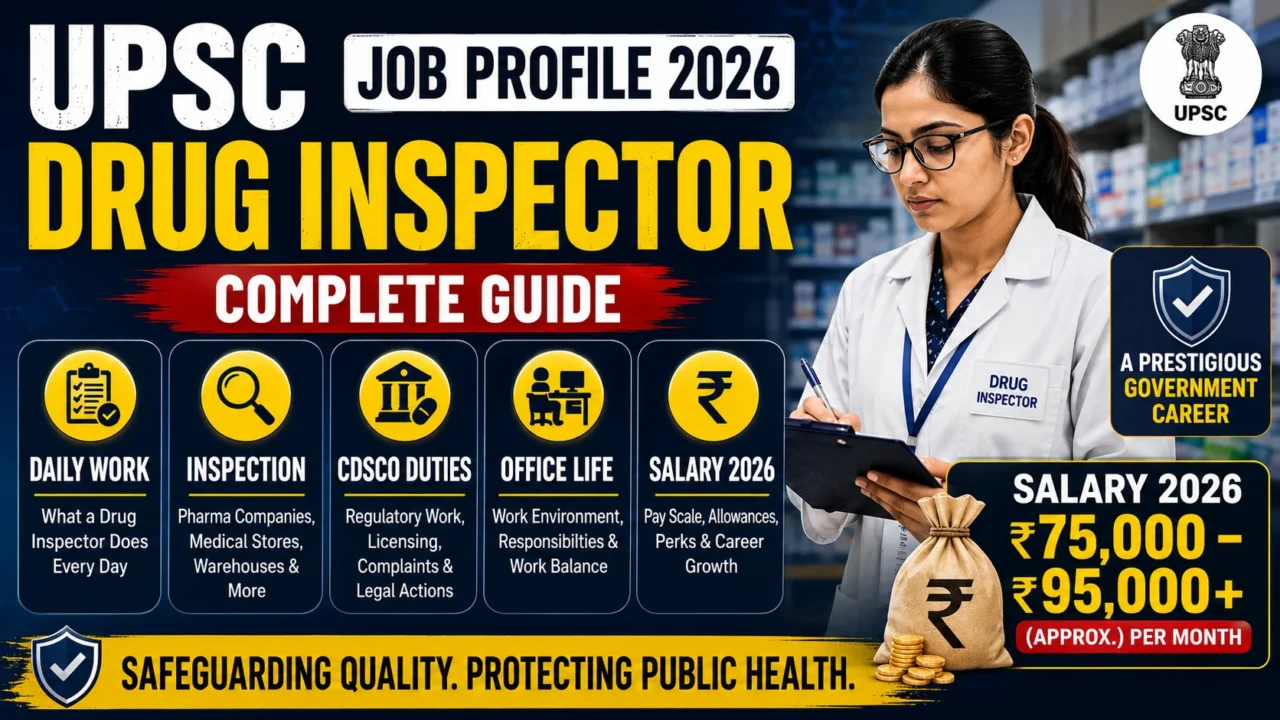

The UPSC Drug Inspector Recruitment 2026 has become one of the most sought-after career opportunities for pharmacy graduates in India. A Drug Inspector plays a crucial role in ensuring that medicines available in the market are safe, effective, and manufactured according to legal standards.
If you are preparing for the UPSC Drug Inspector Exam 2026, understanding the actual job profile is just as important as knowing the syllabus. This article explains the complete Drug Inspector work profile, inspection responsibilities, office life, career growth, and expected salary in 2026.
What Does a UPSC Drug Inspector Do?
A Drug Inspector is a Central Government Gazetted Officer responsible for enforcing the provisions of the Drugs and Cosmetics Act, 1940 and ensuring compliance with Good Manufacturing Practices (GMP).
Their main objective is to ensure that:
- Safe medicines reach patients.
- Fake or spurious drugs are removed from the market.
- Pharmaceutical companies follow government regulations.
- Public health is protected.
Daily Work of a Drug Inspector
Unlike many desk jobs, the Drug Inspector role is a combination of field inspections and office work.
A normal working day may include:
Morning
- Planning inspection schedule
- Reviewing previous inspection reports
- Studying complaints received
- Coordinating with senior officers
During the Day
- Visiting pharmaceutical manufacturing units
- Inspecting drug warehouses
- Inspecting retail and wholesale pharmacies
- Verifying licenses
- Checking storage conditions
- Collecting medicine samples
- Recording observations
Evening
- Preparing inspection reports
- Uploading inspection findings
- Following up on legal actions
- Responding to official correspondence
Every day brings different challenges because inspections are conducted at different locations.
Drug Inspection Responsibilities
Inspection is the most important part of the Drug Inspector’s job.
A Drug Inspector regularly inspects:
Pharmaceutical Manufacturing Companies
They verify:
- GMP compliance
- Cleanroom conditions
- Production records
- Quality Control laboratory
- Documentation
- Equipment calibration
- Batch Manufacturing Records (BMR)
- Validation reports
Retail Medical Stores
Inspection includes:
- Valid Drug License
- Storage temperature
- Schedule H & X medicines
- Expired medicines
- Prescription records
- Pharmacist availability
Wholesale Drug Dealers
The inspector checks:
- Purchase invoices
- Distribution records
- Cold chain maintenance
- Drug licenses
- Storage facilities
Blood Banks
Inspection focuses on:
- Blood storage
- Equipment maintenance
- Record keeping
- Donor screening
- Safety protocols
Medical Device Companies
Responsibilities include:
- Device licensing
- Manufacturing compliance
- Product labeling
- Documentation
Sample Collection
One of the most critical duties is collecting medicine samples.
Drug Inspectors collect samples from:
- Medical stores
- Pharma companies
- Hospitals
- Wholesalers
These samples are sent to Government Drug Testing Laboratories for quality analysis.
If a sample fails quality testing, legal action is initiated.
CDSCO Duties
A Drug Inspector working under the Central Drugs Standard Control Organization (CDSCO) performs several regulatory functions.
Key responsibilities include:
Regulatory Inspections
- GMP inspections
- Good Distribution Practice (GDP)
- Good Clinical Practice (GCP)
- Medical device inspections
Licensing Activities
They participate in:
- Manufacturing license verification
- Import-related inspections
- Export compliance
- Approval recommendations
Investigation
Drug Inspectors investigate:
- Fake medicines
- Spurious drugs
- Misbranded medicines
- Adulterated products
- Illegal manufacturing
Complaint Handling
Common complaints include:
- Poor quality medicines
- Counterfeit drugs
- Adverse drug reactions
- Illegal sales
- Expired medicines
Legal Action
Drug Inspectors have the authority to:
- Issue notices
- Seize drugs
- Suspend licenses (as per applicable legal procedures)
- Launch prosecutions
- Prepare court documents
Office Life
Although field work is important, a significant portion of time is spent in the office.
Typical office responsibilities include:
- Writing inspection reports
- Preparing legal documents
- Maintaining inspection records
- Reviewing laboratory reports
- Coordinating with higher authorities
- Handling RTI and official correspondence
- Updating inspection databases
- Planning future inspections
Most Drug Inspectors work Monday to Friday, though emergency inspections or enforcement activities may occasionally require work beyond regular office hours.
Travel Requirements
Drug Inspectors frequently travel within their assigned jurisdiction.
Travel may include:
- Industrial areas
- Pharmaceutical companies
- Hospitals
- Medical stores
- Warehouses
- District offices
Government travel allowances are generally provided according to applicable rules.
Skills Required
A successful Drug Inspector should possess:
- Strong pharmaceutical knowledge
- Good communication skills
- Attention to detail
- Legal understanding
- Report writing ability
- Decision-making skills
- Integrity and professionalism
- Problem-solving ability
Career Growth
A Drug Inspector has good promotional opportunities within the regulatory system.
A typical career path may include:
- Drug Inspector
- Senior Drug Inspector
- Assistant Drugs Controller
- Deputy Drugs Controller
- Joint Drugs Controller
- Additional Drugs Controller
- Drugs Controller
Promotions depend on service rules, experience, departmental vacancies, and performance.
UPSC Drug Inspector Salary 2026
The Drug Inspector post is generally placed in Level-8 of the 7th Central Pay Commission (CPC).
Expected Salary Structure
| Component | Amount (Approx.) |
|---|---|
| Pay Level | Level-8 |
| Basic Pay | ₹47,600/month |
| Dearness Allowance (DA) | As per Central Government rates |
| House Rent Allowance (HRA) | Depending on city classification |
| Transport Allowance | Applicable as per rules |
| Medical Benefits | Yes |
| Pension (under applicable retirement system) | Yes |
| Leave Travel Concession (LTC) | Yes |
Estimated Gross Monthly Salary (2026): ₹75,000–₹95,000+ (depending on posting location, allowances, and prevailing government rates).
Download GDC Classes App Now – Click here
Perks & Benefits
Apart from salary, Drug Inspectors enjoy several government benefits:
- Central Government employee status
- Job security
- Medical facilities
- Paid leave
- Pension/NPS benefits (as applicable)
- House Rent Allowance
- Dearness Allowance
- Transport Allowance
- Leave Travel Concession (LTC)
- Official training programs
- Promotion opportunities
Is the Drug Inspector Job Stressful?
The role is moderately demanding because it combines technical expertise, regulatory enforcement, documentation, and periodic field inspections. However, it also offers:
- Respect in the pharmaceutical industry
- Meaningful contribution to public health
- Stable government career
- Good work-life balance in many postings
- Excellent long-term career progression
Final Thoughts
The UPSC Drug Inspector 2026 position is one of the best government career options for pharmacy graduates. It offers a unique blend of scientific knowledge, regulatory authority, field inspections, and public service. From inspecting pharmaceutical manufacturing units and retail pharmacies to investigating counterfeit medicines and ensuring compliance with drug laws, Drug Inspectors play a vital role in safeguarding India’s healthcare system.
If you are preparing for the UPSC Drug Inspector Recruitment 2026, understanding the job profile will help you stay motivated and align your preparation with the responsibilities of this prestigious post.
Start your preparation today, because becoming a Drug Inspector means becoming a guardian of medicine quality and public health.
Recommended Products