

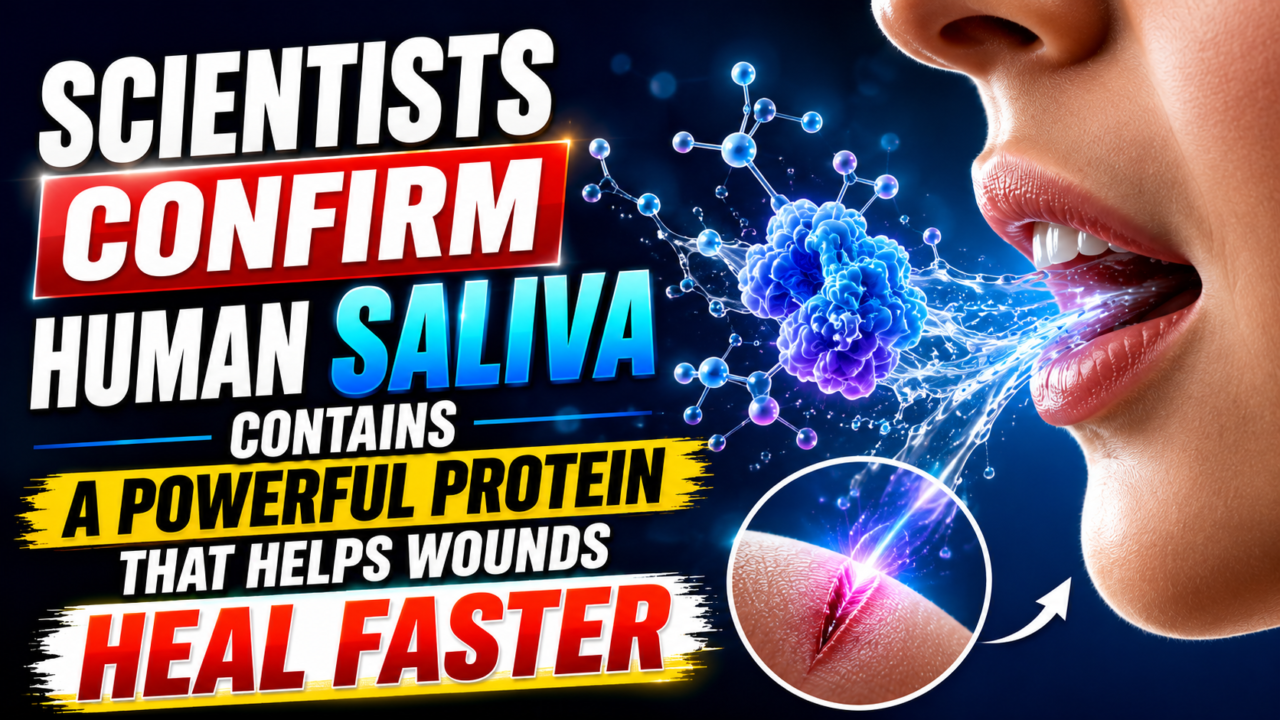

Have you ever noticed that a small cut inside your mouth seems to heal much faster than a similar cut on your skin? Scientists have long been fascinated by this phenomenon, and recent research has shed light on one of the key reasons behind it. Human saliva contains powerful proteins that can significantly accelerate the wound-healing process.

Why Do Mouth Wounds Heal So Quickly?
Unlike skin wounds, oral wounds often heal with less inflammation, reduced scarring, and much faster tissue regeneration. Researchers have discovered that saliva contains several biologically active compounds that help repair damaged tissues and protect against infection.
One of the most important proteins involved in this process is Histatin-1, a naturally occurring protein found in human saliva.
What Is Histatin-1?
Histatin-1 is a protein produced by the salivary glands. It plays a crucial role in maintaining oral health and promoting wound healing. Studies have shown that Histatin-1 can:
- Accelerate the movement of cells needed for tissue repair
- Stimulate wound closure
- Promote the formation of new blood vessels
- Support the regeneration of damaged tissues
- Help protect wounds from harmful microorganisms
These properties make Histatin-1 a promising candidate for future medical treatments aimed at improving wound healing.
Additional Healing Components in Saliva
Histatin-1 is not the only beneficial substance present in saliva. Researchers have identified several other components that contribute to rapid healing, including:
Epidermal Growth Factor (EGF)
EGF stimulates the growth and repair of epithelial cells, which form the protective lining of the mouth and skin.
Trefoil Factors
Trefoil proteins help maintain tissue integrity and assist in the healing of damaged mucosal surfaces.
Antimicrobial Peptides
Saliva contains natural antimicrobial compounds that help prevent infections, creating an ideal environment for healing.
Scientific Evidence
Laboratory studies have demonstrated that cells exposed to saliva can close artificial wounds significantly faster than untreated cells. Researchers believe that the combination of Histatin-1, growth factors, and antimicrobial proteins creates a powerful healing environment that speeds tissue repair.
Scientists are now investigating whether these natural compounds can be incorporated into advanced wound dressings, gels, and regenerative therapies for patients with chronic wounds.
Can You Lick Your Wounds to Heal Them?
While the healing properties of saliva are scientifically supported, intentionally licking wounds is generally not recommended. Human saliva also contains bacteria that can cause infections, especially in larger or deeper wounds.
For proper wound care:
- Clean the wound thoroughly
- Apply an appropriate antiseptic if necessary
- Keep the area covered and protected
- Seek medical attention for deep or infected wounds
Future Medical Applications
The discovery of Histatin-1 and other healing compounds in saliva has opened exciting possibilities for medical research. Scientists hope to develop new treatments that mimic the beneficial effects of saliva without the risks associated with bacterial contamination.
Potential future applications include:
- Advanced wound-healing creams
- Tissue regeneration therapies
- Oral health treatments
- Chronic wound management solutions
- Post-surgical recovery products
Conclusion
Human saliva is far more than just a digestive fluid. It contains powerful proteins such as Histatin-1, Epidermal Growth Factor, and Trefoil Factors that contribute to remarkably fast wound healing inside the mouth. Although more research is needed, these discoveries could lead to innovative medical treatments that help patients heal faster and more effectively in the future.
Recommended Products