



Introduction
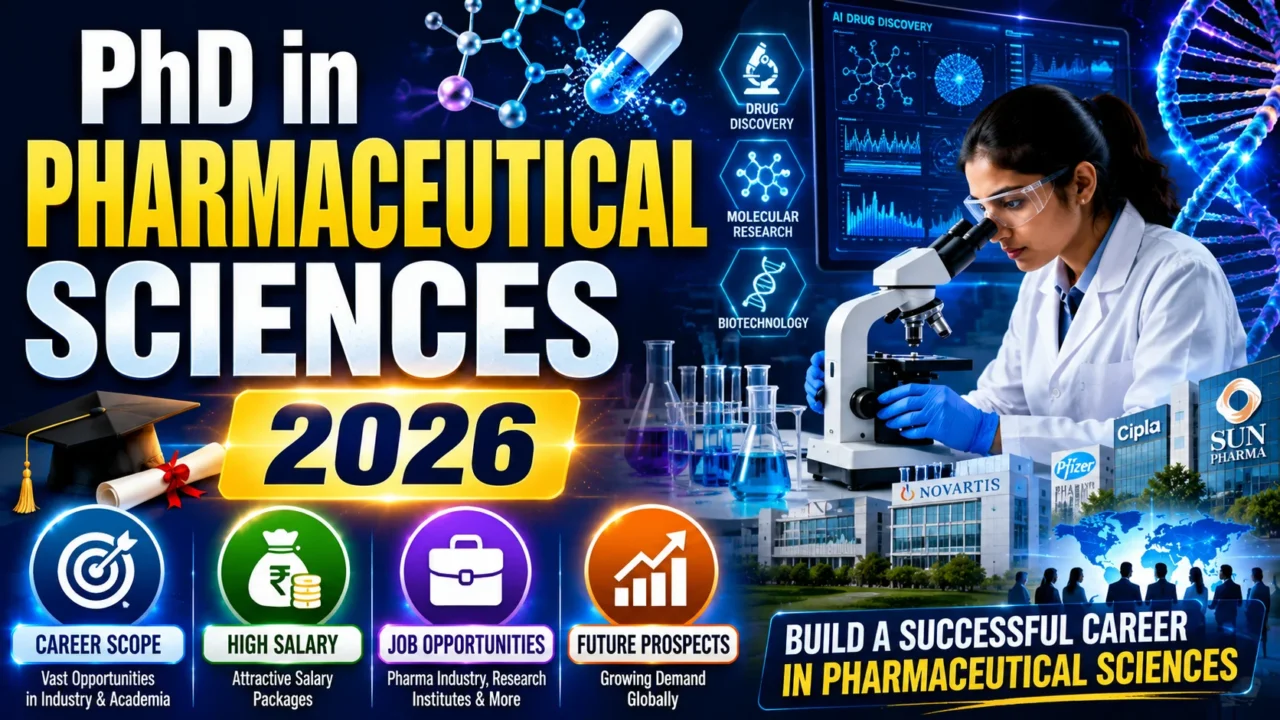
The pharmaceutical industry is one of the fastest-growing sectors globally, driven by advancements in drug discovery, biotechnology, vaccines, personalized medicine, artificial intelligence, and healthcare innovation. As pharmaceutical research becomes increasingly important, the demand for highly skilled researchers and scientists continues to rise.
A PhD in Pharmaceutical Sciences is the highest academic qualification in the field and can open doors to prestigious careers in research, academia, industry, and government organizations.
If you’re wondering, “What is the scope of a PhD in Pharmacy?”, this comprehensive guide will help you understand career opportunities, salary expectations, research areas, and future prospects.
What is a PhD in Pharmaceutical Sciences?
A PhD (Doctor of Philosophy) in Pharmaceutical Sciences is a research-focused doctoral degree that allows students to specialize in a specific area of pharmaceutical research and contribute new knowledge to the field.
Popular PhD Specializations include:
- Pharmaceutics
- Pharmacology
- Medicinal Chemistry
- Pharmaceutical Analysis
- Biotechnology
- Pharmacoinformatics
- Regulatory Affairs
- Drug Discovery
- Nanotechnology
- Biopharmaceuticals
The primary goal of a PhD is to conduct innovative research that contributes to drug development, healthcare improvement, and scientific advancement.
Benefits of Pursuing a PhD in Pharmacy
1. Become a Research Scientist
One of the most common career paths after a PhD is working as a Research Scientist in pharmaceutical and biotechnology companies.
Top Recruiters:
- Pfizer
- Novartis
- Roche
- AstraZeneca
- Biocon
- Sun Pharma
- Cipla
- Dr. Reddy’s Laboratories
- Lupin
- Zydus Lifesciences
Research scientists play a key role in developing new drugs, therapies, and healthcare technologies.
2. Build a Career in Academia
If you are passionate about teaching and research, a PhD can help you become:
- Assistant Professor
- Associate Professor
- Professor
- Research Supervisor
- Academic Researcher
Universities, colleges, and research institutes actively recruit PhD holders for faculty positions.
3. Opportunities in Government Research Organizations
A PhD can lead to rewarding careers in government-funded research institutions.
Major Organizations:
- CSIR (Council of Scientific and Industrial Research)
- ICMR (Indian Council of Medical Research)
- DRDO (Defence Research and Development Organisation)
- DBT (Department of Biotechnology)
- CDSCO
- AIIMS
- NIPER
- CDRI
Common positions include:
- Scientist
- Research Officer
- Project Investigator
- Principal Investigator
Top Career Options After a PhD in Pharmacy
Research Scientist
Research and development of new drugs, formulations, and therapies.
Average Salary: ₹8–20 LPA
Senior Scientist
A higher-level role involving project leadership and strategic research.
Average Salary: ₹15–35 LPA
Medical Writer
Creates scientific publications, regulatory documents, and research reports.
Average Salary: ₹6–15 LPA
Regulatory Affairs Scientist
Ensures pharmaceutical products comply with regulatory requirements and approval processes.
Average Salary: ₹8–18 LPA
Clinical Research Scientist
Manages clinical trials and evaluates the safety and efficacy of drugs.
Average Salary: ₹7–18 LPA
Pharmacovigilance Specialist
Monitors drug safety and adverse drug reactions.
Average Salary: ₹6–15 LPA
Biotechnology Researcher
Works on biologics, vaccines, gene therapy, and advanced therapeutics.
Average Salary: ₹8–25 LPA
International Career Opportunities After a Pharma PhD
A PhD in Pharmaceutical Sciences is highly valued worldwide.
Postdoctoral Research
Leading universities and research centers offer postdoctoral fellowships, including:
- Harvard University
- Stanford University
- University of Oxford
- University of Cambridge
Typical Salary: ₹40–80 LPA (equivalent)
Global Pharmaceutical Industry
Top international employers include:
- Pfizer
- Roche
- Merck
- AstraZeneca
- Eli Lilly
- Novartis
Salary Range: ₹50 LPA to ₹1 Crore+ annually, depending on experience and location.
Salary After a PhD in Pharmacy
| Position | Average Salary |
|---|---|
| Research Associate | ₹5–8 LPA |
| Research Scientist | ₹8–20 LPA |
| Senior Scientist | ₹15–35 LPA |
| Assistant Professor | ₹7–15 LPA |
| Regulatory Affairs Scientist | ₹8–18 LPA |
| Clinical Research Scientist | ₹7–18 LPA |
| International Postdoctoral Fellow | ₹40–80 LPA Equivalent |
Salary may vary based on specialization, skills, publications, and employer.
Future Scope of a PhD in Pharmaceutical Sciences
The future of pharmaceutical research is extremely promising due to emerging technologies and healthcare challenges.
Artificial Intelligence in Drug Discovery
AI is transforming drug design, screening, and development processes.
Biotechnology and Biologics
Growing demand for vaccines, biosimilars, and gene therapies is creating new research opportunities.
Personalized Medicine
Tailored treatments based on genetics are becoming the future of healthcare.
Medical Devices
The medical device industry is expanding rapidly, creating demand for researchers and innovators.
Nanotechnology
Nanomedicine and targeted drug delivery systems are among the most exciting areas of pharmaceutical research.
Is a PhD in Pharmacy Worth It?
A PhD in Pharmaceutical Sciences is an excellent choice if you:
✔ Enjoy scientific research and innovation
✔ Want a career in drug discovery or biotechnology
✔ Aspire to become a scientist or professor
✔ Seek international career opportunities
✔ Want to contribute to healthcare advancements
While a PhD requires dedication and several years of research, the long-term career benefits, professional recognition, and opportunities for growth make it a highly rewarding qualification.
Conclusion
A PhD in Pharmaceutical Sciences offers outstanding career prospects in research, academia, biotechnology, clinical research, regulatory affairs, and government organizations. With the pharmaceutical industry continuously evolving through AI, biotechnology, personalized medicine, and advanced drug development, PhD graduates are expected to remain in high demand for years to come.
If you are passionate about innovation, scientific discovery, and improving global healthcare, pursuing a PhD in Pharmacy can be one of the most rewarding career decisions you make.
Recommended Products