


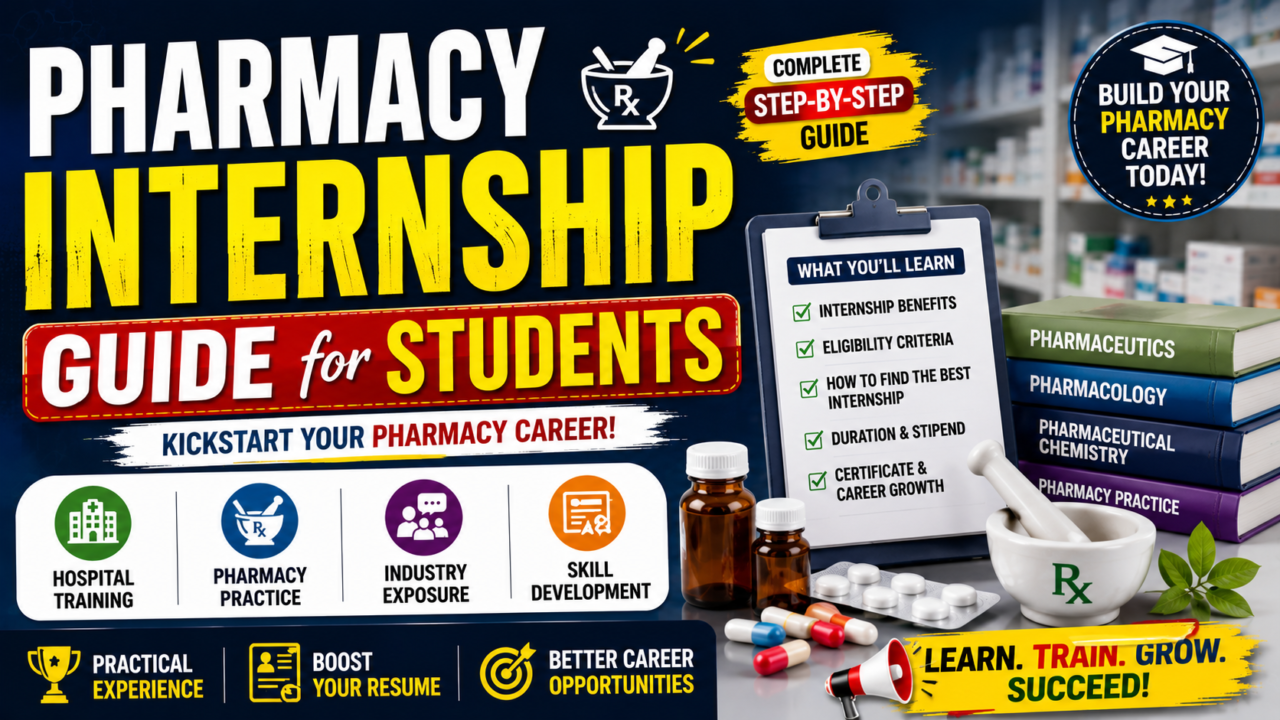

A pharmacy internship is one of the most important phases in a pharmacy student’s career. It helps students gain practical knowledge, improve communication skills, understand the pharmaceutical industry, and prepare for future job opportunities. Whether you are pursuing D.Pharm, B.Pharm, or Pharm.D, internships provide real-world exposure that classroom learning alone cannot offer.
This complete pharmacy internship guide will help students understand the types of internships, benefits, how to apply, required skills, and tips to make the most of the internship experience.
What is a Pharmacy Internship?
A pharmacy internship is practical training where students work in hospitals, pharmaceutical companies, clinical settings, or community pharmacies under professional supervision. It helps students apply theoretical concepts in real healthcare and industrial environments.
Internships may be:
- Mandatory academic training
- Summer internships
- Industrial training
- Hospital training
- Clinical postings
Why Pharmacy Internships are Important
Internships help students:
- Gain practical exposure
- Understand pharmacy operations
- Improve confidence and communication
- Learn patient handling
- Build professional networks
- Increase job opportunities
- Strengthen resume and CV
Students with internship experience often perform better during interviews and placements.

Types of Pharmacy Internships
1. Hospital Pharmacy Internship
Students work in:
- Government hospitals
- Private hospitals
- Clinical pharmacies
Skills Learned
- Prescription handling
- Patient counseling
- Drug dispensing
- Medication management
- Inventory control
2. Industrial Pharmacy Internship
Conducted in pharmaceutical manufacturing companies.
Departments Included
- Production
- Quality control
- Quality assurance
- Regulatory affairs
- Packaging
Skills Learned
- GMP practices
- Manufacturing processes
- Documentation
- SOP handling
3. Clinical Research Internship
Focused on:
- Clinical trials
- Pharmacovigilance
- Data collection
- Medical writing
Best for students interested in clinical research careers.
4. Community Pharmacy Internship
Students work in retail medical stores and pharmacies.
Skills Learned
- Drug dispensing
- OTC medicines
- Billing systems
- Customer communication
5. Research Internship
Suitable for students interested in:
- Drug discovery
- Biotechnology
- Pharmacology research
- Laboratory work
Usually conducted in:
- Research institutes
- Universities
- Pharma labs
Who Can Apply for Pharmacy Internships?
Internships are available for:
- D.Pharm students
- B.Pharm students
- Pharm.D students
- M.Pharm students
Many companies prefer students from:
- 2nd year onward
- Final year students
- Fresh graduates
How to Find Pharmacy Internships
1. Apply Through College
Many colleges have:
- Placement cells
- Industry tie-ups
- Hospital collaborations
Always stay connected with faculty and training coordinators.
2. Apply on Company Websites
Visit official career pages of pharmaceutical companies and hospitals.
Popular pharma companies include:
- Sun Pharma
- Cipla
- Dr. Reddy’s
- Lupin
- Torrent Pharma
3. Use LinkedIn & Job Portals
Platforms:
- Internshala
- Naukri
- Indeed
Search using keywords like:
- Pharmacy internship
- Clinical research intern
- QA trainee
- Pharmacovigilance internship
4. Networking Helps
Connect with:
- Seniors
- Professors
- Pharmacists
- Industry professionals
Many internships are obtained through referrals.
Documents Required for Internship
Keep these documents ready:
- Resume/CV
- College ID card
- Bonafide certificate
- Academic marksheets
- Aadhaar card
- Passport-size photos
How to Make a Good Pharmacy Resume
Your resume should include:
Basic Details
- Name
- Contact information
- Educational qualification
Skills
- Communication skills
- MS Office knowledge
- Laboratory skills
- Clinical knowledge
Academic Projects
Mention:
- Research work
- Seminars
- Posters
- Presentations
Keep the resume simple and professional.
Skills Every Pharmacy Intern Should Learn
Communication Skills
You must learn how to:
- Talk with patients
- Communicate with doctors
- Handle customers professionally
Documentation Skills
Learn:
- SOP writing
- Batch records
- Prescription records
- Clinical documentation
Computer Skills
Basic knowledge of:
- MS Excel
- PowerPoint
- Pharmacy software
- Hospital management systems
Professional Ethics
Maintain:
- Discipline
- Punctuality
- Professional behavior
- Confidentiality
Tips to Perform Well During Internship
Be Curious
Ask questions and learn actively.
Observe Carefully
Watch how professionals work.
Take Notes
Maintain a notebook for:
- Drug names
- Procedures
- Practical learning
Improve Confidence
Talk confidently and politely.
Be Professional
Follow dress code and maintain discipline.
Common Mistakes Students Should Avoid
- Being careless during training
- Poor communication
- Using mobile phones excessively
- Ignoring practical learning
- Not asking doubts
- Arriving late regularly
Best Career Opportunities After Internship
Internships can help students enter careers like:
- Hospital Pharmacist
- Clinical Pharmacist
- Production Officer
- QA/QC Executive
- Drug Inspector
- Pharmacovigilance Associate
- Medical Writer
- Regulatory Affairs Executive
Stipend in Pharmacy Internships
Some internships are unpaid, while others offer stipends.
Average stipend:
- ₹3,000 to ₹15,000 per month
- Higher in multinational companies
Learning experience matters more than stipend initially.
Benefits of Pharmacy Internship Certificate
An internship certificate:
- Strengthens your resume
- Improves placement opportunities
- Adds practical credibility
- Helps during higher studies admissions
Always collect certificates after completion.
Recommended Products