


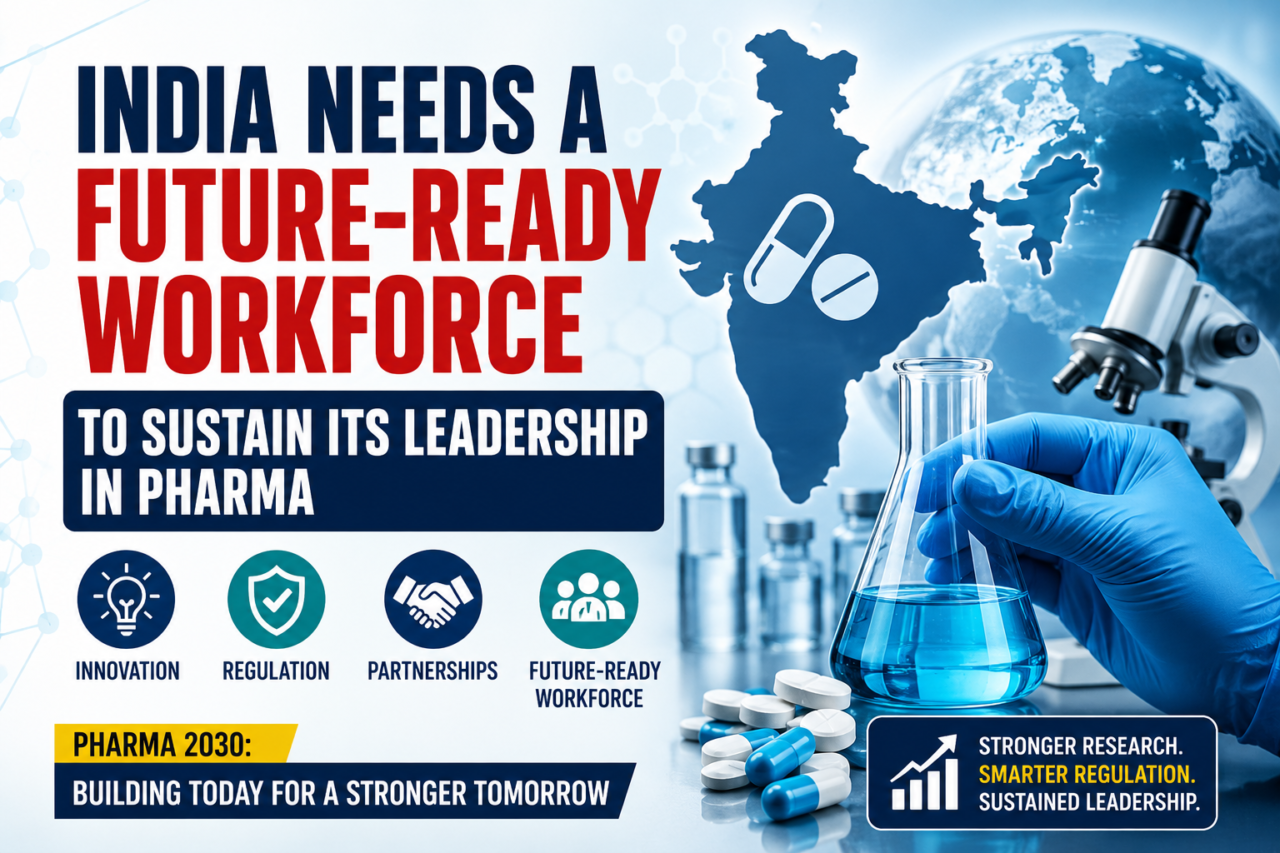

India’s pharmaceutical industry has emerged as one of the strongest pillars of the country’s global economic presence. From generic medicines to vaccine manufacturing, India continues to play a crucial role in global healthcare. However, industry experts now believe that sustaining this leadership will require a future-ready workforce, stronger innovation ecosystems, and better collaboration between academia, industry, and regulatory bodies.
Recently, a webinar titled “Pharma 2030: Innovation, Regulation and the Rise of India” highlighted the growing need for India to modernize its pharmaceutical ecosystem to meet future global challenges.
Importance of Innovation in Pharma
Experts at the webinar emphasized that India must strengthen:
- Research and innovation systems
- Regulatory frameworks
- Industry-academia collaboration
- Skill development programs
A strong innovation ecosystem is essential to transform academic research into real-world pharmaceutical applications. Industry leaders stressed that India already has strong manufacturing capabilities, especially in generic medicines, but now needs to focus more on advanced drug discovery and next-generation pharmaceutical development.

Role of Regulatory Frameworks
Regulatory systems play a major role in balancing:
- Patient safety
- Innovation
- Faster approvals
- Market readiness
Experts pointed out that streamlined regulations can help pharmaceutical companies bring innovative products to market more efficiently while maintaining global quality standards.
Need for Stronger Industry-Academia Partnerships
One of the major concerns highlighted during the webinar was the gap between academic learning and industry requirements. Educational institutions and pharmaceutical companies need stronger partnerships to:
- Develop practical industry-oriented skills
- Encourage interdisciplinary research
- Support innovation-driven projects
- Prepare students for future technologies
Such collaborations can help students gain exposure to real-world pharmaceutical challenges and improve employability.
Future of Advanced Drug Delivery Systems
The discussion also focused on the rising importance of:
- Advanced drug delivery systems
- Nanotechnology
- Formulation science
- Complex pharmaceutical products
As the pharma industry evolves, there is a shift toward value-driven and technologically advanced products. This demands highly skilled professionals with expertise in modern pharmaceutical sciences.
Building a Future-Ready Pharma Workforce
To remain a global pharma leader, India must invest in:
- Modern pharmaceutical education
- Research infrastructure
- Digital healthcare technologies
- Skill-based training
- Innovation-focused policies
The pharmaceutical workforce of the future will require not only technical knowledge but also adaptability, research capabilities, and interdisciplinary expertise.
Conclusion
India’s pharmaceutical sector stands at a critical turning point. While the country has already established itself as the “Pharmacy of the World,” sustaining this leadership in the coming decades will depend on how effectively it builds an innovation-driven, future-ready workforce.
By strengthening research, improving regulatory systems, and promoting industry-academia collaboration, India can continue to lead the global pharmaceutical landscape and shape the future of healthcare innovation.
Recommended Products