



Quick Summary
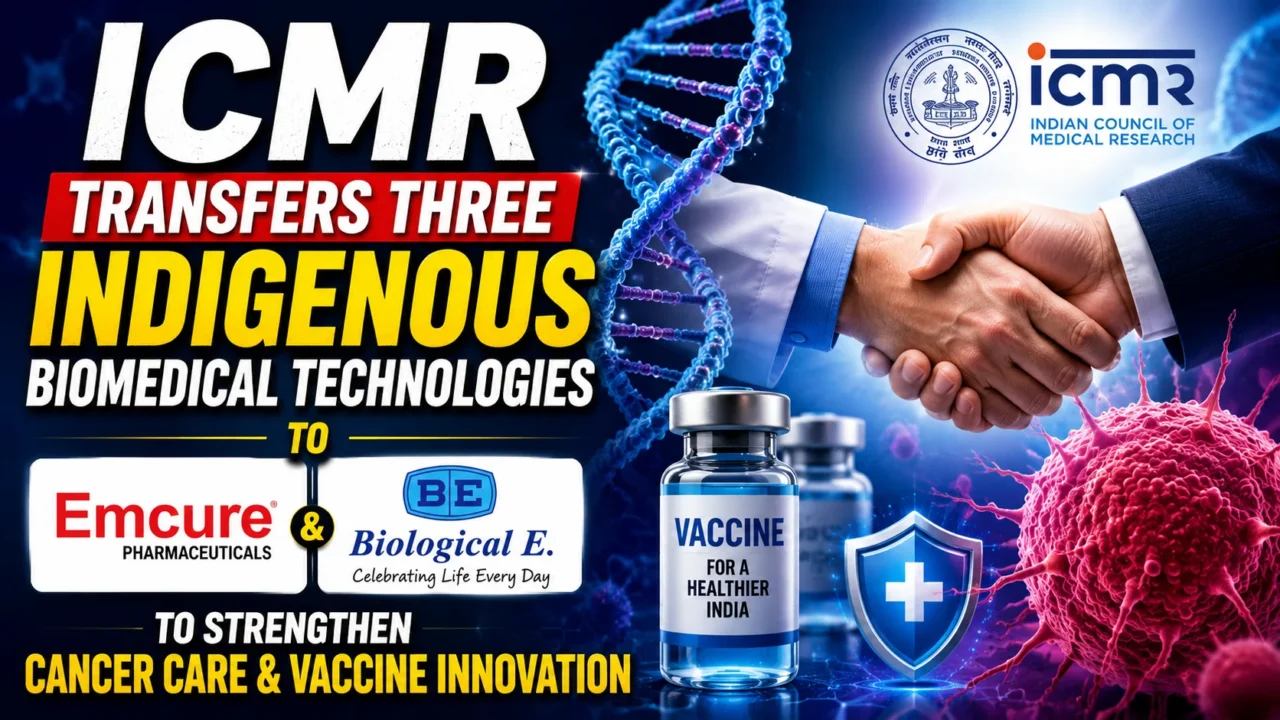
The ICMR transfers biomedical technologies initiative marks a major milestone for India’s biotechnology sector. Three indigenous biomedical technologies have been licensed to Emcure Pharmaceuticals and Biological E to accelerate the development of cancer therapies, vaccines, and infectious disease solutions while promoting indigenous innovation and strengthening India’s healthcare ecosystem.

Overview
The Indian Council of Medical Research (ICMR) has transferred three indigenously developed biomedical technologies to Emcure Pharmaceuticals and Biological E. This technology transfer aims to accelerate the development, manufacturing, and commercialization of innovative cancer therapies, vaccines, and infectious disease solutions.
The initiative highlights India’s growing focus on transforming scientific research into affordable healthcare products while strengthening the country’s biotechnology ecosystem.
Highlights
| Particular | Details |
|---|---|
| Organization | Indian Council of Medical Research (ICMR) |
| Industry Partners | Emcure Pharmaceuticals & Biological E |
| Announcement | Transfer of Three Indigenous Biomedical Technologies |
| Focus Areas | Cancer Prevention, Vaccines, Infectious Diseases |
| Objective | Commercialization of Indigenous Biomedical Innovations |
| Beneficiaries | Healthcare Sector, Biotechnology Industry, Patients |
ICMR Partners with Leading Indian Pharmaceutical Companies
ICMR has licensed three advanced biomedical technologies developed by its scientists to Emcure Pharmaceuticals and Biological E for further research, product development, regulatory approvals, manufacturing, and commercialization.
This collaboration reflects the increasing partnership between government-funded research organizations and India’s pharmaceutical industry to deliver innovative healthcare solutions.
Technologies Focus On
The transferred biomedical technologies are expected to support innovation in multiple healthcare areas.
Cancer Prevention and Treatment
The technologies may contribute to the development of advanced cancer diagnostics and therapeutic solutions aimed at improving patient outcomes.
Infectious Disease Control
The initiative supports India’s efforts to strengthen preparedness against infectious diseases through innovative biomedical research.
Vaccine Innovation
The transferred technologies are expected to assist in developing next-generation vaccines using indigenous scientific expertise.
Next-Generation Therapeutics
The collaboration promotes research into advanced therapeutic platforms capable of addressing emerging healthcare challenges.
ICMR’s Vision
According to ICMR:
“Together, these technologies have the potential to strengthen India’s efforts in cancer prevention and infectious disease control while advancing indigenous development of next-generation therapeutics and vaccines.”
This vision aligns with India’s goal of reducing dependence on imported biomedical technologies while promoting homegrown innovation.
Why This Technology Transfer Matters
The licensing of these indigenous technologies offers several long-term advantages.
| Benefit | Impact |
|---|---|
| Faster Commercialization | Converts laboratory research into healthcare products |
| Affordable Healthcare | Supports development of cost-effective therapies |
| Industry Collaboration | Strengthens partnerships between research institutes and pharmaceutical companies |
| Make in India | Promotes indigenous biomedical innovation |
| Biotechnology Growth | Enhances India’s global competitiveness |

Role of Emcure Pharmaceuticals and Biological E
Following the technology transfer, both companies will undertake:
- Product development
- Clinical and regulatory activities (where applicable)
- Manufacturing
- Commercialization
- Scaling innovative healthcare solutions
Their expertise is expected to accelerate the availability of advanced therapies and vaccines for patients.
Impact on India’s Biotechnology Sector
This collaboration demonstrates how publicly funded scientific research can successfully transition from laboratories to commercial healthcare products.
Expected outcomes include:
- Increased biotechnology innovation
- Growth in pharmaceutical research
- Higher investment in biomedical technologies
- Employment opportunities in research and manufacturing
- Improved global competitiveness of India’s life sciences sector
Why Should Pharmacy Students and Professionals Care?
Although this announcement is not a recruitment notification, it is highly relevant for:
- B.Pharm students
- D.Pharm students
- M.Pharm students
- Pharm.D graduates
- GPAT aspirants
- NIPER aspirants
- Pharmaceutical researchers
- Biotechnology professionals
Understanding such developments helps pharmacy professionals stay updated with emerging trends in drug discovery, vaccine development, translational research, and the Indian pharmaceutical industry.
Important Information
| Particular | Details |
|---|---|
| Recruitment | Not mentioned |
| Eligibility | Not applicable |
| Vacancy Details | Not mentioned |
| Age Limit | Not applicable |
| Salary | Not applicable |
| Selection Process | Not applicable |
| Application Process | Not applicable |
| Important Dates | Technology transfer announced on July 23, 2026 |
Conclusion
The ICMR transfers biomedical technologies initiative represents a significant step toward strengthening India’s biotechnology ecosystem. By partnering with Emcure Pharmaceuticals and Biological E, ICMR is accelerating the development of indigenous cancer therapies, vaccines, and infectious disease solutions.
This collaboration demonstrates how government-supported scientific research can be transformed into real-world healthcare innovations, reinforcing India’s vision of becoming a global leader in biotechnology while improving access to affordable, high-quality medical technologies.
Conclusion
The ICMR transfers biomedical technologies initiative represents a significant step toward strengthening India’s biotechnology ecosystem. By partnering with Emcure Pharmaceuticals and Biological E, ICMR is accelerating the development of indigenous cancer therapies, vaccines, and infectious disease solutions.
This collaboration demonstrates how government-supported scientific research can be transformed into real-world healthcare innovations, reinforcing India’s vision of becoming a global leader in biotechnology while improving access to affordable, high-quality medical technologies.
Frequently Asked Questions (FAQs)
1. What is the latest ICMR technology transfer about?
ICMR has transferred three indigenous biomedical technologies to Emcure Pharmaceuticals and Biological E to support cancer care, vaccine development, and infectious disease control.
2. Which companies received the technologies?
The technologies were transferred to Emcure Pharmaceuticals and Biological E.
3. What are the main focus areas?
The technologies focus on:
- Cancer prevention
- Cancer treatment
- Infectious disease control
- Vaccine development
- Next-generation therapeutics
4. Why is this technology transfer important?
It promotes indigenous innovation, strengthens India’s biotechnology ecosystem, and accelerates the commercialization of advanced healthcare technologies.
5. Does this announcement include any recruitment?
No. This is a technology transfer announcement and does not include recruitment or job vacancies.
6. How will patients benefit?
Patients may gain access to affordable and innovative cancer therapies, vaccines, and infectious disease solutions developed using indigenous technologies.
7. How does this support Make in India?
The initiative encourages domestic research, manufacturing, and commercialization of advanced biomedical technologies, supporting the Make in India and Atmanirbhar Bharat initiatives.
8. Why should pharmacy students follow such news?
Keeping track of biotechnology and pharmaceutical innovations helps students understand current industry trends, research opportunities, and future career prospects.
Recommended Products