

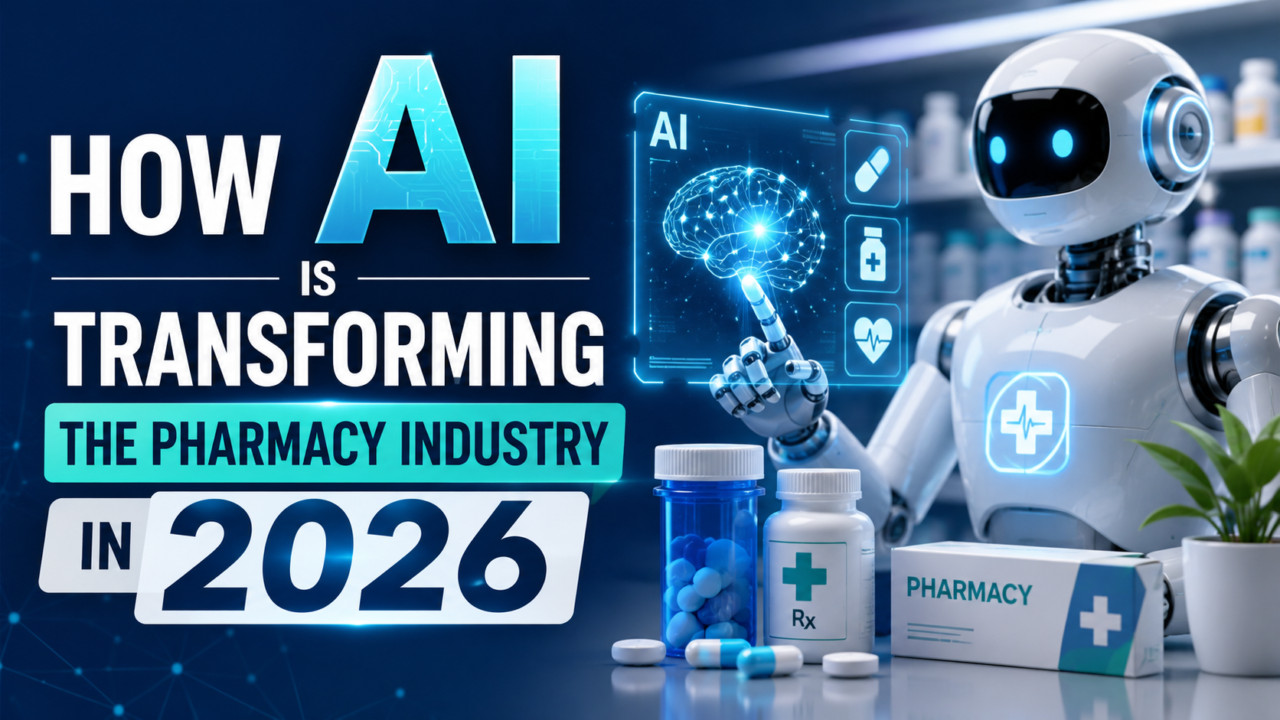

Artificial Intelligence (AI) is rapidly changing the healthcare and pharmaceutical sectors across the world. In 2026, AI is no longer just a futuristic concept — it has become an essential part of the pharmacy industry. From drug discovery to patient care, AI technologies are helping pharmacies, hospitals, and pharmaceutical companies work faster, smarter, and more efficiently.
The integration of AI into pharmacy is improving healthcare services, reducing human errors, and creating new career opportunities for pharmacy professionals.

What is AI in Pharmacy?
Artificial Intelligence refers to computer systems that can perform tasks requiring human intelligence such as:
- Learning
- Decision-making
- Data analysis
- Prediction
- Problem-solving
In pharmacy, AI is used to analyze medical data, improve drug development, automate operations, and support better patient treatment.
Major Areas Where AI is Transforming Pharmacy
1. AI in Drug Discovery
Developing a new medicine traditionally takes many years and costs billions of dollars. AI is helping pharmaceutical companies speed up this process by:
- Identifying drug targets faster
- Predicting drug effectiveness
- Analyzing large biological datasets
- Reducing research time
AI-powered systems can analyze thousands of chemical compounds within minutes, helping researchers discover promising medicines more quickly.
2. Personalized Medicine
AI is making personalized treatment possible by studying:
- Patient genetics
- Medical history
- Lifestyle data
- Disease patterns
This allows doctors and pharmacists to provide customized medicines and treatment plans for individual patients.
Personalized medicine improves treatment success and reduces side effects.
3. Smart Hospital Pharmacies
Modern hospital pharmacies are using AI for:
- Automated dispensing systems
- Inventory management
- Prescription verification
- Reducing medication errors
AI systems can detect possible drug interactions and alert healthcare professionals before medicines are dispensed to patients.
4. AI-Powered Chatbots and Virtual Assistants
Many pharmacies now use AI chatbots to:
- Answer patient questions
- Provide medicine information
- Send medication reminders
- Assist in appointment booking
These virtual assistants improve patient engagement and reduce workload on pharmacy staff.
5. Better Supply Chain Management
AI is improving pharmaceutical supply chains by:
- Predicting medicine demand
- Preventing stock shortages
- Reducing medicine wastage
- Improving logistics
This helps pharmacies maintain proper inventory and ensures timely medicine availability.
6. AI in Clinical Trials
Clinical trials are becoming faster and more efficient with AI. The technology helps researchers:
- Select suitable participants
- Analyze patient data
- Monitor trial safety
- Predict outcomes
AI reduces the time required for clinical research and improves accuracy.
7. Robotic Process Automation in Pharmacies
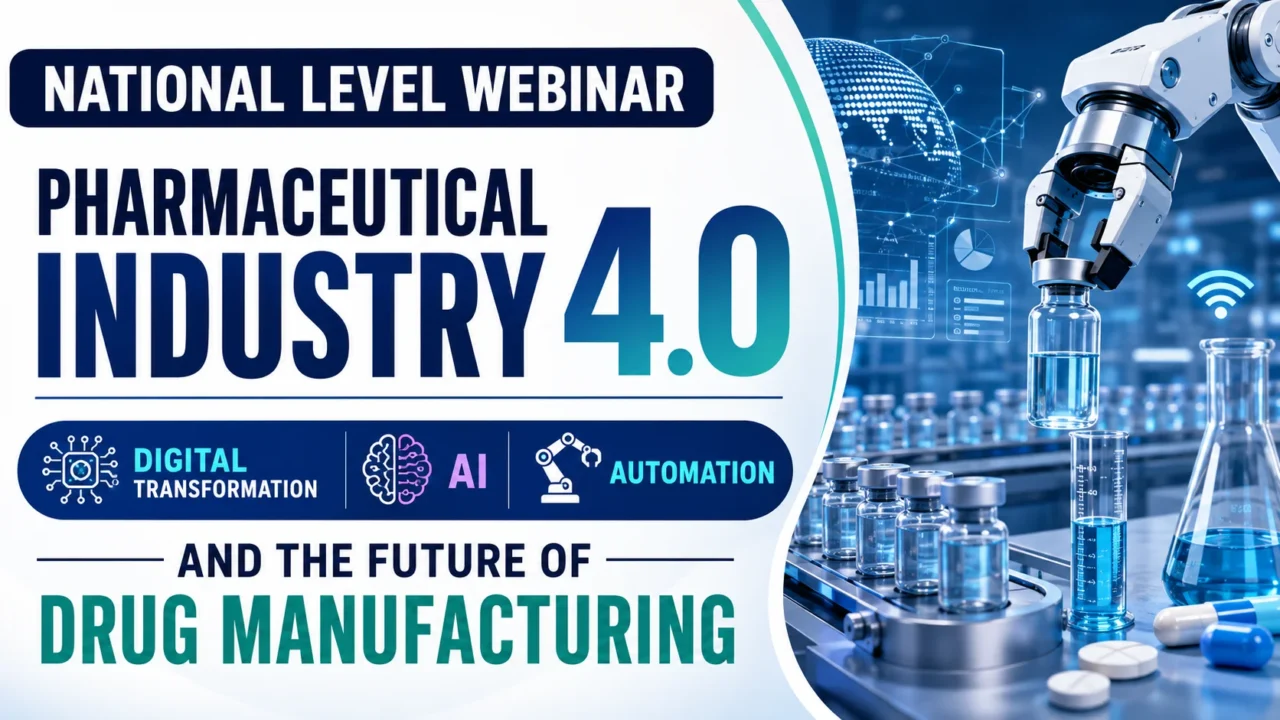
Many large pharmacies are introducing robotic systems powered by AI for:
- Medicine packaging
- Labeling
- Dispensing
- Sorting medicines
Automation reduces human errors and increases operational efficiency.
Benefits of AI in the Pharmacy Industry
Faster Drug Development
AI speeds up research and innovation.
Reduced Human Errors
AI systems improve accuracy in dispensing and prescription analysis.
Improved Patient Care
Patients receive faster and more personalized treatment.
Cost Reduction
Automation lowers operational costs for healthcare organizations.
Better Decision-Making
AI provides data-driven insights for healthcare professionals.
Challenges of AI in Pharmacy
Despite its advantages, AI also brings certain challenges:
- Data privacy concerns
- High implementation costs
- Need for skilled professionals
- Dependence on technology
- Ethical and regulatory issues
Pharmacy professionals will need proper training to adapt to AI-based healthcare systems.
Career Opportunities in AI and Pharmacy
The rise of AI is creating new career paths such as:
- Clinical data analyst
- AI healthcare consultant
- Pharmaceutical informatics specialist
- Drug safety analyst
- Digital healthcare researcher
Pharmacy students who learn AI-related skills may have better career opportunities in the future.
Future of AI in Pharmacy
Experts believe AI will continue to revolutionize the pharmaceutical industry in coming years. Future developments may include:
- AI-designed medicines
- Fully automated pharmacies
- Advanced disease prediction systems
- AI-assisted surgeries and diagnostics
The combination of pharmacy and AI is expected to make healthcare faster, safer, and more accessible.
Conclusion
Artificial Intelligence is transforming the pharmacy industry in 2026 by improving drug discovery, patient care, hospital pharmacy operations, and pharmaceutical research. While challenges remain, AI has the potential to reshape healthcare in a positive way.
For pharmacy students and professionals, understanding AI is becoming increasingly important. Those who adapt to these technological advancements will play a major role in the future of healthcare and pharmaceutical innovation.
Recommended Products