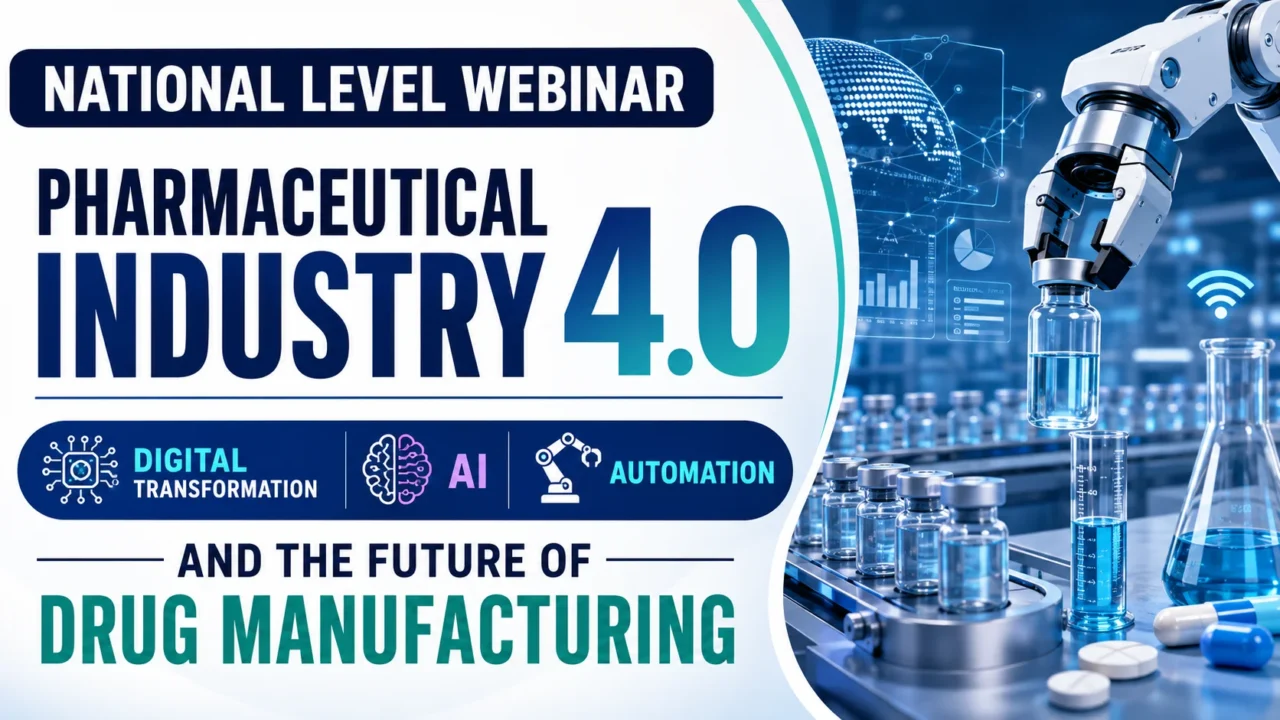


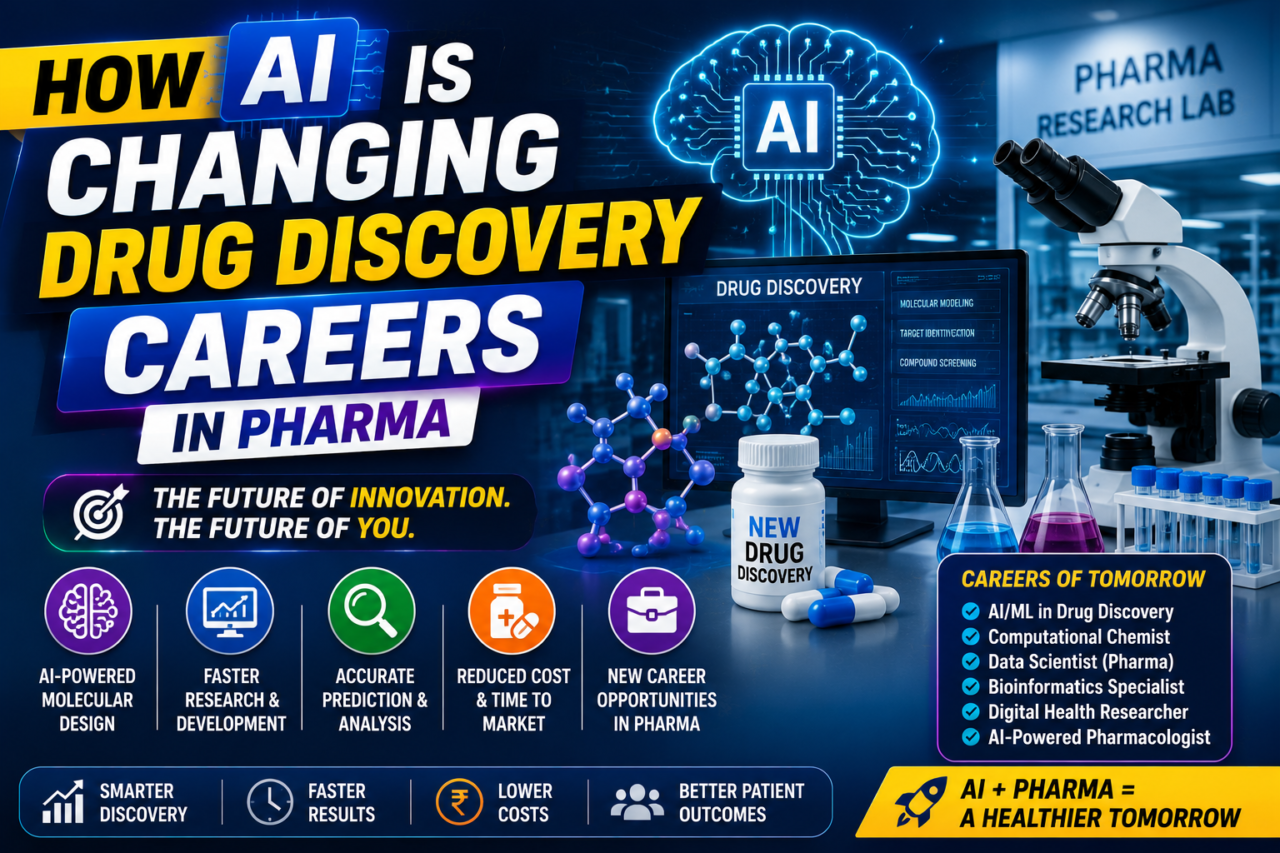

Artificial Intelligence (AI) is transforming the pharmaceutical industry faster than ever before. From discovering new medicines to predicting drug effectiveness, AI is revolutionizing the entire drug development process. Because of this rapid transformation, new career opportunities are emerging for pharmacy students, life science graduates, researchers, and healthcare professionals.
Today, pharmaceutical companies are investing heavily in AI-driven drug discovery to reduce research costs, improve accuracy, and speed up medicine development. As a result, professionals with AI and pharmaceutical knowledge are becoming highly valuable in the pharma industry.
In this blog, we will explore how AI is changing drug discovery careers in pharma, new job opportunities, required skills, salary trends, and future scope.
What is AI in Drug Discovery?
AI in drug discovery means using artificial intelligence technologies such as:
- Machine Learning (ML)
- Deep Learning
- Data Analytics
- Predictive Modeling
- Automation
to help researchers discover and develop medicines faster and more efficiently.
AI can analyze huge amounts of biological and chemical data in much less time compared to traditional methods.
How Traditional Drug Discovery Works
Traditional drug discovery is:
- Expensive
- Time-consuming
- Complex
Developing a single drug can take:
- 10–15 years
- Billions of dollars
Researchers must test thousands of compounds before finding a successful medicine candidate.
How AI is Transforming Drug Discovery
AI is helping pharmaceutical companies:
- Identify drug targets faster
- Predict drug behavior
- Reduce research failures
- Analyze clinical data quickly
- Develop personalized medicines
This technology significantly reduces drug development time and research costs.
Major Areas Where AI is Used in Pharma
1. Drug Target Identification
AI helps scientists identify disease-related targets quickly by analyzing:
- Genetic data
- Protein structures
- Biological pathways
This speeds up early-stage research.
2. Molecule Design and Screening
AI can predict which chemical compounds may become effective medicines.
Benefits include:
- Faster compound screening
- Better success rates
- Reduced laboratory workload
3. Clinical Trial Optimization
AI helps improve clinical trials by:
- Selecting suitable patients
- Predicting outcomes
- Monitoring safety data
This increases trial efficiency and reduces delays.

4. Personalized Medicine
AI helps create customized treatments based on:
- Patient genetics
- Disease history
- Lifestyle data
This is becoming a major future trend in healthcare.
5. Predicting Drug Side Effects
AI models can predict:
- Toxicity
- Drug interactions
- Side effects
before human trials begin.
This improves patient safety and reduces risks.
How AI is Creating New Career Opportunities in Pharma
AI is not replacing pharma professionals completely. Instead, it is creating new hybrid career roles combining:
- Pharmaceutical knowledge
- Data science
- Artificial intelligence
- Biotechnology
Top AI Drug Discovery Careers in Pharma
1. AI Drug Discovery Scientist
Responsibilities
- AI-based drug research
- Data analysis
- Molecule prediction
- Research collaboration
Skills Needed
- Pharmacology
- Machine learning basics
- Bioinformatics
2. Bioinformatics Specialist
These professionals analyze biological and genetic data using computational tools.
Work Areas
- Genomics
- Protein analysis
- Data interpretation
3. Clinical Data Analyst
Clinical data analysts use AI tools to study:
- Clinical trial data
- Patient responses
- Drug performance
4. Computational Chemist
They use computer-based simulations and AI models for:
- Drug design
- Chemical structure analysis
- Compound prediction
5. Pharmacovigilance AI Specialist
AI is improving drug safety monitoring.
Professionals in this role analyze:
- Adverse drug reactions
- Safety reports
- Risk management data
6. AI Healthcare Research Associate
These professionals work on:
- AI healthcare projects
- Research databases
- Medical data interpretation
Top Companies Using AI in Drug Discovery
Many global pharma companies are already using AI technologies.
Leading Companies
- Pfizer
- Novartis
- Roche
- AstraZeneca
- Bristol Myers Squibb
- Insilico Medicine
- BenevolentAI
Indian pharma companies are also gradually adopting AI technologies.
Skills Required for AI Drug Discovery Careers
Students interested in AI pharma careers should develop:
Pharmaceutical Knowledge
- Pharmacology
- Medicinal chemistry
- Drug development basics
Technical Skills
- Artificial Intelligence basics
- Machine Learning fundamentals
- Data analysis
- Bioinformatics
Computer Skills
- Python programming
- Data visualization
- Excel and analytics tools
Soft Skills
- Communication
- Research mindset
- Problem-solving ability
Best Courses for AI Pharma Careers
Students can improve skills through:
- AI certification courses
- Bioinformatics training
- Data science programs
- Machine learning basics
- Clinical research certifications
Online learning platforms are also helping pharmacy students gain AI knowledge.
Salary in AI Drug Discovery Careers
AI-related pharma jobs often offer higher salaries because of specialized skills.
| Role | Average Salary |
|---|---|
| AI Research Associate | ₹5 – ₹10 LPA |
| Bioinformatics Specialist | ₹6 – ₹12 LPA |
| Computational Scientist | ₹8 – ₹15 LPA |
| Experienced AI Pharma Professional | ₹20+ LPA |
International opportunities may offer even higher salaries.
Future Scope of AI in Pharma
The future of AI in drug discovery is extremely promising because:
- Pharma companies want faster drug development
- Research costs are increasing
- Personalized medicine demand is growing
- Biotechnology and AI integration is expanding
AI-based pharmaceutical careers are expected to grow rapidly in the coming years.
Can Pharmacy Students Enter AI Careers?
Yes. Pharmacy students can enter AI-related careers by learning:
- Data analysis
- AI basics
- Bioinformatics
- Computational biology
A combination of pharmacy and AI skills can create excellent career opportunities.
Challenges of AI in Pharma
Despite its advantages, AI also faces challenges:
- High implementation cost
- Data privacy concerns
- Need for skilled professionals
- Dependence on quality data
However, the industry is continuously improving these areas.
Conclusion
Artificial Intelligence is transforming the pharmaceutical industry and changing how drugs are discovered, tested, and developed. AI is creating exciting new career opportunities for pharmacy students, researchers, and healthcare professionals who are willing to learn modern technologies.
Professionals with combined knowledge of pharmacy and AI will have strong demand in the future pharmaceutical industry. Students who start learning AI-related skills today can build successful and high-paying careers in AI-driven drug discovery and healthcare innovation.
Recommended Products