


Cancer treatment has traditionally relied on surgery, chemotherapy, and radiation therapy. However, medical technology is evolving rapidly, and a groundbreaking FDA-approved treatment called Histotripsy is offering new hope for patients with liver tumors.
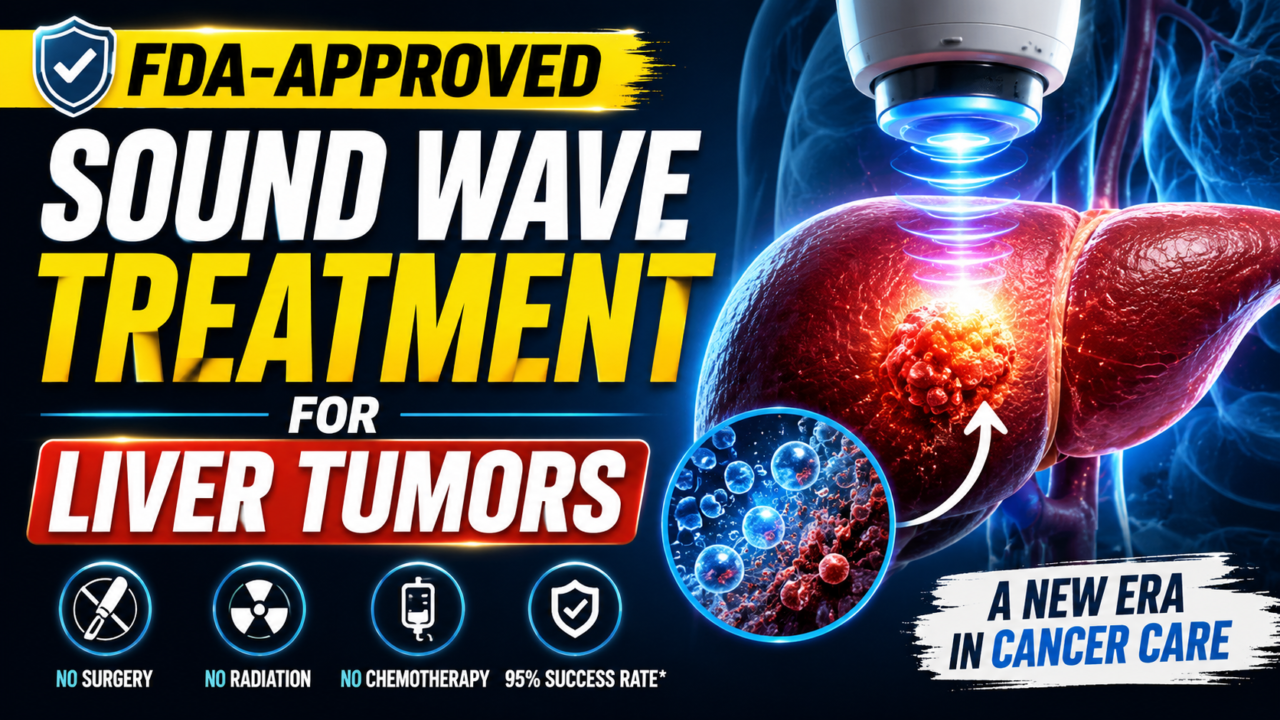
This innovative therapy uses focused sound waves to destroy liver tumors without surgery, radiation, or chemotherapy.

What Is Histotripsy?
Histotripsy is a non-invasive treatment that uses highly focused ultrasound waves to target and destroy tumor tissue. Unlike traditional treatments, Histotripsy does not involve incisions, needles, radiation exposure, or cancer-fighting drugs.
The technology works by generating microscopic bubbles inside the tumor. These bubbles rapidly expand and collapse, mechanically breaking apart cancer cells while minimizing damage to surrounding healthy tissue.
How Does Histotripsy Work?
The procedure involves:
- Identifying the tumor using imaging guidance.
- Directing focused ultrasound waves toward the tumor.
- Creating microbubbles within the cancerous tissue.
- Destroying tumor cells through mechanical disruption.
- Allowing the body’s immune system to naturally remove the destroyed tissue.
This process is often referred to as “non-thermal ablation” because it destroys tumors without using heat.
FDA Approval and Clinical Trial Results
The FDA approved the Histotripsy System for treating liver tumors after promising clinical trial results.
Key Findings from the HOPE4LIVER Trial
- Technical success rate: 95%
- Major complication rate: 7%
- Local tumor control after 12 months: 90%
- No surgical incisions required
- No radiation exposure
- No chemotherapy drugs needed
These results suggest that Histotripsy may provide an effective treatment option for selected patients with liver cancer and metastatic liver tumors.
Benefits of Histotripsy
1. Non-Invasive Treatment
Patients can receive treatment without surgery, reducing recovery time and surgical risks.
2. No Radiation
Unlike radiation therapy, Histotripsy does not expose patients to harmful radiation.
3. Precision Targeting
The focused ultrasound waves can target tumors while preserving nearby healthy tissue.
4. Faster Recovery
Many patients may experience shorter recovery periods compared to traditional surgical procedures.
5. Potential Immune System Activation
Researchers are studying whether Histotripsy may stimulate the immune system to help fight remaining cancer cells.
Who Can Benefit?
Histotripsy is primarily being used for:
- Primary liver cancer
- Metastatic liver tumors
- Patients who are not suitable candidates for surgery
- Patients seeking minimally invasive treatment options
However, eligibility depends on factors such as tumor size, location, and overall patient health.
Limitations and Considerations
While Histotripsy is a major advancement, it is not suitable for every patient. Doctors carefully evaluate each case before recommending treatment. Factors such as tumor characteristics and medical history play an important role in determining eligibility.
Future of Sound Wave Cancer Treatment
Researchers are currently exploring Histotripsy for additional cancers, including tumors in the kidney, pancreas, and other organs. Ongoing studies aim to improve treatment outcomes and expand its applications.
Conclusion
The FDA-approved Histotripsy System represents a significant breakthrough in cancer treatment. By using focused sound waves to destroy liver tumors without surgery, radiation, or chemotherapy, this technology offers a promising alternative for many patients.
As research continues, Histotripsy may become an important part of the future of non-invasive cancer care, providing safer and more effective treatment options for patients worldwide.
Recommended Products