

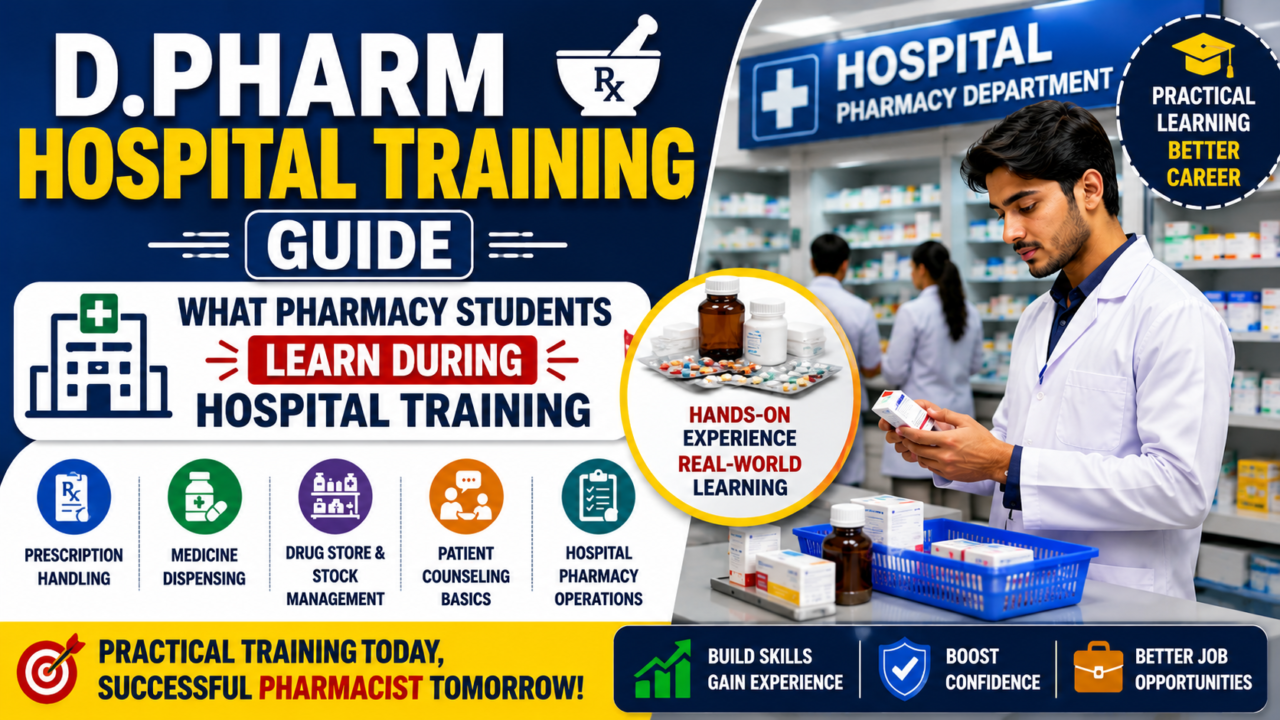

Hospital training is one of the most important parts of the Diploma in Pharmacy (D.Pharm) curriculum. It provides students with practical exposure to healthcare settings and helps them understand how medicines are managed, dispensed, and monitored in hospitals. Through hospital training, pharmacy students gain hands-on experience that bridges the gap between classroom learning and real-world pharmacy practice.
In this guide, we will explore what D.Pharm students learn during hospital training, the duties they perform, the skills they develop, and the career benefits of this practical experience.
What Is D.Pharm Hospital Training?
Hospital training is a practical learning program where D.Pharm students work under the supervision of pharmacists and healthcare professionals in a hospital setting.
Objectives of Hospital Training
| Objective | Purpose |
|---|---|
| Practical Exposure | Learn real-world pharmacy operations |
| Patient Care Understanding | Observe medication use in healthcare settings |
| Medicine Management | Understand storage and dispensing procedures |
| Professional Development | Build communication and teamwork skills |
| Career Preparation | Prepare for pharmacist roles after registration |
Why Is Hospital Training Important for D.Pharm Students?
Hospital training allows students to apply theoretical knowledge gained during their diploma course.
| Benefit | Description |
|---|---|
| Practical Knowledge | Understand pharmacy operations firsthand |
| Skill Development | Improve dispensing and communication skills |
| Confidence Building | Gain experience working with healthcare professionals |
| Career Readiness | Prepare for hospital and retail pharmacy jobs |
| Professional Ethics | Learn responsibilities of pharmacists |
Areas Where D.Pharm Students Receive Training
Students are exposed to various departments within the hospital pharmacy system.
| Department | Learning Focus |
|---|---|
| Outpatient Pharmacy (OPD) | Dispensing medicines to patients |
| Inpatient Pharmacy (IPD) | Supplying medicines to admitted patients |
| Drug Store | Medicine storage and inventory management |
| Hospital Pharmacy | Prescription handling and dispensing |
| Purchase Department | Procurement of medicines and supplies |
| Clinical Areas | Understanding medication use in patient care |
What Pharmacy Students Learn During Hospital Training
1. Prescription Reading and Interpretation
One of the most important skills learned during hospital training is understanding prescriptions.
Students learn:
- Prescription formats
- Drug names and strengths
- Dosage instructions
- Frequency and duration of medication use
- Common medical abbreviations
| Skill | Importance |
|---|---|
| Prescription Interpretation | Prevent medication errors |
| Drug Identification | Ensure correct dispensing |
| Dosage Understanding | Improve patient safety |
2. Medicine Dispensing Procedures
Students observe and assist pharmacists in dispensing medicines.
Activities Include:
- Selecting medicines
- Checking expiry dates
- Labeling medicines
- Packaging medications
- Verifying prescriptions
| Dispensing Task | Learning Outcome |
|---|---|
| Medicine Selection | Accuracy in dispensing |
| Label Preparation | Proper medication instructions |
| Final Verification | Error prevention |
3. Drug Storage and Inventory Management
Proper storage is critical for maintaining medicine quality.
Students learn:
- Storage temperature requirements
- Cold chain management
- Stock rotation methods
- Inventory control
- Expiry date monitoring
| Storage Activity | Purpose |
|---|---|
| Stock Arrangement | Easy identification |
| Expiry Monitoring | Reduce wastage |
| Inventory Checking | Maintain medicine availability |
4. Hospital Pharmacy Operations
Students gain knowledge about daily pharmacy workflows.
| Area | Learning Topics |
|---|---|
| Medicine Procurement | Ordering and purchasing medicines |
| Record Keeping | Maintaining pharmacy registers |
| Billing Systems | Understanding medicine billing |
| Drug Distribution | Supply management within the hospital |
5. Patient Counseling Basics
Although detailed counseling is usually handled by pharmacists, students observe patient interactions.
Students learn:
- How medicines should be taken
- Importance of adherence
- Common medication precautions
- Communication with patients
| Counseling Topic | Importance |
|---|---|
| Dosage Instructions | Safe medication use |
| Side Effects Awareness | Improved patient safety |
| Storage Advice | Drug effectiveness |
6. Understanding Hospital Pharmacy Documentation
Documentation is an essential part of pharmacy practice.
Students become familiar with:
| Document Type | Purpose |
|---|---|
| Prescription Records | Medication tracking |
| Stock Registers | Inventory management |
| Purchase Records | Procurement documentation |
| Drug Issue Registers | Distribution tracking |
Daily Activities of a D.Pharm Trainee
A typical day during hospital training may include:
| Time | Activity |
|---|---|
| Morning | Pharmacy rounds and stock checking |
| Mid-Morning | Prescription processing |
| Afternoon | Medicine dispensing |
| Evening | Record maintenance and inventory review |

Skills Developed During Hospital Training
Hospital training helps students build both technical and professional skills.
Technical Skills
| Skill | Benefit |
|---|---|
| Prescription Reading | Accurate dispensing |
| Inventory Management | Efficient stock control |
| Drug Knowledge | Better pharmaceutical understanding |
| Documentation | Professional record keeping |
Soft Skills
| Skill | Benefit |
|---|---|
| Communication | Better patient interaction |
| Teamwork | Collaboration with healthcare staff |
| Time Management | Efficient workflow handling |
| Professional Ethics | Responsible pharmacy practice |
Challenges Faced by D.Pharm Students During Training
Students may initially face some difficulties.
| Challenge | Solution |
|---|---|
| Understanding Prescriptions | Practice regularly |
| Identifying Medicines | Improve drug knowledge |
| Communication Anxiety | Gain confidence through observation |
| Fast Hospital Workflow | Learn through experience |
Benefits of Hospital Training for Future Careers
Hospital training provides valuable experience for future employment.
| Career Benefit | Description |
|---|---|
| Better Job Opportunities | Practical experience attracts employers |
| Professional Confidence | Preparedness for pharmacist roles |
| Improved Skills | Strong pharmacy foundation |
| Career Growth | Useful for hospital and retail pharmacy jobs |
Tips for D.Pharm Students During Hospital Training
Follow These Best Practices
✅ Be punctual and professional
✅ Maintain proper hygiene and dress code
✅ Ask questions and learn actively
✅ Observe pharmacists carefully
✅ Take notes during training
✅ Improve communication skills
✅ Learn medicine names and classifications
✅ Follow hospital rules and protocols
Frequently Asked Questions (FAQs)
Is hospital training compulsory for D.Pharm students?
Yes, practical training is an important part of pharmacy education and professional development.
Do students handle medicines during training?
Students may assist under supervision but major responsibilities remain with licensed pharmacists.
Can hospital training help in getting jobs?
Yes, practical experience significantly improves employability.
What is the main objective of hospital training?
To provide practical exposure to pharmacy operations and patient care systems.
Is hospital training useful for becoming a registered pharmacist?
Yes, it helps students develop the practical skills needed for professional pharmacy practice.
Conclusion
Hospital training is a valuable learning experience for D.Pharm students. It provides practical exposure to prescription handling, medicine dispensing, inventory management, patient counseling, and hospital pharmacy operations. This training helps students develop essential technical and professional skills, making them more confident and career-ready pharmacists.
By actively participating in hospital training and learning from experienced healthcare professionals, D.Pharm students can build a strong foundation for a successful career in pharmacy and healthcare services.
Recommended Products