



Introduction
One of the most common questions asked by pharmacy students is:
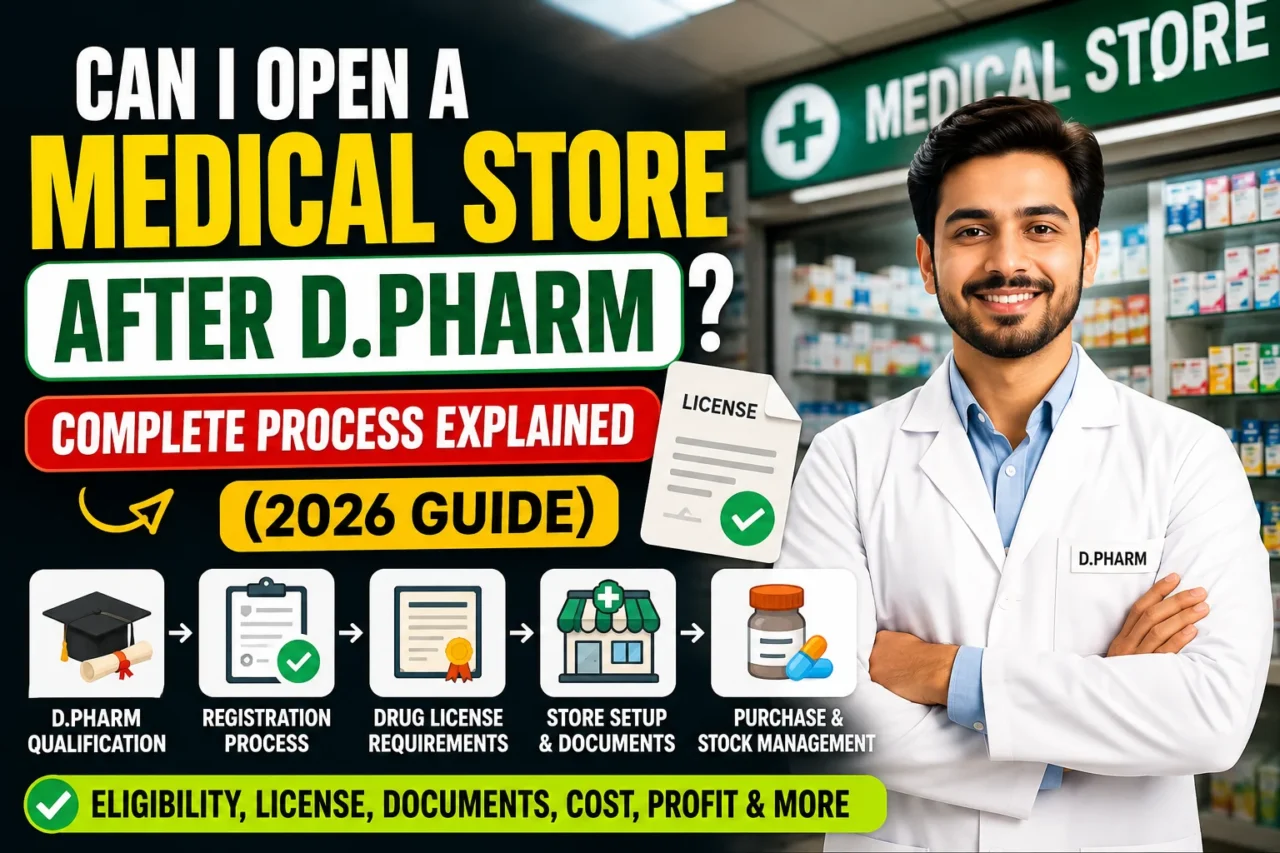
“Can I open a medical store after completing D.Pharm?”
The answer is Yes. A D.Pharm (Diploma in Pharmacy) holder can play a key role in operating a pharmacy, provided all legal and licensing requirements are met under the applicable drug and pharmacy regulations.
In fact, many D.Pharm graduates choose to start their own pharmacy business instead of pursuing a traditional job. With the increasing demand for medicines, healthcare products, and pharmacy services, opening a medical store can be a rewarding career option.
In this guide, we’ll explain the complete process, eligibility, licenses required, investment, profit potential, and important legal requirements for opening a medical store after D.Pharm.
Can a D.Pharm Student Open a Medical Store?
Yes, after completing D.Pharm and obtaining registration with the State Pharmacy Council, a qualified pharmacist can be associated with a licensed retail pharmacy.
A registered pharmacist is required for dispensing prescription medicines and ensuring compliance with pharmacy regulations.
Basic Eligibility to Open a Medical Store
Requirements
| Requirement | Details |
|---|---|
| Educational Qualification | D.Pharm or B.Pharm |
| Pharmacist Registration | State Pharmacy Council Registration |
| Age | 18 Years or Above |
| Pharmacy License | Required |
| Shop Space | As per local drug licensing norms |
| Drug License Approval | Mandatory |
Step 1: Complete Your D.Pharm Course
The first step is completing a recognized Diploma in Pharmacy course.
D.Pharm Course Details
| Particular | Details |
|---|---|
| Course | Diploma in Pharmacy |
| Duration | 2 Years |
| Eligibility | 10+2 Science |
| Regulatory Body | Pharmacy Council of India (PCI) |
After successful completion, you become eligible to apply for pharmacist registration.
Step 2: Obtain Pharmacist Registration
After completing D.Pharm, apply for registration with your State Pharmacy Council.
Documents Required
- D.Pharm Mark Sheets
- Diploma Certificate
- Passport-size Photographs
- Aadhaar Card
- Identity Proof
- Application Form
Once approved, you will receive a Registered Pharmacist Certificate.
This registration is essential for pharmacy practice.

Step 3: Arrange a Suitable Shop Location
Choosing the right location is critical for business success.
Ideal Locations
✅ Near Hospitals
✅ Residential Areas
✅ Clinics
✅ Diagnostic Centers
✅ Market Areas
✅ Highway Locations
A pharmacy near healthcare facilities usually attracts more customers.
Step 4: Ensure Required Shop Space
The minimum area requirements may vary depending on the type of pharmacy and local regulations.
Typical Space Requirements
| Type of Store | Minimum Area |
|---|---|
| Retail Pharmacy | As per local licensing requirements |
| Wholesale Pharmacy | As per local licensing requirements |
Always verify current requirements with the concerned licensing authority.
Step 5: Apply for a Drug License
A drug license is mandatory for selling medicines.
Types of Drug Licenses
| License Type | Purpose |
|---|---|
| Retail Drug License | Selling medicines directly to customers |
| Wholesale Drug License | Bulk medicine distribution |
Applications are generally processed through the State Drug Control Department.
Documents Required
- Pharmacist Registration Certificate
- Shop Ownership/Rent Agreement
- Identity Proof
- Shop Layout Plan
- Refrigerator Details (where required)
- Affidavit and Application Forms
Step 6: Obtain GST Registration
GST registration may be required depending on your business structure and applicable tax regulations.
Benefits include:
- Legal business operation
- Tax compliance
- Wholesale purchasing
- Business expansion opportunities
Step 7: Purchase Medicines from Authorized Distributors
Medicines should always be procured from:
- Licensed Pharmaceutical Companies
- Authorized Stockists
- Approved Wholesalers
This ensures product authenticity and regulatory compliance.
Estimated Investment Required
The investment depends on location, shop size, and inventory.
Approximate Initial Investment
| Expense | Estimated Cost |
|---|---|
| Shop Rent/Deposit | ₹50,000 – ₹3,00,000 |
| Drug License & Documentation | Varies |
| Furniture & Fixtures | ₹50,000 – ₹2,00,000 |
| Refrigerator & Equipment | ₹20,000 – ₹1,00,000 |
| Initial Medicine Stock | ₹2 Lakh – ₹10 Lakh+ |
| Computer & Billing System | ₹20,000 – ₹50,000 |
Profit Margin in Medical Store Business
Pharmacy businesses earn through margins on medicines and healthcare products.
Average Margins
| Product Category | Approximate Margin |
|---|---|
| Generic Medicines | Higher |
| Branded Medicines | Moderate |
| OTC Products | Moderate to High |
| Health Supplements | High |
| Medical Devices | Varies |
Actual profitability depends on location, customer base, competition, and inventory management.
Advantages of Opening a Medical Store
Benefits
✔ Self-Employment
✔ Growing Healthcare Industry
✔ Daily Customer Demand
✔ Stable Business Model
✔ Opportunity for Expansion
✔ Long-Term Income Potential
✔ Community Service Through Healthcare
Challenges You Should Know
Like any business, pharmacy operations also have challenges.
Common Challenges
- Competition from Nearby Pharmacies
- Inventory Management
- Expiry Management
- Regulatory Compliance
- Maintaining Prescription Records
- Working Capital Requirements
Proper planning can help overcome these challenges.
Can I Open an Online Medical Store After D.Pharm?
Online pharmacy operations involve additional legal and regulatory requirements.
Before starting an online medicine business, consult the relevant licensing authorities and comply with applicable laws governing e-pharmacy operations.
Career Alternatives Besides Opening a Medical Store
If you do not wish to start a pharmacy business immediately, D.Pharm also offers career opportunities such as:
| Career Option |
|---|
| Hospital Pharmacist |
| Retail Pharmacist |
| Medical Representative |
| Drug Store Manager |
| Government Pharmacist |
| Pharmaceutical Sales Executive |
| Quality Control Assistant |
Frequently Asked Questions (FAQs)
Is D.Pharm enough to start a pharmacy-related business?
D.Pharm provides the educational qualification required to become a registered pharmacist, but operating a pharmacy also requires compliance with licensing and regulatory requirements.
Is pharmacist registration compulsory?
A registered pharmacist is generally required for dispensing prescription medicines in a licensed pharmacy.
How much investment is required?
Investment varies widely depending on location, inventory, infrastructure, and business model.
Is a medical store profitable?
A well-managed pharmacy in a suitable location can become a sustainable and profitable business.
Conclusion
Yes, a D.Pharm graduate can build a career in the pharmacy business by obtaining pharmacist registration and meeting all licensing requirements. With proper planning, compliance, and customer service, a pharmacy can become a successful long-term venture.
Before starting, always verify the latest rules and requirements with your State Pharmacy Council and State Drug Control Department, as regulations may vary by state and may change over time.
For pharmacy students who dream of becoming entrepreneurs, opening a medical store can be an excellent opportunity to combine healthcare service with business growth.
Recommended Products