


Introduction
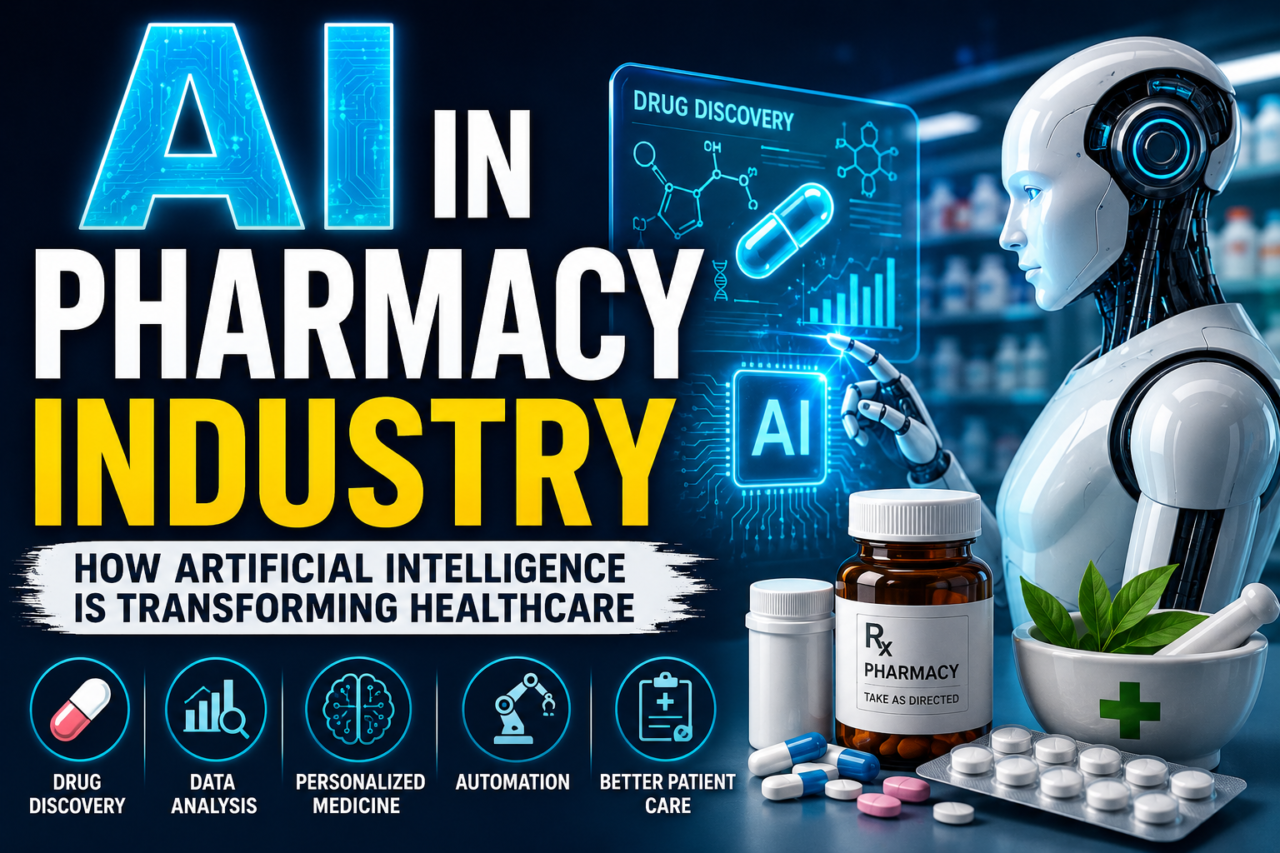
Artificial Intelligence (AI) is rapidly changing the healthcare and pharmaceutical industries. From drug discovery to patient care, AI is helping pharmaceutical companies improve efficiency, reduce costs, and develop medicines faster than ever before.
Today, AI is becoming one of the most important technologies in modern pharmacy. Pharmacy students and healthcare professionals must understand how AI works and how it will shape the future of medicine.
In this blog, we will explore the role of AI in the pharmacy industry, its applications, benefits, challenges, and future opportunities.
What is Artificial Intelligence (AI)?
Artificial Intelligence refers to computer systems that can perform tasks that normally require human intelligence.
AI systems can:
- Analyze data
- Learn patterns
- Make predictions
- Solve problems
- Support decision-making
In pharmacy, AI helps researchers, pharmacists, hospitals, and pharmaceutical companies improve healthcare services and drug development.
Role of AI in the Pharmacy Industry
AI is used in many areas of the pharmaceutical sector.
Major Applications of AI:
- Drug discovery
- Disease prediction
- Clinical trials
- Personalized medicine
- Hospital pharmacy management
- Medical data analysis
- Inventory management
- Patient counseling
AI is helping the healthcare system become faster, safer, and more accurate.
AI in Drug Discovery
Drug discovery is a long and expensive process. Traditionally, developing a new medicine can take many years.
AI helps by:
- Identifying potential drug molecules
- Predicting drug effectiveness
- Reducing research time
- Analyzing biological data quickly
Benefits
- Faster drug development
- Reduced cost
- Better success rates
- Improved accuracy
Many pharmaceutical companies now use AI-based software for research and innovation.
AI in Clinical Trials
Clinical trials are necessary to test the safety and effectiveness of medicines.
AI helps in:
- Selecting suitable patients
- Monitoring trial data
- Predicting side effects
- Managing clinical records
This improves the efficiency of clinical studies and reduces errors.
AI in Personalized Medicine
Every patient responds differently to medicines. AI helps doctors and pharmacists provide personalized treatment based on:
- Genetics
- Medical history
- Lifestyle
- Disease condition
This approach improves treatment outcomes and reduces adverse drug reactions.
AI in Hospital Pharmacy
AI systems are improving hospital pharmacy services.
Uses in Hospital Pharmacy
- Automated medicine dispensing
- Prescription verification
- Drug interaction checking
- Inventory management
- Patient medication tracking
AI helps pharmacists work more efficiently and safely.
AI in Disease Prediction
AI can analyze large amounts of medical data to identify disease patterns.
It helps in:
- Early diagnosis
- Predicting disease risks
- Monitoring patient conditions
- Supporting preventive healthcare
AI-based healthcare systems are especially useful in chronic diseases like:
- Diabetes
- Cancer
- Heart disease
AI-Powered Robots in Pharmacy
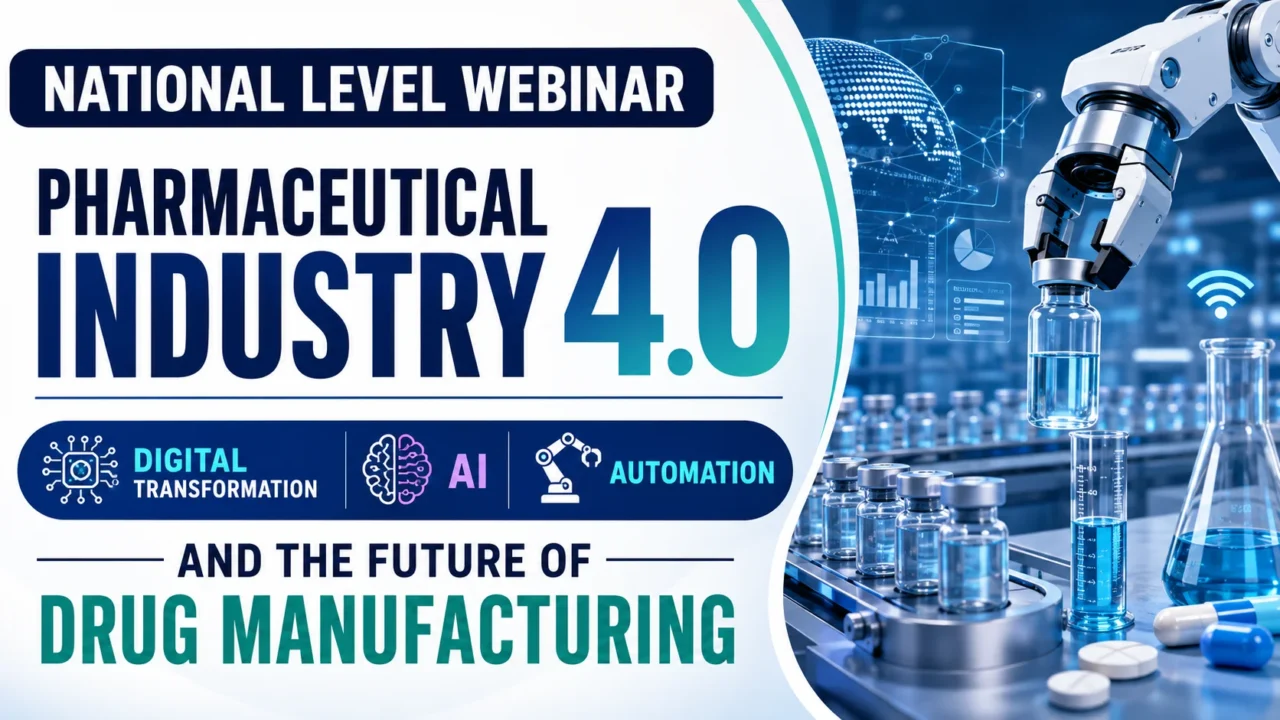
Some pharmacies use robotic systems for:
- Dispensing medicines
- Packaging drugs
- Labeling products
- Managing stock
These robotic systems reduce human errors and save time.
Benefits of AI in Pharmacy Industry
1. Faster Drug Development
AI speeds up research and innovation.
2. Improved Accuracy
AI reduces medication errors and improves safety.
3. Cost Reduction
Automation lowers operational costs.
4. Better Patient Care
AI supports personalized treatment and monitoring.
5. Efficient Data Management
Large medical data can be analyzed quickly.
6. Improved Decision Making
AI provides data-driven insights for healthcare professionals.
Challenges of AI in Pharmacy
Despite many advantages, AI also has some challenges.
Data Privacy Issues
Medical data must be protected carefully.
High Implementation Cost
AI technologies can be expensive.
Lack of Skilled Professionals
Trained AI experts are still limited.
Dependence on Technology
Overdependence on AI may reduce human involvement.
Ethical Concerns
Proper regulations are needed for safe AI usage.
Future of AI in Pharmacy
The future of AI in pharmacy is very promising.
Future Trends
- Smart hospitals
- AI-based diagnosis
- Virtual pharmacists
- Robotic drug dispensing
- Advanced clinical research
- Precision medicine
AI will continue to create new career opportunities for pharmacy students and healthcare professionals.
Career Opportunities in AI and Pharmacy
Pharmacy students can build careers in:
- Clinical data analysis
- Pharmacovigilance
- Medical coding
- Healthcare informatics
- AI-assisted research
- Digital healthcare
Students with knowledge of AI and healthcare technologies may have better career opportunities in the future.
Skills Pharmacy Students Should Learn
To prepare for the future, pharmacy students should learn:
- Basic AI concepts
- Data analysis
- Computer skills
- Healthcare technology
- Digital pharmacy systems
Learning these skills can improve job opportunities in modern healthcare industries.
Conclusion
Artificial Intelligence is transforming the pharmacy industry by improving drug discovery, patient care, clinical research, and healthcare management. AI technologies are helping pharmaceutical companies and healthcare professionals provide faster, safer, and more effective services.
Although there are challenges such as data privacy and high costs, the future of AI in pharmacy is extremely bright. Pharmacy students who understand AI and digital healthcare technologies will have greater opportunities in the modern pharmaceutical industry.
AI is not replacing pharmacists; instead, it is helping pharmacists work smarter and more efficiently in the rapidly evolving healthcare world.
Recommended Products