


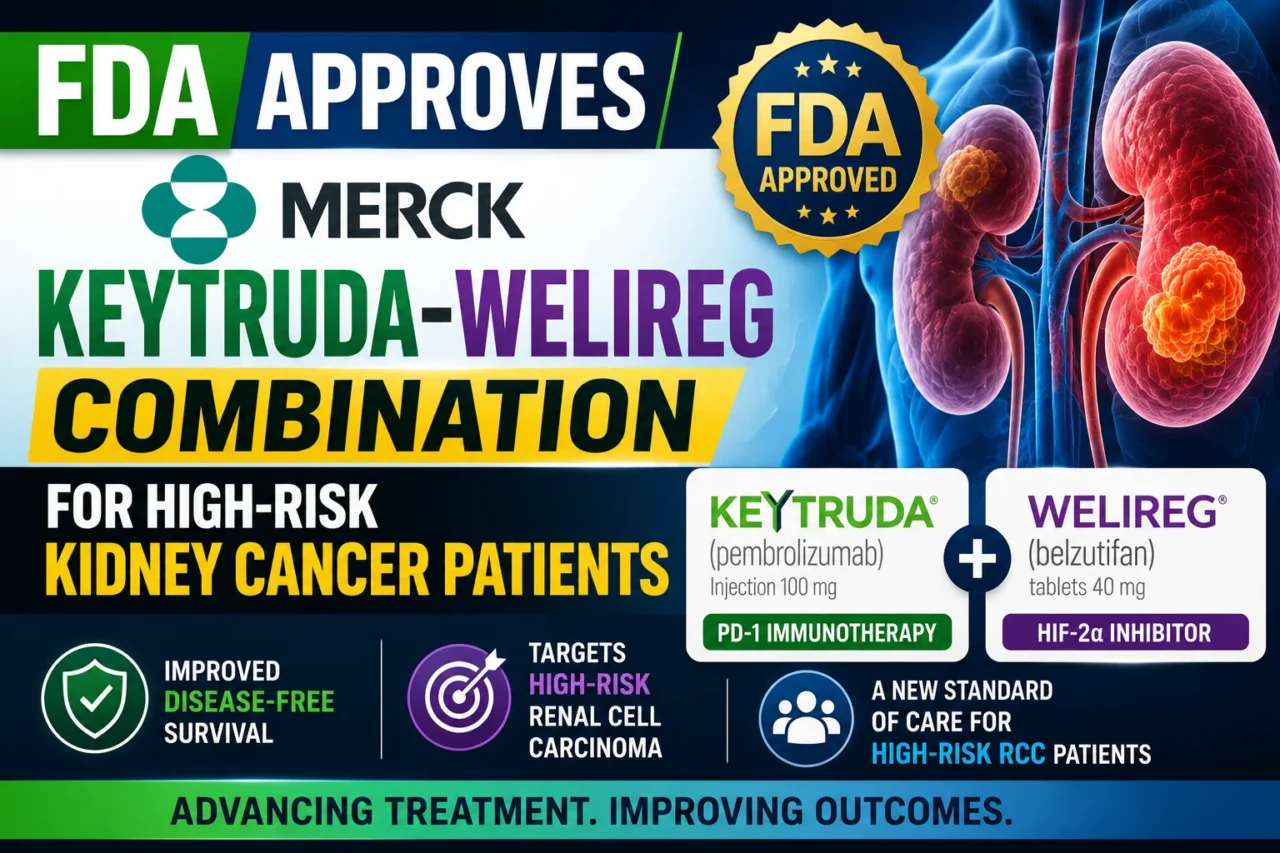

In a significant advancement for kidney cancer treatment, the U.S. Food and Drug Administration (FDA) has approved Merck’s immunotherapy KEYTRUDA® (pembrolizumab), including its newly approved subcutaneous formulation KEYTRUDA QLEx™, in combination with WELIREG® (belzutifan) for the adjuvant treatment of certain patients with renal cell carcinoma (RCC).
The approval provides a new treatment option for patients who have undergone surgery for kidney cancer but remain at a high risk of disease recurrence. By combining two innovative therapies with different mechanisms of action, the regimen aims to help patients stay cancer-free for longer following surgery.
Understanding Renal Cell Carcinoma
Renal cell carcinoma (RCC) is the most common form of kidney cancer, accounting for approximately 90% of all kidney cancer cases. While surgery remains the primary treatment for localized RCC, many patients face a significant risk of recurrence even after successful tumor removal.
For patients with high-risk disease, preventing cancer from returning remains one of the biggest challenges in long-term cancer management. This has led researchers to explore adjuvant therapies that can eliminate remaining cancer cells and reduce recurrence risk after surgery.
FDA Approval Backed by Late-Stage Clinical Trial
The FDA’s decision was based on results from a pivotal Phase 3 clinical trial involving patients with clear-cell renal cell carcinoma who had undergone nephrectomy (kidney removal surgery) and were considered at increased risk for recurrence.
The study evaluated the effectiveness of:
- KEYTRUDA (pembrolizumab)
- WELIREG (belzutifan)
compared with placebo in the adjuvant setting.

Key Findings
Researchers reported that the combination therapy significantly improved disease-free survival (DFS), meaning patients remained free of cancer recurrence for a longer period after surgery compared to those receiving placebo.
The positive results demonstrated that the combination could effectively delay or prevent the return of cancer, offering an important new option for patients facing a high likelihood of relapse.
How KEYTRUDA Works
KEYTRUDA (pembrolizumab) is one of the world’s most widely used immunotherapy medications.
It belongs to a class of drugs known as PD-1 inhibitors, which help the immune system recognize and attack cancer cells more effectively.
Normally, cancer cells can evade immune detection by exploiting immune checkpoint pathways. KEYTRUDA blocks these pathways, allowing immune cells to identify and destroy cancerous cells that might otherwise go unnoticed.
The therapy has already been approved for numerous cancer types, including melanoma, lung cancer, bladder cancer, and kidney cancer.
How WELIREG Targets Kidney Cancer
WELIREG (belzutifan) works through an entirely different mechanism.
The drug targets hypoxia-inducible factor-2 alpha (HIF-2α), a protein that plays a crucial role in the growth, survival, and spread of certain kidney cancer cells.
Many RCC tumors depend on HIF-2α signaling to thrive. By blocking this pathway, WELIREG interferes with processes that help cancer cells survive and multiply.
This targeted approach has made WELIREG an important advancement in kidney cancer treatment in recent years.
Why the Combination Matters
Experts believe the combination of KEYTRUDA and WELIREG offers a complementary treatment strategy.
KEYTRUDA:
- Activates the immune system
- Enhances cancer cell recognition
- Promotes immune-mediated tumor destruction
WELIREG:
- Directly targets cancer-driving pathways
- Blocks HIF-2α activity
- Inhibits tumor growth and survival mechanisms
Together, these therapies attack cancer from multiple angles, potentially improving treatment outcomes beyond what either therapy could achieve alone.
Introduction of KEYTRUDA QLEx™
The approval also includes KEYTRUDA QLEx™, a newly approved subcutaneous formulation of pembrolizumab.
Unlike traditional intravenous administration, the subcutaneous version is designed to be delivered under the skin, potentially offering:
- Faster administration times
- Greater convenience for patients
- Improved treatment experience
- Reduced time spent in infusion centers
The new formulation represents an additional step toward making cancer treatment more accessible and patient-friendly.
Potential Impact on Patient Care
The approval of the KEYTRUDA-WELIREG combination could significantly influence the treatment landscape for high-risk kidney cancer patients.
Potential benefits include:
- Reduced risk of cancer recurrence
- Longer disease-free survival
- More effective post-surgical management
- Personalized treatment strategies based on recurrence risk
- Expanded therapeutic options for oncologists
For patients who have already undergone major surgery, preventing relapse is often a top priority. This new combination provides an additional layer of protection against disease recurrence.
Looking Ahead
As researchers continue to evaluate long-term outcomes, additional data will help clarify:
- Overall survival benefits
- Long-term safety profile
- Quality-of-life outcomes
- Optimal patient selection strategies
The approval further strengthens the growing role of combination therapies in oncology, where immunotherapy and targeted treatments are increasingly used together to achieve better outcomes.
Conclusion
The FDA approval of KEYTRUDA and WELIREG for certain high-risk renal cell carcinoma patients marks a major milestone in kidney cancer care. Supported by strong clinical trial evidence showing improved disease-free survival, the combination offers new hope for patients seeking to reduce the risk of cancer recurrence after surgery.
By combining the power of immunotherapy with targeted cancer treatment, the regimen represents an important advancement in the ongoing effort to improve long-term outcomes for kidney cancer patients worldwide.
Recommended Products