


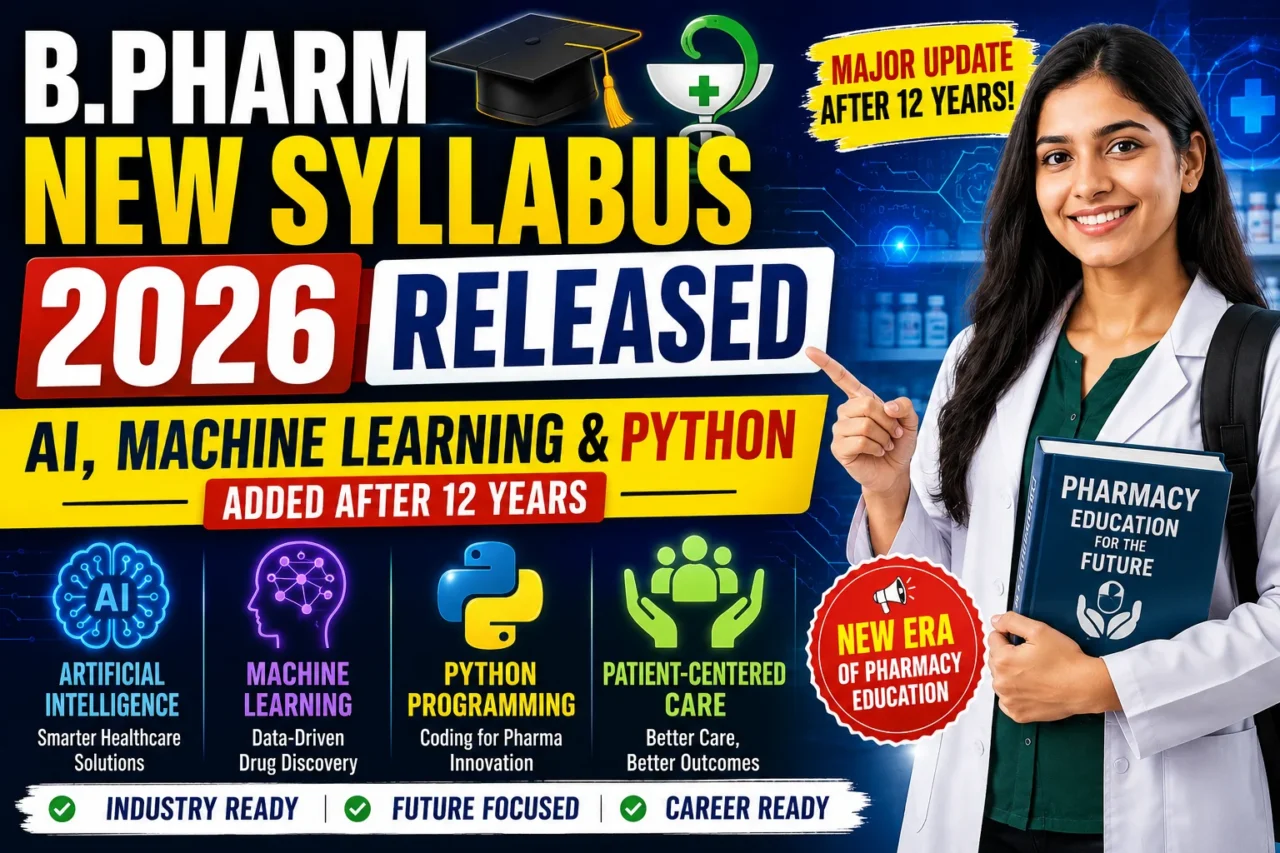

The Pharmacy Council of India (PCI) has announced a significant revision in the Bachelor of Pharmacy (B.Pharm) curriculum after 12 years. The updated syllabus, which will be implemented from the 2026 academic session, is designed to align pharmacy education with modern healthcare needs, technological advancements, and the objectives of the National Education Policy (NEP) 2020.
Key Highlights of the New B.Pharm Curriculum 2026
1. Introduction of AI and Machine Learning
For the first time, subjects such as Artificial Intelligence (AI), Machine Learning (ML), Data Analytics, Digital Health, Entrepreneurship, and Patient-Centered Healthcare have been incorporated into the pharmacy curriculum. These additions aim to prepare pharmacy graduates for the rapidly evolving healthcare and pharmaceutical sectors.
2. Industry-Oriented Learning Approach
According to PCI, pharmacists today require more than textbook knowledge. The revised curriculum focuses on developing:
- Scientific thinking
- Clinical understanding
- Problem-solving abilities
- Digital competencies
- Innovation and research skills
This shift is expected to improve employability and prepare students for emerging pharmaceutical careers.
No Need to Repeat an Entire Semester After Failing
One of the most student-friendly reforms is the introduction of a flexible academic progression system.
Under the new rules:
- Students who fail in a semester will not need to repeat the entire semester or academic year.
- They can continue to the next semester while reappearing for the failed subjects.
- Only the failed courses need to be cleared in supplementary examinations.
This change reduces academic delays and helps students complete their degree more efficiently.

Python Programming to Be Taught from the First Semester
The revised syllabus introduces computational and digital skills from the beginning of the course.
Semester-Wise Technology Integration
First Semester
- Digital literacy
- Basic computer applications
- Introduction to Python programming
Second Semester
- Applied Biostatistics
Third Semester
- Machine Learning fundamentals
These subjects will help students understand healthcare data, research analytics, and digital pharmaceutical systems.
Greater Flexibility in Course Selection
The curriculum adopts the Choice-Based Credit System (CBCS), allowing students to choose certain courses according to their interests and career goals.
Benefits include:
- Skill enhancement opportunities
- Value-added courses
- Multidisciplinary learning
- Personalized academic pathways
This flexibility enables students to build expertise in specialized areas of pharmacy and healthcare.
Internship and Research Projects Made Mandatory
To strengthen practical learning, PCI has introduced:
- 240 hours of compulsory internship
- Research project in the 7th and 8th semesters
These requirements will provide students with hands-on experience in hospitals, pharmaceutical industries, research laboratories, and clinical settings.
Updated Evaluation System
Student assessment will now be based on multiple parameters, including:
- End-semester examinations
- Assignments
- Quizzes
- Fieldwork
- Attendance requirements
A minimum attendance criterion will continue to remain mandatory for successful course completion.
Focus on Clinical and Patient-Centered Care
The eighth semester will include greater emphasis on:
- Clinical applications of pharmacy
- Patient counseling
- Healthcare management
- Modern healthcare technologies
This approach aims to transform pharmacists into active healthcare professionals rather than merely medicine dispensers.
Impact on Future Pharmacy Careers
The new curriculum is expected to create better career opportunities in:
- Artificial Intelligence in Healthcare
- Clinical Pharmacy
- Pharmacovigilance
- Digital Health
- Medical Data Analytics
- Pharmaceutical Research
- Regulatory Affairs
- Healthcare Technology
- Hospital Pharmacy
- Pharmaceutical Industry
Graduates will be better equipped to meet the demands of modern healthcare systems and global pharmaceutical markets.
Conclusion
The B.Pharm Curriculum 2026 marks one of the most significant reforms in pharmacy education in India. By introducing AI, Machine Learning, Python programming, digital health technologies, mandatory internships, and a flexible credit-based system, PCI aims to produce industry-ready pharmacy professionals capable of contributing to the future of healthcare. The updated curriculum reflects the growing importance of technology, research, and patient-centered care in the pharmacy profession.
Recommended Products






















Test, message – Thank you!