


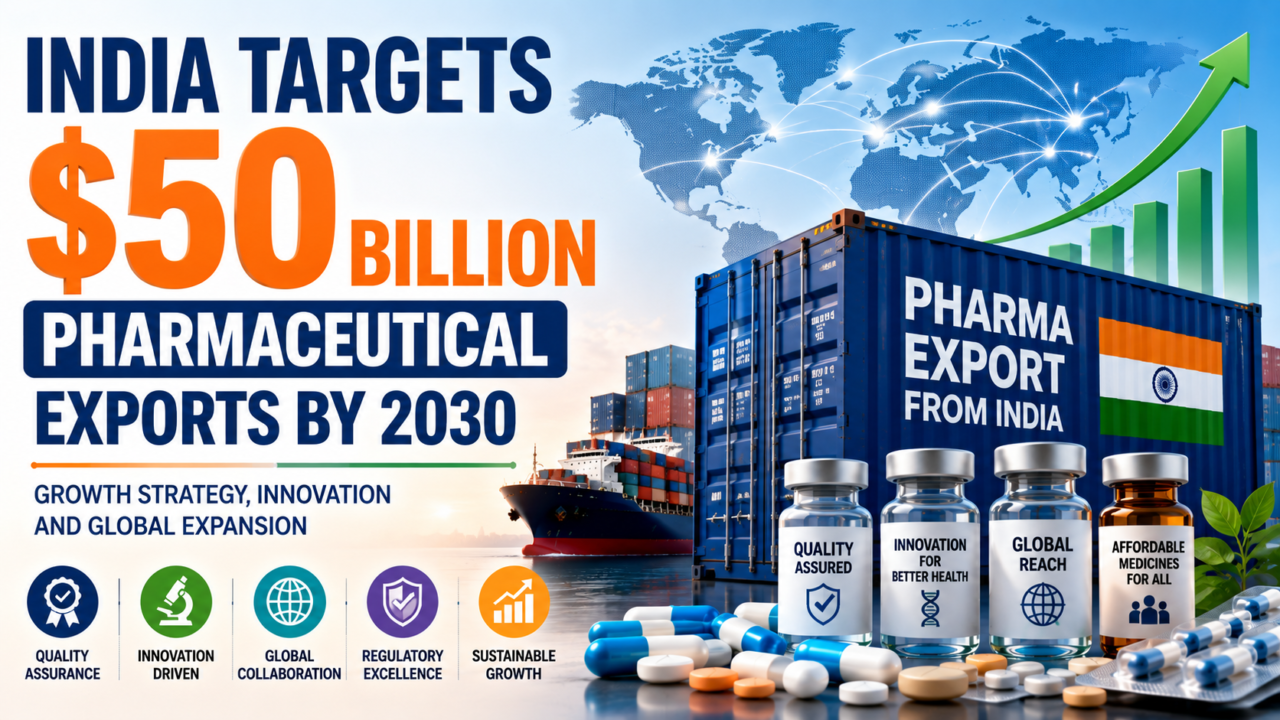

India is setting an ambitious goal to achieve pharmaceutical exports worth USD 50 billion by 2030, reinforcing its position as one of the world’s leading suppliers of affordable and high-quality medicines. Backed by a strong manufacturing ecosystem, continuous innovation, and increasing global partnerships, the country’s pharmaceutical sector is entering a new phase of growth aimed at expanding its international footprint and strengthening its role in global healthcare.
Known as the “Pharmacy of the World,” India currently supplies medicines, vaccines, and healthcare products to more than 200 countries and territories. Over the years, Indian pharmaceutical companies have earned a reputation for producing cost-effective generic medicines while adhering to stringent quality standards. As global demand for accessible healthcare solutions continues to rise, India is leveraging its strengths to achieve the next major milestone in pharmaceutical exports.
India’s Vision for Pharmaceutical Growth
The USD 50 billion export target represents more than just a financial goal. It reflects India’s broader vision of becoming a global leader in pharmaceutical innovation, manufacturing excellence, and healthcare accessibility.
Key Objectives of the 2030 Export Strategy
| Focus Area | Objective |
|---|---|
| Quality Manufacturing | Ensure compliance with global quality standards |
| Innovation | Invest in advanced drug development and research |
| Regulatory Excellence | Strengthen regulatory systems and approvals |
| Global Expansion | Increase presence in regulated and emerging markets |
| International Collaboration | Foster partnerships with global healthcare stakeholders |
Industry experts believe that achieving these objectives will help Indian pharmaceutical companies access new markets while enhancing trust among international regulators and consumers.
Quality Remains the Foundation
Quality has emerged as the cornerstone of India’s pharmaceutical growth strategy. As competition intensifies in global markets, maintaining consistent manufacturing standards is becoming increasingly important.
The government and industry stakeholders are focusing on:
- Adoption of global Good Manufacturing Practices (GMP)
- Enhanced quality control systems
- Regulatory compliance with international standards
- Upgradation of manufacturing facilities
- Workforce training and skill development
These initiatives are expected to strengthen India’s reputation as a reliable supplier of safe and effective medicines across the world.

Innovation Driving the Next Phase of Growth
Innovation is expected to be one of the most significant drivers of pharmaceutical export growth over the next decade.
Indian pharmaceutical companies are increasingly moving beyond traditional generic medicines and investing in:
| Innovation Segment | Growth Potential |
|---|---|
| Complex Generics | High |
| Biosimilars | Very High |
| Specialty Medicines | High |
| Novel Drug Development | Long-Term Growth |
| Personalized Medicine | Emerging Opportunity |
Research and development investments are steadily increasing as companies seek to develop high-value products capable of competing in advanced international markets.
The Role of Artificial Intelligence
Artificial Intelligence (AI) and digital technologies are transforming pharmaceutical research and manufacturing processes.
AI is helping companies:
- Accelerate drug discovery
- Improve clinical trial efficiency
- Enhance manufacturing precision
- Reduce development costs
- Predict market trends and patient needs
The integration of digital technologies is expected to improve competitiveness and support faster product innovation.
Strengthening Global Collaboration
International cooperation remains a critical component of India’s pharmaceutical roadmap.
By strengthening partnerships with global regulators, healthcare organizations, and pharmaceutical companies, India aims to:
- Facilitate faster drug approvals
- Promote regulatory harmonization
- Improve cross-border healthcare access
- Encourage knowledge sharing
- Expand international market opportunities
These collaborations will help reduce regulatory barriers and create a more efficient pathway for Indian pharmaceutical products to enter global markets.
Opportunities in Emerging Markets
While developed markets remain important, emerging economies are expected to contribute significantly to future export growth.
Regions such as:
- Africa
- Southeast Asia
- Latin America
- Middle East
are witnessing rising demand for affordable healthcare solutions. Indian pharmaceutical companies are well-positioned to meet this demand through their extensive manufacturing capabilities and cost-effective product offerings.
Challenges on the Road to $50 Billion
Despite strong growth prospects, several challenges must be addressed to achieve the export target.
Key Challenges
| Challenge | Impact |
|---|---|
| Regulatory Compliance | Increased scrutiny from global regulators |
| Pricing Pressure | Competitive international markets |
| Supply Chain Risks | Dependence on raw material imports |
| Innovation Costs | High R&D investment requirements |
| Global Competition | Competition from established pharmaceutical hubs |
Addressing these challenges will require coordinated efforts from government agencies, regulators, industry leaders, and research institutions.
Why India’s Pharmaceutical Sector Matters Globally
India plays a crucial role in global healthcare by providing affordable medicines to millions of patients worldwide. The country’s pharmaceutical industry contributes significantly to public health initiatives, disease management programs, and vaccine distribution efforts.
Its growing focus on innovation, quality assurance, and international collaboration is expected to further enhance its influence in the global healthcare ecosystem.
Conclusion
India’s ambitious target of achieving USD 50 billion in pharmaceutical exports by 2030 reflects the country’s confidence in its manufacturing capabilities, innovation ecosystem, and global partnerships. By focusing on quality, regulatory excellence, technological advancement, and international collaboration, the Indian pharmaceutical industry is positioning itself for sustained long-term growth.
As healthcare needs continue to expand across the world, India’s pharmaceutical sector is poised to play an even greater role in delivering affordable, high-quality medicines to global markets. With a clear roadmap and strong industry-government cooperation, the vision of becoming a USD 50 billion pharmaceutical export powerhouse is increasingly within reach.
Recommended Products