

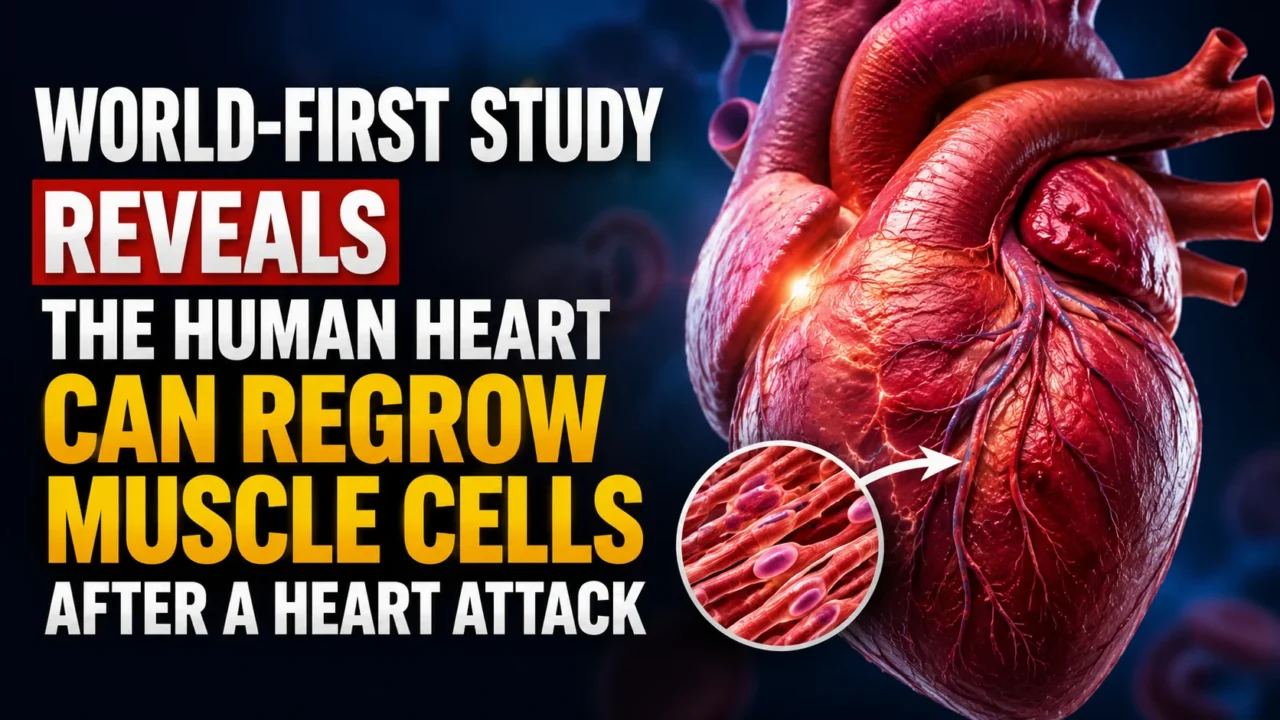

For decades, scientists believed that the human heart had very limited ability to repair itself after suffering damage from a heart attack. Unlike skin or liver cells, heart muscle cells were thought to be largely incapable of regeneration. However, a groundbreaking new study has challenged this long-standing belief and opened exciting possibilities for future cardiovascular treatments.

A Revolutionary Discovery
Researchers from the University of Sydney have made a remarkable discovery showing that the human heart can naturally generate new muscle cells after experiencing significant injury. By analyzing living heart tissue collected from patients undergoing bypass surgery, scientists found evidence that the heart activates its own repair mechanisms following severe damage.
This finding is considered a major breakthrough because it demonstrates that the heart is not completely incapable of regeneration as previously believed. Instead, it possesses a limited but measurable ability to produce new cardiac muscle cells.
Why This Discovery Matters
Heart attacks remain one of the leading causes of death worldwide. During a heart attack, blood flow to a portion of the heart is blocked, causing heart muscle cells to die. Since the damaged tissue is often replaced with scar tissue rather than new muscle, many patients experience long-term complications, including heart failure.
The new research suggests that the heart naturally attempts to repair itself by generating new muscle cells. Although this process is currently too slow and insufficient to fully restore heart function, understanding how it works could help scientists develop treatments that enhance and accelerate this natural healing response.
Potential Impact on Future Treatments
The discovery could pave the way for a new generation of regenerative therapies aimed at repairing damaged hearts. Researchers hope to identify the biological signals responsible for triggering muscle cell regeneration and use them to design innovative treatments.
Future therapies may include:
- Drugs that stimulate heart muscle regeneration
- Gene-based treatments that activate repair pathways
- Cell-based regenerative medicine approaches
- Personalized therapies for heart attack patients
- Novel strategies to prevent or reduce heart failure
If successful, these treatments could significantly improve recovery outcomes for millions of patients worldwide.
A New Understanding of Heart Disease
This study represents a major shift in how scientists view cardiovascular disease. Rather than focusing solely on preventing damage, future research may increasingly explore ways to harness and amplify the heart’s own regenerative capabilities.
The findings provide fresh hope for patients living with heart disease and suggest that the human body may possess more healing potential than previously recognized.
Looking Ahead
While more research is needed before regenerative therapies become widely available, this world-first discovery marks an important step forward in cardiovascular medicine. Scientists are now working to understand the mechanisms behind heart muscle regeneration and determine how they can be safely enhanced in clinical settings.
As research progresses, the dream of helping damaged hearts heal themselves may move closer to becoming a reality.
Recommended Products