


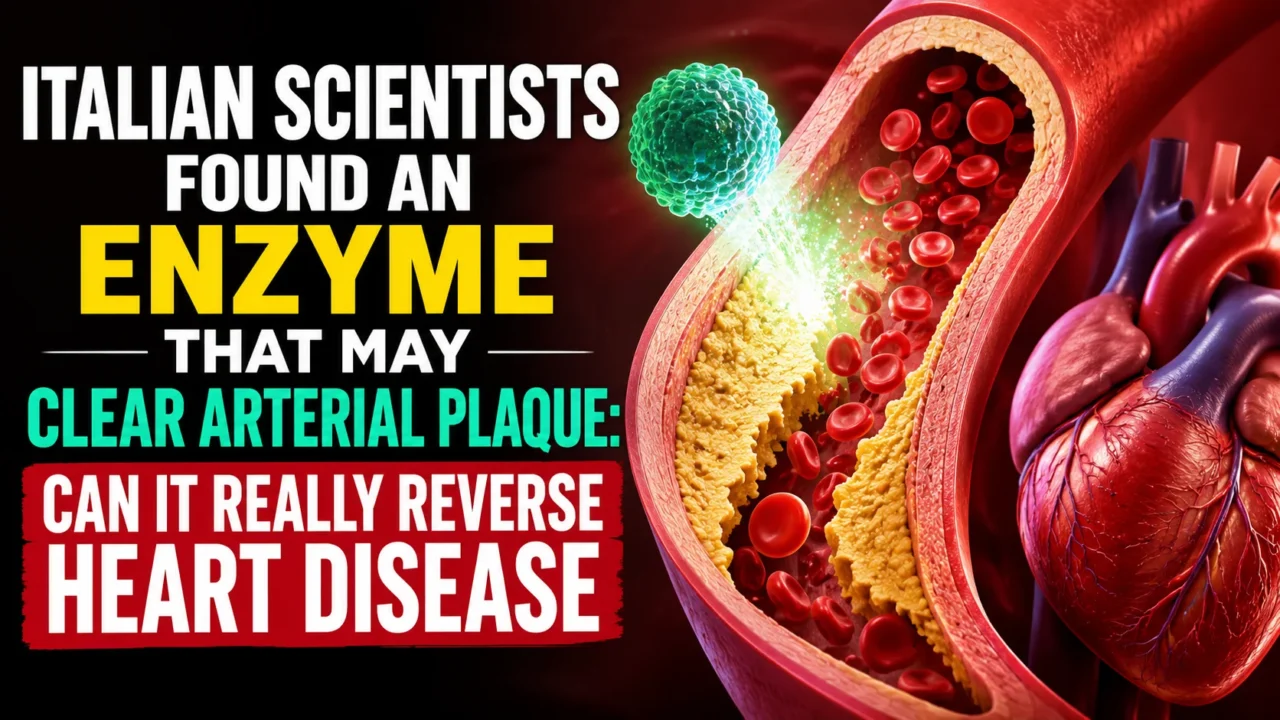

Heart disease remains one of the leading causes of death worldwide, and one of the biggest contributors is the buildup of fatty deposits, known as arterial plaque, inside blood vessels. Recently, social media posts and news reports have highlighted a promising discovery by Italian researchers who are studying an enzyme that may help break down arterial plaque naturally. This breakthrough has generated excitement because it could potentially offer a non-invasive approach to treating cardiovascular disease.
But how accurate are these claims, and what does the science actually say? Let’s explore.

What Is Arterial Plaque?
Arterial plaque is a mixture of:
- Cholesterol
- Fatty substances
- Calcium
- Cellular waste products
- Inflammatory cells
Over time, plaque accumulates on the inner walls of arteries through a process called atherosclerosis. As plaque builds up, arteries become narrower and less flexible, restricting blood flow to vital organs such as the heart and brain.
This condition can lead to:
- Heart attacks
- Stroke
- Peripheral artery disease
- High blood pressure
The Italian Research Breakthrough
Italian scientists have been investigating enzymes capable of breaking down components of arterial plaque. According to preliminary research, certain naturally occurring enzymes may help dissolve or reduce fatty deposits without the need for invasive surgical procedures.
Researchers believe that targeting specific proteins and inflammatory pathways involved in plaque formation could:
- Reduce plaque accumulation
- Improve blood flow
- Lower the risk of cardiovascular events
- Support healthier arteries
This approach differs from traditional treatments because it aims to directly affect the plaque itself rather than simply controlling risk factors.
How Could the Enzyme Work?
The enzyme under investigation is believed to act by:
1. Breaking Down Plaque Components
It may help degrade substances that contribute to plaque formation within arteries.
2. Reducing Inflammation
Chronic inflammation plays a major role in atherosclerosis. The enzyme may reduce inflammatory activity in blood vessels.
3. Improving Arterial Function
By reducing plaque burden, arteries could become more flexible and allow better circulation.
4. Supporting Natural Repair Mechanisms
Researchers are exploring whether the enzyme can assist the body’s natural ability to maintain healthy blood vessels.
Can It Actually Reverse Heart Disease?
This is the most important question.
The answer is: Not yet proven.
While the early findings are encouraging, researchers emphasize that:
- Studies are still in the early stages.
- Most results have not yet been confirmed through large-scale human clinical trials.
- More evidence is required before the treatment can be considered safe and effective.
At present, no enzyme therapy has been officially approved as a cure for heart disease based on this research.
Current Treatments for Arterial Plaque
Doctors currently recommend a combination of:
Lifestyle Changes
- Healthy diet
- Regular exercise
- Smoking cessation
- Weight management
Medications
- Statins
- Blood pressure medicines
- Antiplatelet drugs
- Cholesterol-lowering therapies
Medical Procedures
- Angioplasty
- Stent placement
- Coronary artery bypass surgery
These treatments remain the standard of care for managing cardiovascular disease.
Potential Benefits of Future Enzyme Therapy
If future studies confirm its effectiveness, enzyme-based therapy could offer several advantages:
✅ Non-invasive treatment option
✅ Reduced need for surgery
✅ Improved blood circulation
✅ Lower risk of heart attacks and strokes
✅ Better long-term cardiovascular health
Challenges Researchers Must Overcome
Before such a treatment becomes available, scientists must determine:
- Long-term safety
- Optimal dosage
- Possible side effects
- Effectiveness in different patient populations
- Cost and accessibility
Clinical trials involving thousands of participants will likely be required.
What Does This Mean for Patients Today?
The discovery represents an exciting development in cardiovascular research, but it should not be viewed as a proven cure for heart disease at this stage. Patients should continue following medical advice, taking prescribed medications, and maintaining healthy lifestyle habits.
While enzyme-based therapies may become part of future treatment strategies, further research is necessary before they can be widely recommended.
Conclusion
The research conducted by Italian scientists on plaque-clearing enzymes offers a promising glimpse into the future of heart disease treatment. By potentially targeting arterial plaque directly, this approach could revolutionize cardiovascular care. However, the science is still developing, and more clinical evidence is needed before claims of reversing heart disease can be confirmed.
For now, maintaining a heart-healthy lifestyle and following established medical treatments remain the most effective ways to protect cardiovascular health.
Recommended Products