


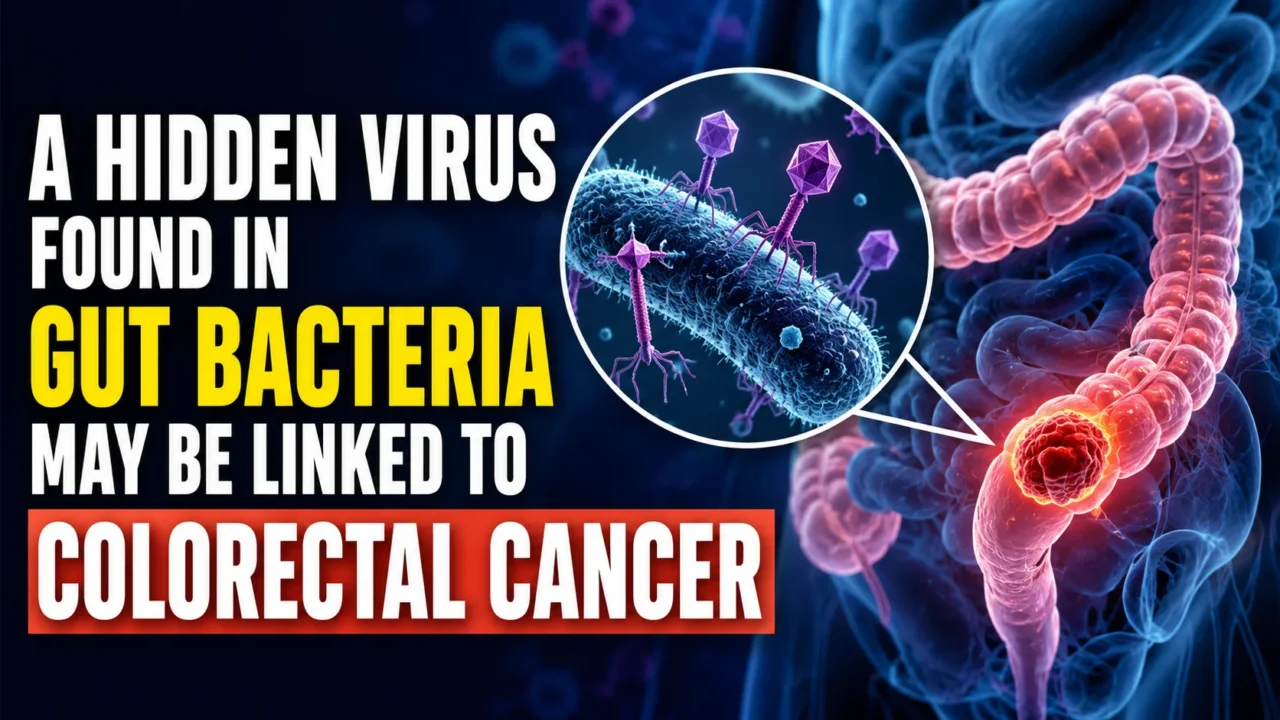

The human gut is home to trillions of microorganisms that play a crucial role in digestion, immunity, and overall health. Scientists are continuously uncovering new ways in which these microbes influence disease, and a recent study has highlighted a surprising discovery—a hidden virus living inside gut bacteria that may be linked to colorectal cancer.
This finding provides fresh insights into the complex relationship between the gut microbiome and cancer development, opening new avenues for research and potential treatment strategies.

The Discovery of a Hidden Virus
Researchers have identified a previously unknown bacteriophage—a virus that infects bacteria—within certain strains of Bacteroides fragilis, a common bacterium found in the human intestine.
In a study involving 871 individuals, scientists observed that patients with colorectal cancer were nearly twice as likely to carry this virus compared to healthy individuals. While the study does not prove that the virus causes cancer, the strong association suggests that it may play a role in creating conditions favorable for tumor development.
What Are Bacteriophages?
Bacteriophages, often called phages, are viruses that specifically infect bacteria. They are among the most abundant biological entities on Earth and are naturally present in the human gut.
Rather than infecting human cells directly, phages influence the behavior of bacteria. They can:
- Alter bacterial gene expression
- Increase bacterial survival
- Enhance bacterial virulence
- Modify interactions between bacteria and the host
Because of these effects, bacteriophages are increasingly recognized as important contributors to human health and disease.
The Role of Bacteroides fragilis
Bacteroides fragilis is a normal component of the gut microbiome. However, certain strains can produce toxins that damage intestinal cells and promote inflammation.
Previous studies have already linked toxin-producing Bacteroides fragilis strains with colorectal cancer. The newly discovered virus may further influence the bacterium’s behavior, potentially increasing its ability to contribute to disease processes.
Why Does This Matter?
Scientists believe the virus could affect colorectal cancer development in several ways:
1. Altering Bacterial Virulence
The virus may change how Bacteroides fragilis behaves, making it more aggressive or capable of producing harmful compounds.
2. Influencing the Gut Environment
Changes in bacterial activity can alter the intestinal microenvironment, creating conditions that favor chronic inflammation and abnormal cell growth.
3. Promoting Cancer-Friendly Conditions
Long-term inflammation and microbial imbalance are known risk factors for colorectal cancer. The virus may contribute indirectly by enhancing these processes.
Important Note: Correlation Does Not Mean Causation
Although researchers found a strong association between the virus and colorectal cancer, the study does not demonstrate that the virus directly causes cancer.
Additional research is needed to determine:
- Whether the virus actively contributes to tumor formation
- How it interacts with gut bacteria
- Whether eliminating the virus could reduce cancer risk
For now, the findings should be viewed as an important clue rather than definitive proof.
Potential Impact on Future Cancer Research
The discovery highlights the growing importance of the gut microbiome in cancer biology. Future studies may explore:
- Using bacteriophages as biomarkers for early cancer detection
- Developing microbiome-targeted therapies
- Designing treatments that modify harmful bacterial populations
- Personalized approaches to colorectal cancer prevention
Understanding how viruses interact with gut bacteria could eventually lead to innovative strategies for diagnosing and treating colorectal cancer.
Conclusion
The identification of a hidden bacteriophage associated with Bacteroides fragilis adds a new layer to our understanding of colorectal cancer. Researchers found that colorectal cancer patients were significantly more likely to harbor this virus, suggesting a potential link between viral-bacterial interactions and disease development.
While the findings are promising, further studies are required to determine the exact role of the virus. Nevertheless, this research underscores the complexity of the gut microbiome and its potential influence on one of the world’s most common cancers.
As scientists continue to explore the hidden world of gut microbes and viruses, discoveries like this may pave the way for more effective cancer prevention, diagnosis, and treatment strategies in the future.
Recommended Products