


Navigating the Next-Generation ICH Q1 Revision with Risk-Based Stability Strategies
The pharmaceutical industry is entering a new era of stability testing. With the release of the draft revision of ICH Q1, regulatory authorities are introducing one of the most significant changes to global stability programs in more than ten years. Organizations involved in pharmaceutical development, quality assurance, regulatory affairs, and product lifecycle management must understand these changes and prepare for their implementation.
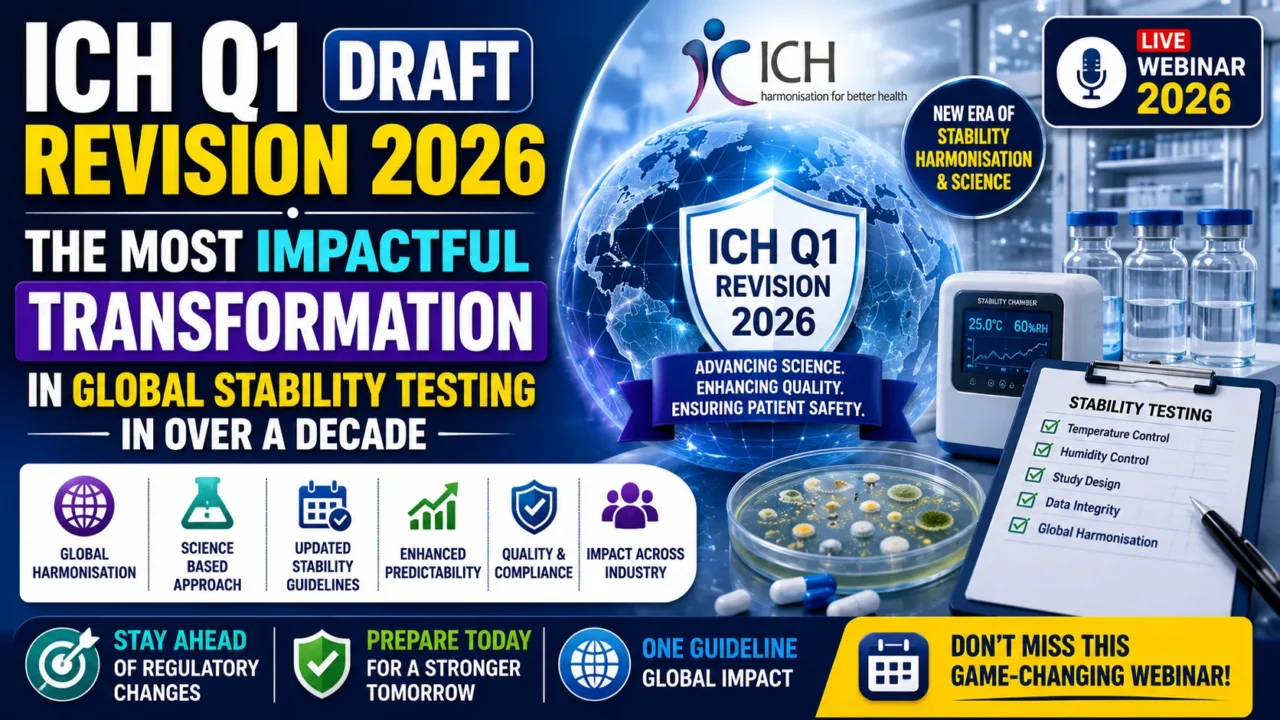
To help professionals stay ahead of evolving regulatory expectations, a live interactive webinar titled “ICH Q1 Draft Revision – The Most Impactful Transformation in Global Stability Testing in Over a Decade” will take place on June 24, 2026, led by industry expert Kim Huynh-Ba.
This instructor-led session will provide practical guidance on interpreting the new draft, implementing risk-based stability strategies, and preparing for future regulatory requirements.
Why the ICH Q1 Revision Matters
The ICH Q1 guideline has long served as the global foundation for pharmaceutical stability testing. However, advances in pharmaceutical science, product complexity, and regulatory expectations have created a need for modernization.
The newly released draft revision introduces a comprehensive risk-based framework that changes how companies:
- Design stability studies
- Assign product shelf life
- Establish storage conditions
- Justify testing strategies
- Prepare global regulatory submissions
Unlike minor updates issued in the past, the current revision fundamentally reshapes the way stability programs are developed, evaluated, and reviewed by regulatory authorities.
Organizations that fail to adapt may face:
- Regulatory deficiencies
- Additional information requests
- Delays in product approvals
- Increased development costs
- Rework of existing stability programs
Key Changes Introduced in the Draft ICH Q1 Revision
Risk-Based Stability Testing
One of the most significant changes is the adoption of a structured risk-based approach.
Instead of applying identical stability requirements across all products, companies will be expected to justify study designs using scientific risk assessments based on:
- Product characteristics
- Manufacturing processes
- Packaging systems
- Storage environments
- Product lifecycle considerations
This shift aims to improve efficiency while maintaining product quality and patient safety.
Modern Shelf-Life Assignment Strategies
The revised guideline introduces updated methodologies for determining shelf life.
Companies will need to:
- Utilize scientific evidence more effectively
- Apply risk assessment principles
- Support shelf-life decisions with stronger data justification
- Demonstrate product understanding throughout development
This approach is expected to improve decision-making and reduce unnecessary testing burdens.
Updated Climate Zone Considerations
Global distribution continues to expand, making climate-zone classifications increasingly important.
The draft revision revisits:
- Climate-zone definitions
- Regional storage requirements
- Global market stability expectations
- Environmental risk assessments
These updates may significantly influence multinational product registration strategies.

Expanded Use of Bracketing and Matrixing
The revised guidance encourages the strategic use of:
- Bracketing designs
- Matrixing approaches
- Reduced testing models
- Efficient study planning
When scientifically justified, these techniques can reduce resource utilization while maintaining confidence in stability data.
Webinar Learning Objectives
Participants attending this webinar will gain practical knowledge and implementation strategies related to the proposed ICH Q1 changes.
Understand the New ICH Q1 Draft
Attendees will receive a detailed overview of the Step 2 draft revision and learn how it differs from the current guideline.
Design Risk-Based Stability Programs
The webinar will demonstrate how to develop scientifically justified stability protocols that align with future regulatory expectations.
Evaluate Global Stability Requirements
Participants will learn how revised climate-zone definitions may affect international product registration and lifecycle management.
Optimize Testing Through Bracketing and Matrixing
Experts will explain how to reduce testing burden while maintaining compliance and scientific rigor.
Improve Photostability and Forced Degradation Strategies
The session will cover updated expectations regarding:
- Photostability studies
- Forced degradation assessments
- Product characterization activities
Prepare Regulatory Submissions
Attendees will learn how to create inspection-ready documentation that satisfies both FDA and EMA reviewers.
Accelerate Program Advancement
Risk assessment methodologies will be discussed to help organizations streamline development timelines and support faster regulatory submissions.
Practical Implementation Guidance
One of the most valuable aspects of this webinar is its focus on practical application.
Participants will learn how to:
- Redesign existing stability protocols
- Assess ongoing studies against new expectations
- Update regulatory strategies
- Prepare implementation roadmaps
- Avoid common compliance gaps
Real-world examples and case studies will help attendees understand how the proposed changes can be successfully integrated into current development programs.
Webinar Schedule
10:15 AM – Log-In Period
Participants can access the training platform and prepare for the session.
10:30 AM – Introduction & Live Lecture Part 1
The first segment introduces the revised guideline, regulatory background, and major changes.
11:30 AM – 10-Minute Break
Live Lecture Part 2
The second session focuses on implementation strategies, case studies, and regulatory applications.
12:30 PM – Live Q&A and Discussion
Attendees will have the opportunity to ask questions directly to the instructor and discuss specific challenges relevant to their organizations.
Registration Benefits
Every registered participant will receive:
- Presentation slide deck
- Certificate of training for professional records
- Resource handout comparing current and proposed ICH Q1 requirements
- Access to live expert discussion and Q&A
These resources will help attendees begin implementing risk-based stability strategies immediately after the webinar.
Who Should Attend?
This webinar is ideal for professionals involved in pharmaceutical development and stability programs, including:
Stability and Formulation Scientists
Professionals responsible for designing and executing stability studies.
Quality Assurance and Quality Control Teams
Individuals responsible for ensuring compliance with regulatory requirements.
Regulatory Affairs Specialists
Professionals preparing submissions for FDA, EMA, and international health authorities.
Project Managers
Leaders overseeing pharmaceutical development timelines and regulatory milestones.
Analytical Scientists and Laboratory Managers
Experts responsible for stability-indicating methods and testing programs.
Pharmaceutical Consultants
Advisors supporting clients with stability compliance and regulatory strategies.
How to Attend
The webinar will be hosted live through Cisco WebEx. Participants do not need a WebEx account to attend.
Registered attendees will receive:
- Direct webinar access link
- Email invitation before the event
- Easy browser-based access
Only a computer and internet connection are required to participate.
Conclusion
The draft revision of ICH Q1 represents a transformative shift in global stability testing expectations. By introducing a modern risk-based framework, regulatory agencies are encouraging more scientific, efficient, and flexible approaches to stability program design.
Companies that proactively understand and implement these changes will be better positioned to accelerate development timelines, improve regulatory success, and maintain compliance in an increasingly complex global environment.
The “ICH Q1 Draft Revision – The Most Impactful Transformation in Global Stability Testing in Over a Decade” webinar provides a valuable opportunity to learn directly from industry expert Kim Huynh-Ba and prepare for the future of pharmaceutical stability testing before the new requirements become mandatory.
Recommended Products