



A Revolutionary Step Toward Natural Knee Repair
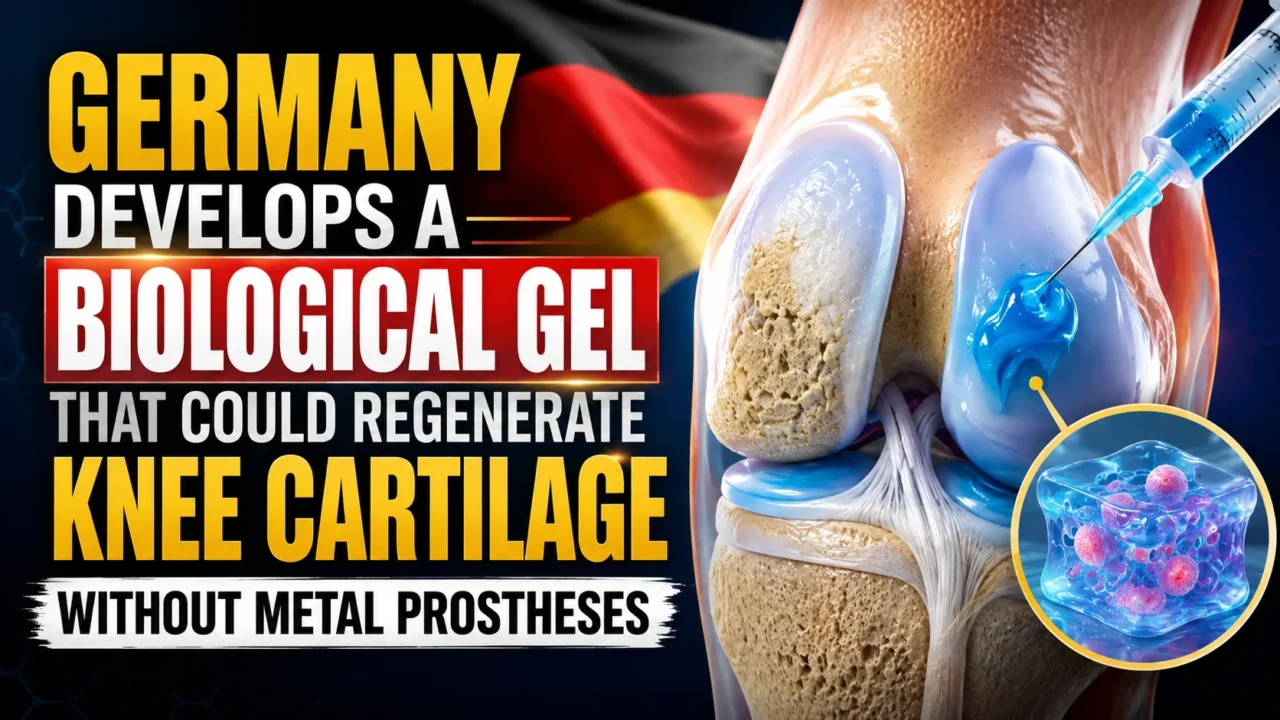
In a major breakthrough in regenerative medicine, scientists in Germany are developing an innovative biological gel designed to help regenerate damaged knee cartilage. This cutting-edge technology has the potential to reduce the need for artificial metal knee replacements and offer a more natural solution for patients suffering from cartilage-related joint problems.
As knee osteoarthritis and cartilage degeneration affect millions of people worldwide, researchers are exploring advanced biological therapies that encourage the body to heal itself. The newly developed gel represents a promising step in that direction.
Why Knee Cartilage Matters
Knee cartilage is a smooth, flexible tissue that covers the ends of bones within the knee joint. It plays a crucial role in:
- Reducing friction during movement
- Absorbing shock and pressure
- Supporting smooth joint function
- Preventing bone-on-bone contact
Unlike many other tissues in the body, cartilage has very limited ability to repair itself after injury or degeneration. Once damaged, patients often experience:
- Chronic knee pain
- Swelling and inflammation
- Reduced mobility
- Joint stiffness
- Progressive osteoarthritis
In severe cases, total knee replacement surgery becomes the only available treatment option.
What Is the New Biological Gel?
The German research team has developed a specialized biological gel that creates an ideal environment for cartilage regeneration inside the knee joint.
The gel is designed to:
- Support natural tissue repair
- Stimulate cartilage cell growth
- Promote regeneration of damaged cartilage
- Improve joint function
- Reduce long-term degeneration
Instead of replacing damaged tissue with artificial implants, this approach aims to encourage the body’s own cells to rebuild healthy cartilage.
How Does It Work?
The biological gel acts as a supportive scaffold within the knee joint.
Key Functions:
1. Cell Support
The gel provides a protective environment where cartilage-producing cells can survive and multiply.
2. Tissue Regeneration
It helps guide the growth of new cartilage tissue in areas where damage has occurred.
3. Enhanced Healing
The gel promotes natural repair mechanisms by encouraging cell communication and tissue development.
4. Joint Protection
By restoring cartilage, the treatment may help reduce friction and wear within the knee.
Potential Benefits
If successful, the technology could transform the treatment of knee injuries and osteoarthritis.
Benefits May Include:
✅ Reduced knee pain
✅ Improved mobility
✅ Faster recovery compared to major surgery
✅ Delayed or avoided knee replacement procedures
✅ More natural joint function
✅ Better long-term joint health
✅ Improved quality of life for patients
Could This Replace Metal Knee Prostheses?
Traditional knee replacement surgery involves removing damaged joint surfaces and replacing them with metal and plastic components.
While knee replacements are highly effective, they can have limitations:
- Major surgical procedure
- Risk of infection
- Implant wear over time
- Long recovery period
- Possible revision surgeries
The biological gel offers a different strategy by repairing damaged cartilage rather than replacing the entire joint.
Although it is too early to say whether it will completely eliminate the need for knee prostheses, the technology could significantly reduce the number of patients requiring joint replacement surgery in the future.
Current Research Status
Researchers report promising laboratory and early-stage findings. However, the treatment is still under development and has not yet become a standard clinical therapy.
Before widespread use, the gel must undergo:
- Extensive laboratory testing
- Animal studies
- Human clinical trials
- Safety evaluations
- Regulatory approval processes
These steps are essential to ensure both effectiveness and patient safety.
Challenges Ahead
Despite the excitement surrounding this innovation, several challenges remain:
Long-Term Effectiveness
Scientists need to determine how long regenerated cartilage remains healthy and functional.
Large-Scale Production
Manufacturing the gel consistently and economically will be important for widespread adoption.
Patient Variability
Different patients may respond differently based on age, health conditions, and severity of cartilage damage.
Regulatory Approval
The therapy must meet strict medical standards before reaching hospitals and clinics.
The Future of Regenerative Orthopedics
The development of this biological gel reflects a growing trend toward regenerative medicine, where treatments focus on repairing and rebuilding damaged tissues rather than replacing them.
Experts believe future therapies may combine:
- Biological gels
- Stem cells
- Growth factors
- Tissue engineering
- Personalized medicine
Together, these technologies could dramatically improve treatment outcomes for joint diseases and musculoskeletal injuries.
Conclusion
Germany’s innovative biological gel represents a promising advancement in cartilage regeneration research. By encouraging the body’s natural healing processes, this technology could offer a less invasive alternative to traditional knee replacement surgery and help millions of patients maintain healthier, pain-free joints.
While more research and clinical testing are needed, the development highlights the exciting future of regenerative medicine and its potential to revolutionize orthopedic care.
As science moves closer to repairing damaged tissues naturally, treatments like this biological gel may one day redefine how knee injuries and osteoarthritis are managed worldwide.
Recommended Products