

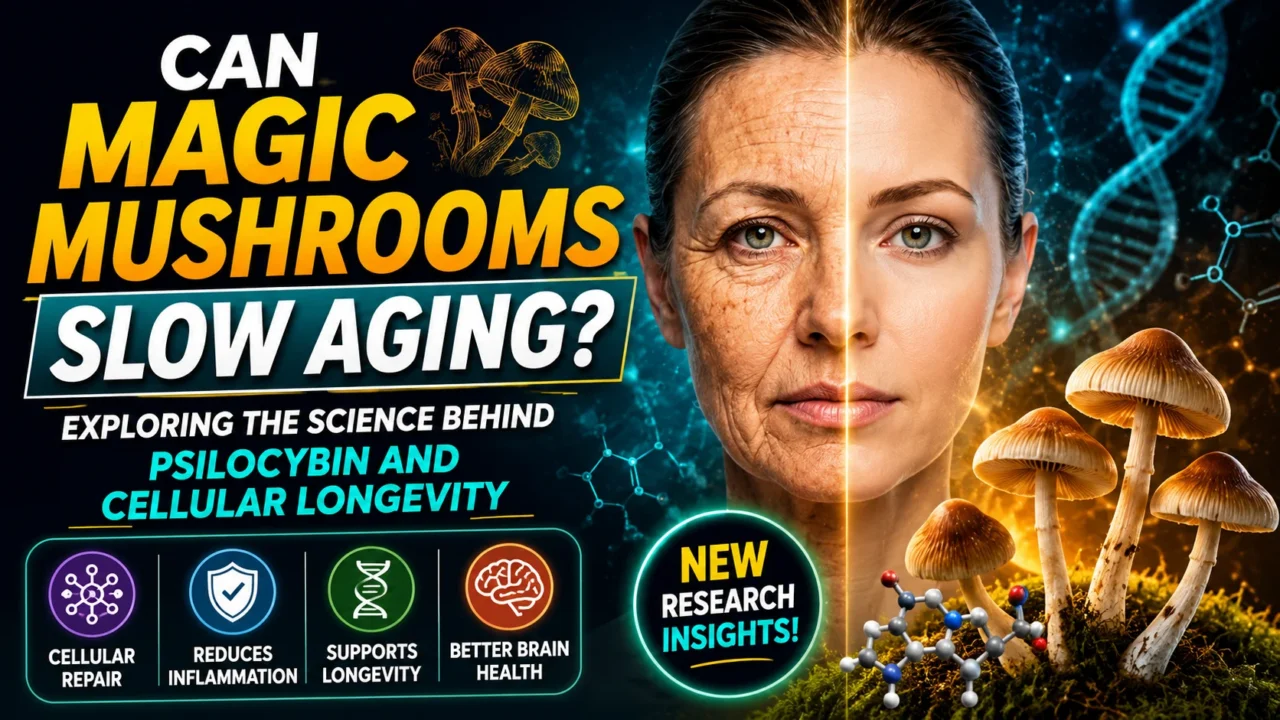

A fascinating new area of scientific research is exploring whether psilocybin, the naturally occurring compound found in certain psychedelic mushrooms, could help slow the aging process at the cellular level. Recent studies suggest that psilocybin may improve cellular resilience and potentially delay some biological processes associated with aging.
While these findings are still in the early stages, they have generated significant interest among researchers studying longevity, brain health, and regenerative medicine.

What Are Magic Mushrooms?
Magic mushrooms are fungi that contain psilocybin, a naturally occurring psychedelic compound. Once consumed, psilocybin is converted into psilocin, which affects serotonin receptors in the brain and produces changes in perception, mood, and cognition.
Traditionally, research on psilocybin has focused on:
- Depression
- Anxiety
- Post-traumatic stress disorder (PTSD)
- Addiction treatment
- Mental health therapy
Now, scientists are beginning to investigate its potential effects on aging and cellular health.
The New Research Findings
According to a study published in the journal npj Aging, researchers discovered that psilocybin may have beneficial effects beyond its psychological impact.
The study suggests that psilocybin could:
- Enhance cellular resilience
- Improve cellular repair mechanisms
- Support metabolic health
- Slow certain biological processes linked to aging
Researchers observed that cells exposed to psilocybin showed signs of improved survival and functionality compared to untreated cells.
How Could Psilocybin Influence Aging?
Aging occurs when cells gradually lose their ability to repair damage and maintain normal function. Several biological processes contribute to aging, including:
1. Oxidative Stress
Over time, harmful molecules called free radicals damage cells and tissues. Some evidence suggests psilocybin may help cells better cope with oxidative stress.
2. Cellular Senescence
Senescent cells are damaged cells that stop dividing but remain in the body, contributing to inflammation and aging. Researchers are investigating whether psilocybin influences pathways involved in cellular senescence.
3. Inflammation
Chronic inflammation is closely linked to aging and age-related diseases. Early research suggests psilocybin may possess anti-inflammatory properties that could support healthier aging.
4. Metabolic Function
Healthy metabolism is essential for cellular energy production. Scientists believe psilocybin may help regulate certain metabolic pathways that support cell survival and longevity.
Could Psilocybin Extend Lifespan?
At present, there is no evidence that psilocybin can extend human lifespan.
The current research only suggests that it may positively affect cellular processes associated with aging. Much more research is required before scientists can determine whether these effects translate into longer or healthier lives.
Important Limitations
Although the findings are promising, several important limitations exist:
- Most studies are still laboratory-based.
- Human clinical trials are limited.
- Long-term safety for anti-aging purposes has not been established.
- Researchers do not yet know the optimal dosage or treatment approach.
Therefore, it is far too early to consider psilocybin an anti-aging therapy.
Potential Future Applications
If future studies confirm these findings, psilocybin-based therapies could potentially be explored for:
- Healthy aging support
- Neurodegenerative diseases
- Cognitive decline prevention
- Cellular repair enhancement
- Longevity research
However, these applications remain speculative until more scientific evidence becomes available.
Legal and Medical Considerations
Psilocybin remains a controlled substance in many countries and should not be used without proper legal and medical supervision.
Individuals should not self-medicate based on preliminary research findings.
Conclusion
The possibility that psilocybin may influence cellular aging represents an exciting development in longevity research. Early evidence suggests that this naturally occurring compound could improve cellular resilience, support metabolic health, and slow certain biological processes linked to aging.
However, the science is still emerging, and much more research is needed before any conclusions can be drawn about its effectiveness as an anti-aging treatment.
For now, the findings highlight a growing scientific interest in understanding how compounds once studied primarily for mental health may also play a role in promoting long-term cellular health and healthy aging.
Recommended Products