


Introduction
The Diploma in Pharmacy (D.Pharm) is one of the most popular courses for students aspiring to build a career in the healthcare and pharmaceutical industry. While academic knowledge is essential, employers today look for professionals who possess a combination of technical expertise, communication abilities, and practical skills. Developing these skills during your D.Pharm journey can significantly improve your career prospects and help you stand out in a competitive job market.
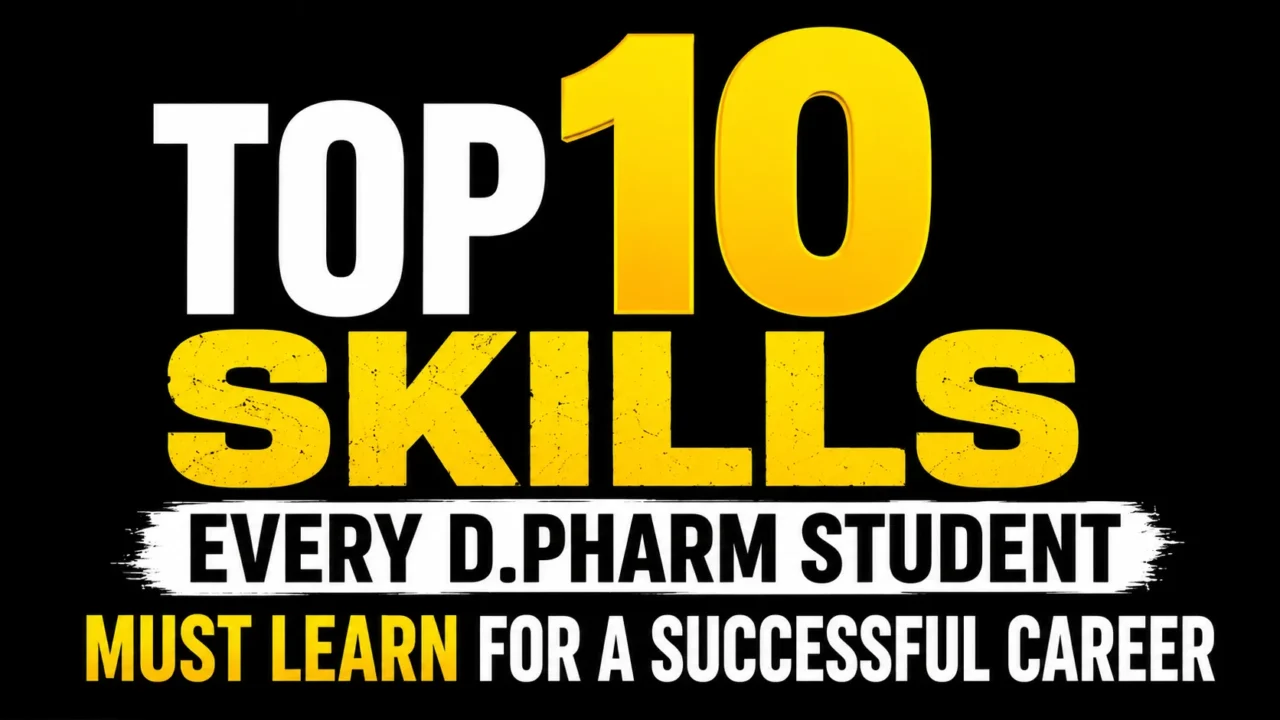
In this blog, we explore the top 10 skills every D.Pharm student should learn to achieve long-term success in the pharmaceutical field.
1. Strong Knowledge of Pharmacology
Understanding how drugs work in the human body is the foundation of a pharmacy career. D.Pharm students should develop a solid grasp of:
- Drug classifications
- Mechanisms of action
- Therapeutic uses
- Side effects and adverse reactions
- Drug interactions
A strong pharmacology background enables pharmacists to provide accurate medication guidance and improve patient safety.
2. Effective Communication Skills
Pharmacists interact with patients, doctors, nurses, and healthcare professionals daily. Clear communication helps in:
- Explaining medication instructions
- Counseling patients
- Answering health-related queries
- Building trust with customers
Students should focus on improving both verbal and written communication skills to excel in professional settings.
3. Patient Counseling Skills
Modern pharmacists are not just medicine dispensers; they are healthcare advisors. Patient counseling involves:
- Educating patients about medications
- Explaining dosage schedules
- Discussing potential side effects
- Encouraging medication adherence
Good counseling skills enhance patient outcomes and strengthen professional credibility.

4. Prescription Reading and Interpretation
One of the most critical skills for pharmacy professionals is accurately reading and interpreting prescriptions.
Students must learn to:
- Understand medical abbreviations
- Identify drug names and strengths
- Verify dosages
- Detect potential prescription errors
Mastering this skill minimizes medication mistakes and ensures patient safety.
5. Drug Dispensing and Inventory Management
Efficient dispensing and inventory control are essential in retail and hospital pharmacies.
Key competencies include:
- Correct medication dispensing
- Stock management
- Expiry date monitoring
- Record maintenance
- Storage compliance
Proper inventory management prevents shortages and reduces financial losses.
6. Computer and Pharmacy Software Skills
Digital technology has transformed pharmacy operations. D.Pharm students should become familiar with:
- Pharmacy management software
- Electronic health records (EHR)
- Billing systems
- Inventory tracking tools
- Online prescription processing
Technology proficiency increases efficiency and improves workplace productivity.
7. Attention to Detail
Even a minor mistake in pharmacy practice can have serious consequences. Students should cultivate habits such as:
- Double-checking prescriptions
- Verifying patient information
- Monitoring drug interactions
- Ensuring accurate labeling
Attention to detail is one of the most valued qualities in pharmaceutical careers.
8. Knowledge of Pharmaceutical Regulations and Ethics
Understanding legal and ethical responsibilities is crucial for pharmacy professionals.
Important areas include:
- Drug laws and regulations
- Pharmacy ethics
- Patient confidentiality
- Controlled substance handling
- Professional conduct standards
Compliance with regulations helps maintain patient trust and professional integrity.
9. Problem-Solving and Critical Thinking
Pharmacists frequently encounter situations that require quick and informed decisions.
Examples include:
- Identifying prescription discrepancies
- Managing medication shortages
- Addressing patient concerns
- Recommending alternative therapies
Strong critical-thinking skills help professionals make safe and effective decisions.
10. Continuous Learning and Adaptability
The pharmaceutical industry evolves rapidly with new medicines, technologies, and healthcare practices emerging regularly.
Successful D.Pharm students should:
- Attend workshops and seminars
- Read pharmaceutical journals
- Pursue certifications
- Stay updated with industry trends
- Embrace new technologies
A commitment to lifelong learning ensures career growth and professional relevance.
Conclusion
A successful pharmacy career requires much more than academic excellence. D.Pharm students who develop strong pharmacological knowledge, communication abilities, patient counseling expertise, technological proficiency, and ethical awareness will be better prepared for opportunities in retail pharmacies, hospitals, pharmaceutical companies, and healthcare organizations.
By focusing on these top 10 essential skills during your studies, you can build a strong foundation for a rewarding and successful career in the pharmaceutical industry.
Start developing these skills today, and you’ll be one step closer to becoming a highly competent and respected pharmacy professional.
Recommended Products