


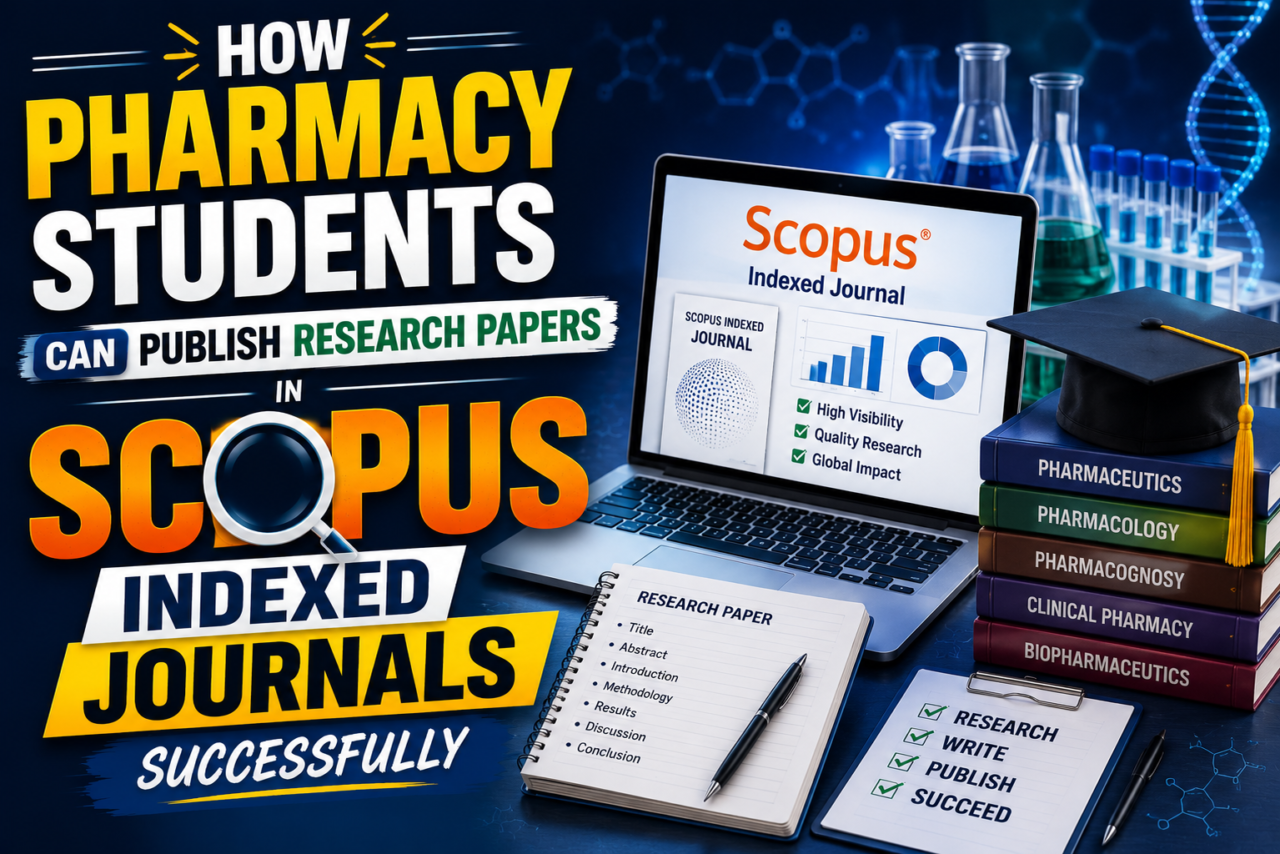

Publishing a research paper in a Scopus indexed journal is one of the biggest academic achievements for Pharmacy students. Whether you are pursuing B.Pharm, M.Pharm, Pharm D, or PhD, research publications can significantly improve your academic profile, career opportunities, and research credibility.
Today, many students want to publish research papers but often feel confused about:
- Where to start
- How to write a paper
- Which journal to select
- How Scopus journals work
- How to avoid fake journals
This complete guide will help Pharmacy students understand the step-by-step process of publishing research papers successfully in Scopus indexed journals.
What is a Scopus Indexed Journal?
Scopus is one of the world’s largest and most trusted databases of peer-reviewed scientific journals, managed by Elsevier Scopus.
A Scopus indexed journal is considered high-quality because:
- It follows proper peer-review standards
- It maintains publication ethics
- It has international research visibility
- It improves research credibility
Research publications in Scopus journals are highly valued for:
- PhD admissions
- Academic careers
- Faculty promotions
- Research funding
- International opportunities
Why Pharmacy Students Should Publish Research Papers
Publishing research papers provides several benefits for pharmacy students.
Academic Benefits
- Improves research knowledge
- Enhances scientific writing skills
- Strengthens academic profile
- Helps in PhD admissions
Career Benefits
- Better job opportunities
- Advantage in interviews
- Research career growth
- International recognition
Professional Benefits
- Networking with researchers
- Collaboration opportunities
- Improved confidence
- Better understanding of pharmaceutical research
Students interested in:
- Pharmacology
- Pharmaceutics
- Pharmaceutical Chemistry
- Pharmacognosy
- Clinical Pharmacy
- Biotechnology
- Pharmacovigilance
should actively participate in research publication activities.

Step-by-Step Process to Publish Research Papers
Step 1: Choose Your Research Topic Carefully
The most important step is selecting a strong and relevant research topic.
Choose topics based on:
- Current healthcare challenges
- New pharmaceutical technologies
- Clinical research trends
- Drug delivery systems
- Artificial intelligence in healthcare
- Nanotechnology
- Antimicrobial resistance
- Herbal medicines
- Personalized medicine
A good topic should be:
- Unique
- Research-oriented
- Scientifically valuable
- Relevant to current industry trends
Step 2: Perform Literature Review
Before starting research, students must study previously published papers.
Search research articles from:
This helps students:
- Understand existing research
- Identify research gaps
- Improve research quality
- Avoid duplication
Step 3: Conduct Proper Research Work
Research quality is extremely important for publication success.
Students should:
- Follow scientific methodology
- Maintain accurate data
- Use proper statistical analysis
- Follow ethical guidelines
For experimental research:
- Maintain laboratory records
- Document observations properly
- Ensure data authenticity
Poor-quality or copied research often gets rejected.
Step 4: Learn Research Paper Structure
A standard pharmacy research paper usually contains:
Title
The title should be:
- Clear
- Scientific
- SEO-friendly
- Easy to understand
Abstract
A short summary of:
- Objective
- Methodology
- Results
- Conclusion
Introduction
Explains:
- Background of the study
- Research problem
- Study objectives
Materials and Methods
Describes:
- Experimental procedures
- Instruments
- Statistical methods
Results & Discussion
Presents:
- Findings
- Tables
- Graphs
- Data interpretation
Conclusion
Summarizes the research outcomes and future scope.
References
Citations should follow the journal’s required format.
Step 5: Avoid Plagiarism
Plagiarism is one of the major reasons for paper rejection.
Students must:
- Write content in their own words
- Properly cite references
- Avoid copy-paste writing
Most journals prefer plagiarism below:
- 10–15%
Useful plagiarism checking tools:
Step 6: Select the Right Scopus Indexed Journal
Choosing the correct journal is extremely important.
Students should check:
- Scope of the journal
- Publication charges
- Acceptance rate
- Review time
- Indexing status
Always verify Scopus indexing directly from:
Scopus Source List
Step 7: Beware of Fake Journals
Many fake journals claim to be “Scopus indexed” but are not genuine.
Red Flags of Fake Journals
- Guaranteed publication within days
- Very low-quality websites
- No peer review process
- Fake indexing claims
- Spam emails asking for submissions
Publishing in fake journals can damage academic credibility.
Step 8: Submit Your Paper Properly
Most journals use online submission systems.
Students must upload:
- Manuscript file
- Cover letter
- Ethical approval (if required)
- Figures and tables
- Author details
Always follow the journal’s:
- Formatting guidelines
- Reference style
- Word limits
Step 9: Handle Peer Review Comments Professionally
After submission, reviewers may:
- Accept the paper
- Request revisions
- Reject the paper
Rejection is normal in research publishing.
Students should:
- Respond politely to reviewer comments
- Revise carefully
- Improve scientific quality
Many successful papers are accepted after revisions.
Common Mistakes Pharmacy Students Should Avoid
Poor Topic Selection
Choose research-oriented and current topics.
Weak English Writing
Scientific writing should be:
- Clear
- Professional
- Grammatically correct
Ignoring Journal Guidelines
Every journal has different formatting requirements.
Submitting Without Mentor Review
Always discuss your manuscript with:
- Guide
- Professor
- Research mentor
before submission.
Best Research Areas for Pharmacy Students in 2026
Highly trending pharmacy research topics include:
- Artificial Intelligence in Pharmacy
- Nanotechnology Drug Delivery
- Pharmacovigilance
- Personalized Medicine
- Antimicrobial Resistance
- Herbal Drug Research
- Clinical Pharmacy
- Biotechnology
- Cancer Research
- Drug Repurposing
These areas have strong publication opportunities in international journals.
Benefits of Publishing in Scopus Journals
| Benefit | Importance |
|---|---|
| International Recognition | High |
| Better Career Opportunities | High |
| PhD Admission Advantage | High |
| Academic Profile Improvement | High |
| Research Funding Opportunities | High |
Tips for Successful Publication
- Start research early during M.Pharm
- Attend conferences & workshops
- Learn scientific writing
- Read published papers regularly
- Collaborate with experienced researchers
- Stay updated with healthcare trends
Consistency and patience are extremely important in research publishing.
Final Thoughts
Publishing research papers in Scopus indexed journals may seem difficult initially, but with proper guidance, research quality, and scientific writing skills, Pharmacy students can achieve successful publications.
Research publications not only improve academic profiles but also open doors to:
- PhD opportunities
- International research collaborations
- Better jobs
- Academic careers
- Pharmaceutical industry growth
Recommended Products