


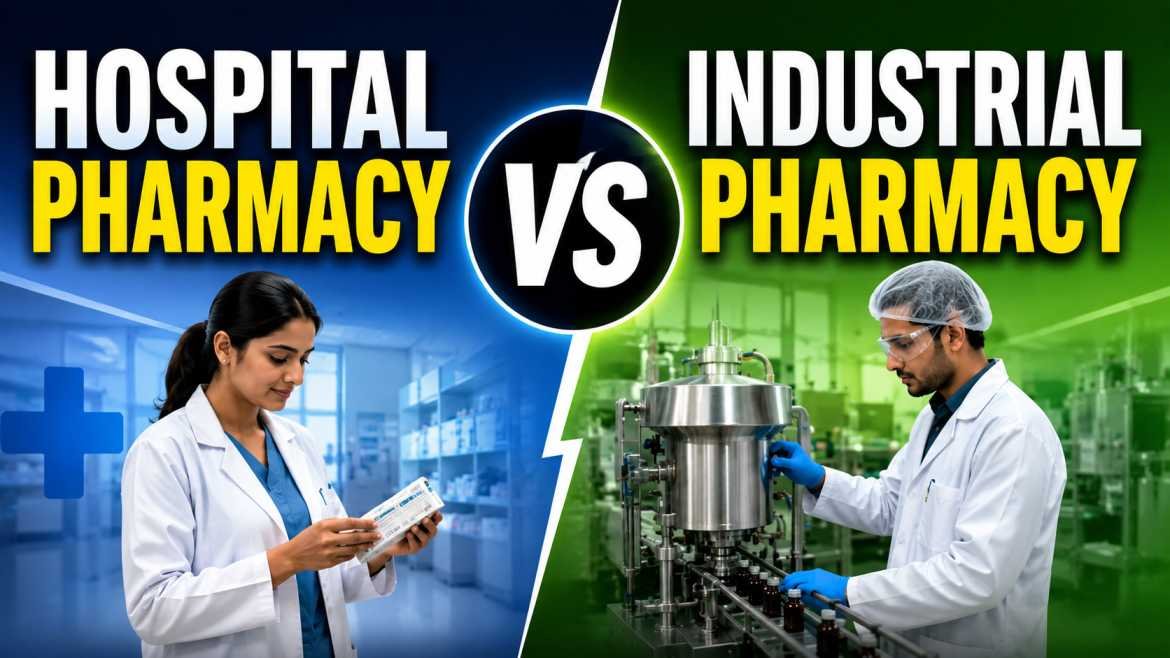

The pharmacy profession offers many exciting career paths, but two of the most popular options are Hospital Pharmacy and Industrial Pharmacy. Both fields play a vital role in healthcare and medicine, yet they differ greatly in work environment, responsibilities, salary, career growth, and required skills.
If you are a pharmacy student or someone planning a career in the pharmaceutical sector, understanding the differences between these two branches can help you choose the right path for your future.
What is Hospital Pharmacy?
Hospital pharmacy focuses on the safe and effective use of medicines inside hospitals and healthcare centers. Hospital pharmacists work closely with doctors, nurses, and patients to ensure proper medication management.
Main Responsibilities of a Hospital Pharmacist
- Dispensing prescribed medicines
- Monitoring patient medication therapy
- Preventing drug interactions
- Advising doctors on medicine selection
- Counseling patients about medicine usage
- Managing hospital drug inventory
- Preparing sterile formulations and injections

Work Environment
Hospital pharmacists usually work in:
- Government hospitals
- Private hospitals
- Clinics
- Healthcare centers
- Emergency care units
Skills Required
- Strong communication skills
- Patient counseling ability
- Clinical knowledge
- Attention to detail
- Teamwork with healthcare professionals
What is Industrial Pharmacy?
Industrial pharmacy deals with the manufacturing, development, testing, and marketing of pharmaceutical products. Industrial pharmacists work in pharmaceutical companies and research laboratories.
Main Responsibilities of an Industrial Pharmacist
- Drug manufacturing
- Quality control and quality assurance
- Research and development (R&D)
- Regulatory affairs
- Production management
- Packaging and labeling
- Clinical research
Work Environment
Industrial pharmacists commonly work in:
- Pharmaceutical manufacturing companies
- Research laboratories
- Biotechnology firms
- Regulatory agencies
- Drug testing laboratories
Skills Required
- Technical and analytical skills
- Knowledge of manufacturing processes
- Understanding of GMP and regulations
- Problem-solving ability
- Research-oriented mindset
Hospital Pharmacy vs Industrial Pharmacy
| Factor | Hospital Pharmacy | Industrial Pharmacy |
|---|---|---|
| Work Focus | Patient care | Drug manufacturing |
| Interaction | Direct patient interaction | Mostly laboratory/production work |
| Work Environment | Hospitals & clinics | Pharma companies & factories |
| Nature of Work | Clinical and healthcare-based | Technical and industrial |
| Salary Growth | Moderate | Higher growth potential |
| Stress Level | Emergency and patient pressure | Production deadlines |
| Career Opportunities | Clinical pharmacist, hospital administrator | QA, QC, R&D, production manager |
| Research Exposure | Limited | High |
Salary Comparison
Salary depends on qualifications, experience, and location.
Hospital Pharmacy Salary
- Freshers: Moderate starting salary
- Experienced pharmacists: Stable growth
- Government hospitals may offer better job security and benefits
Industrial Pharmacy Salary
- Higher starting packages in many pharma companies
- Faster salary growth in R&D, QA/QC, and regulatory affairs
- Better opportunities in multinational pharmaceutical companies
Which Career Has Better Growth?
Choose Hospital Pharmacy If You:
- Enjoy helping patients directly
- Like healthcare environments
- Prefer clinical work over manufacturing
- Have good communication skills
- Want a stable healthcare career
Choose Industrial Pharmacy If You:
- Are interested in drug development
- Enjoy research and laboratory work
- Prefer corporate environments
- Want higher salary potential
- Are interested in pharmaceutical technology
Advantages and Disadvantages
Hospital Pharmacy
Advantages
- Direct contribution to patient care
- Respect in healthcare settings
- Stable work environment
- Strong clinical exposure
Disadvantages
- Limited salary growth compared to industry
- Emergency duty shifts
- High responsibility in patient safety
Industrial Pharmacy
Advantages
- Higher salary opportunities
- Wide career options
- Research and innovation exposure
- International job opportunities
Disadvantages
- Less patient interaction
- Production pressure and targets
- Competitive corporate environment
Final Verdict: Which Is Better?
There is no single “best” option because both careers offer excellent opportunities. The right choice depends on your interests, personality, and career goals.
- If you are passionate about patient care and clinical services, hospital pharmacy is a great choice.
- If you are interested in manufacturing, research, and pharmaceutical innovation, industrial pharmacy may suit you better.
The pharmaceutical sector continues to grow rapidly, creating strong opportunities in both hospital and industrial pharmacy. Choose the field that matches your passion and long-term vision.
Conclusion
Hospital pharmacy and industrial pharmacy are both essential parts of the healthcare system. One focuses on patient well-being, while the other ensures safe and effective medicines reach the market.
Recommended Products