


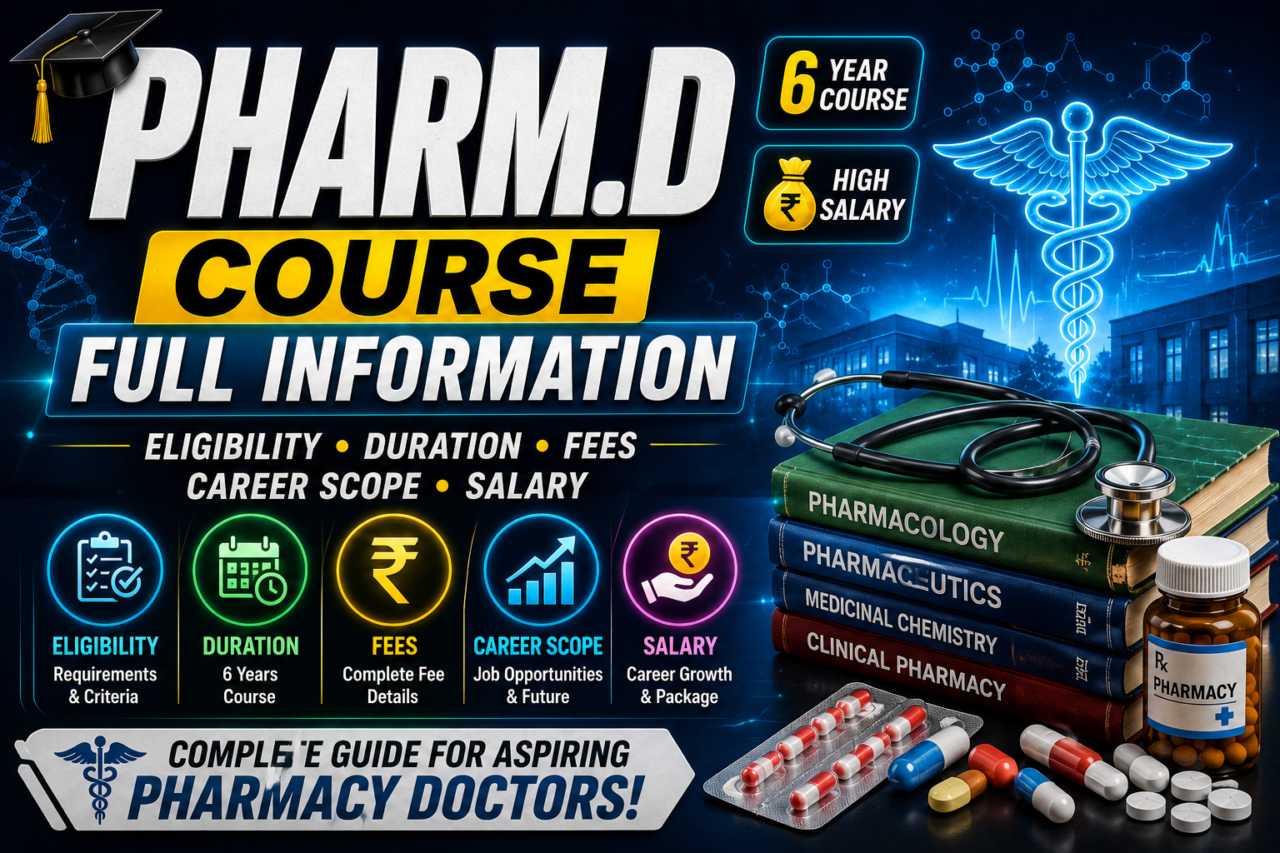

The Doctor of Pharmacy, commonly known as Pharm.D, is one of the most advanced pharmacy courses in the healthcare sector. Unlike traditional pharmacy programs that mainly focus on medicines and manufacturing, Pharm.D is designed to train students in clinical pharmacy, patient care, and hospital-based healthcare services.
In recent years, Pharm.D has gained popularity in India because of increasing demand for clinical pharmacists in hospitals, healthcare companies, and research organizations.
If you are planning a career in pharmacy and want detailed information about Pharm.D, this complete guide will help you understand eligibility, admission process, subjects, career scope, salary, and future opportunities.
What is Pharm.D?
Pharm.D stands for Doctor of Pharmacy. It is a professional doctoral degree in pharmacy focused on clinical practice and patient-centered healthcare.
The course teaches students:
- Proper use of medicines
- Patient counseling
- Drug interactions
- Clinical research
- Hospital pharmacy management
- Pharmacovigilance
- Disease management
Pharm.D graduates work closely with doctors and healthcare teams to improve patient treatment and medicine safety.
Pharm.D Course Duration
There are two types of Pharm.D programs in India:
1. Regular Pharm.D
- Duration: 6 Years
- Includes:
- 5 years academic study
- 1 year internship/residency in hospitals
2. Pharm.D (Post Baccalaureate)
- Duration: 3 Years
- For students who already completed B.Pharm
Eligibility Criteria for Pharm.D
Students must fulfill the following eligibility conditions:
For Regular Pharm.D
- Passed 10+2 with:
- Physics
- Chemistry
- Biology/Mathematics
- Minimum qualifying marks depend on college requirements.
For Pharm.D (PB)
- Must have completed B.Pharm from a recognized institution.
Admission Process
Admission may occur through:
- Merit basis
- State counseling
- Entrance exams conducted by universities or state authorities
Some private universities also conduct their own entrance tests.
Subjects in Pharm.D
The Pharm.D syllabus combines pharmaceutical sciences with clinical healthcare training.
Major Subjects Include:
- Human Anatomy & Physiology
- Pharmacology
- Pharmaceutical Chemistry
- Clinical Pharmacy
- Pharmacotherapeutics
- Pathophysiology
- Hospital Pharmacy
- Clinical Toxicology
- Pharmacovigilance
- Biostatistics & Research Methodology
- Community Pharmacy
Students also receive practical hospital training during the internship period.
Skills Required for Pharm.D Students
To succeed in Pharm.D, students should develop:
- Communication skills
- Clinical understanding
- Patient counseling ability
- Medical terminology knowledge
- Problem-solving skills
- Attention to detail
Since Pharm.D graduates interact directly with patients and doctors, confidence and professionalism are very important.
Pharm.D Internship
The final year includes hospital internship/residency training where students work in departments such as:
- General Medicine
- Pediatrics
- Surgery
- ICU
- Cardiology
- Oncology
During internship, students learn:
- Prescription analysis
- Drug interaction monitoring
- Patient counseling
- Clinical case discussions
This practical exposure is one of the biggest advantages of Pharm.D.
Pharm.D Fees in India
Fees vary depending on college type.
Approximate Fee Structure
- Government Colleges: ₹50,000 – ₹1,50,000 per year
- Private Colleges: ₹1,50,000 – ₹4,00,000 per year
Additional hostel and examination charges may apply.
Career Scope After Pharm.D
Pharm.D graduates have opportunities in both healthcare and pharmaceutical sectors.
Job Opportunities
- Clinical Pharmacist
- Hospital Pharmacist
- Drug Safety Associate
- Pharmacovigilance Officer
- Clinical Research Associate
- Medical Writer
- Regulatory Affairs Executive
- Medical Coding Specialist
- Pharma Industry Professional
Best Sectors for Pharm.D Graduates
Hospitals
Hospitals require clinical pharmacists for patient care and medication management.
Pharmacovigilance
Drug safety and adverse reaction monitoring is a growing sector in India.
Clinical Research
Pharm.D graduates can work in clinical trials and healthcare research organizations.
Medical Coding
Many healthcare companies hire pharmacy graduates for medical coding jobs.
Abroad Opportunities
Countries like the USA, Canada, Australia, and Gulf countries offer excellent opportunities for qualified pharmacists.
Salary After Pharm.D
Salary depends on skills, location, and experience.
Average Salary Range
- Freshers: ₹2.5 – ₹5 LPA
- Experienced Professionals: ₹6 – ₹12 LPA or higher
International salaries are generally much higher.
Pharm.D vs B.Pharm
| Feature | Pharm.D | B.Pharm |
|---|---|---|
| Duration | 6 Years | 4 Years |
| Focus | Clinical & Patient Care | Pharmaceutical Industry |
| Hospital Training | Extensive | Limited |
| Degree Type | Doctoral | Bachelor’s |
| Clinical Exposure | High | Moderate |
Students interested in hospital pharmacy and patient interaction often prefer Pharm.D.
Advantages of Pharm.D
- Strong clinical knowledge
- Better hospital exposure
- Growing demand in healthcare sector
- Opportunities in India and abroad
- Diverse career options
Challenges in Pharm.D
- Longer course duration
- Higher fees in private colleges
- Competitive job market
- Need for continuous skill development
Students should focus on internships, communication skills, and certifications to improve career growth.
Is Pharm.D a Good Career in 2026?
Yes, Pharm.D is becoming an important healthcare course because hospitals and healthcare systems increasingly require medication experts who can improve patient safety and treatment outcomes.
Students who are interested in:
- Clinical practice
- Healthcare services
- Patient counseling
- Research
- Hospital environment
can build a strong and rewarding career through Pharm.D.
Final Thoughts
Pharm.D is more than a pharmacy course—it is a healthcare-oriented professional degree that connects medicines with patient care. With the healthcare industry growing rapidly, skilled clinical pharmacists are becoming increasingly valuable.
Choosing Pharm.D can open doors to hospitals, research organizations, pharmacovigilance companies, and global healthcare opportunities. However, success depends on practical knowledge, communication skills, and continuous learning.
Students should carefully understand the course structure, career opportunities, and future scope before making their decision.
Recommended Products