


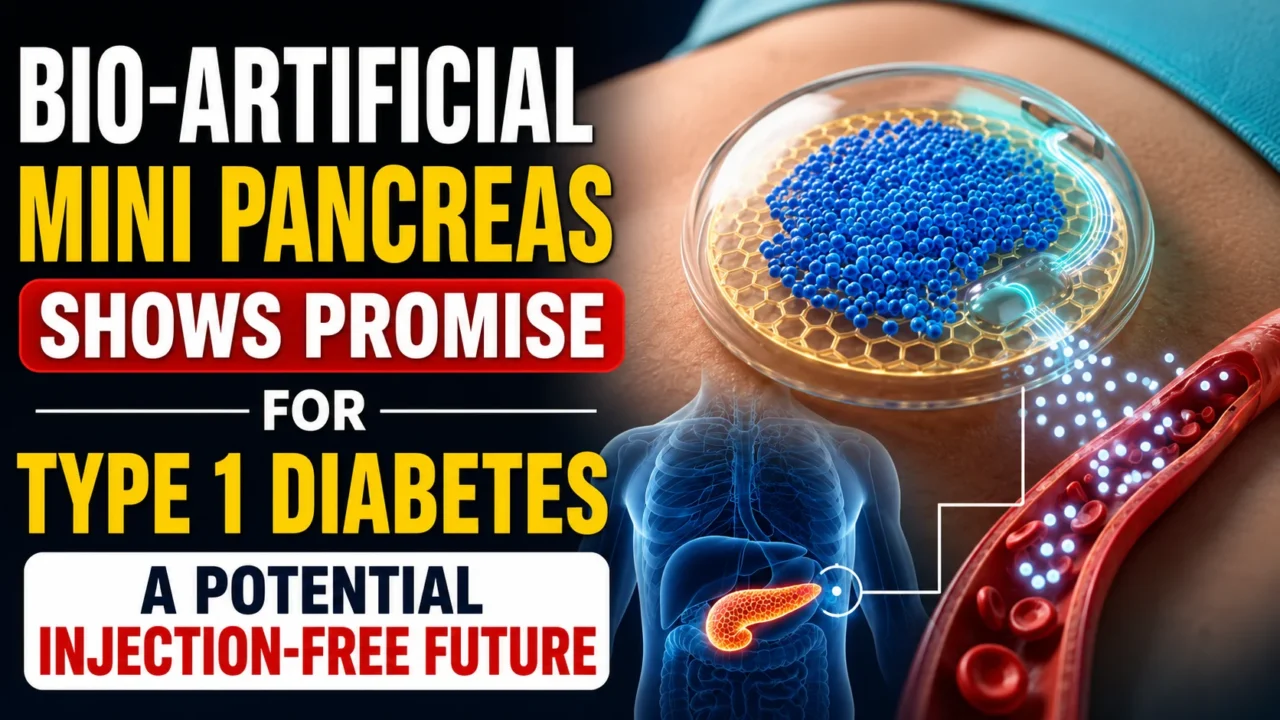

Type 1 Diabetes management may soon witness a revolutionary breakthrough with the development of implantable bio-artificial mini pancreases. Researchers from leading institutions, including MIT and the European VANGUARD consortium, have reported encouraging results from studies demonstrating long-term blood sugar regulation without the need for frequent insulin injections.

What Is a Bio-Artificial Mini Pancreas?
A bio-artificial mini pancreas is a small implantable medical device designed to mimic the natural function of the human pancreas. It contains thousands of insulin-producing pancreatic islet cells that can automatically sense blood glucose levels and release insulin when needed.
Unlike traditional insulin therapy, these devices aim to provide continuous and natural glucose regulation, reducing the burden of daily injections and constant blood sugar monitoring.
How Does the Technology Work?
The implant combines living pancreatic cells with advanced biomedical engineering technologies. The implanted device:
- Houses insulin-producing islet cells.
- Detects changes in blood glucose levels.
- Releases insulin automatically.
- Maintains near-normal blood sugar levels without manual intervention.
This approach closely resembles how a healthy pancreas functions in the body.
Major Challenges Addressed
Scientists have faced two significant obstacles in developing bio-artificial pancreas technology:
1. Oxygen Supply to Cells
Pancreatic islet cells require a constant oxygen supply to survive and function effectively. Researchers at MIT developed an integrated oxygen-generation system within the implant, helping keep the cells alive for extended periods.
2. Immune System Protection
The body’s immune system may attack implanted cells, leading to device failure. Researchers addressed this issue by using specialized protective biomaterials that shield the cells while still allowing nutrients and insulin to pass through.
Benefits of Bio-Artificial Mini Pancreas
The technology offers several potential advantages:
- Reduced dependence on insulin injections.
- Automatic blood glucose regulation.
- Better diabetes management.
- Improved quality of life.
- Reduced risk of severe blood sugar fluctuations.
- Long-term treatment possibility.
Why Is This Breakthrough Important?
More than millions of people worldwide live with Type 1 Diabetes and rely on lifelong insulin therapy. A successful implantable mini pancreas could transform diabetes treatment by providing a more natural and convenient solution.
If future clinical trials continue to show positive results, patients may eventually experience long-term blood sugar control without the need for daily insulin injections.
Current Status
The technology is still undergoing research and clinical evaluation. While the early findings are highly promising, additional studies are required to confirm long-term safety, effectiveness, and widespread usability before regulatory approval.
Conclusion
The development of implantable bio-artificial mini pancreases represents one of the most exciting advancements in diabetes care. By combining living insulin-producing cells with innovative biomedical engineering, researchers are moving closer to a future where people with Type 1 Diabetes can achieve natural blood sugar regulation without frequent insulin injections.
If successful, this breakthrough could redefine diabetes treatment and significantly improve the lives of millions of patients worldwide.
Recommended Products