

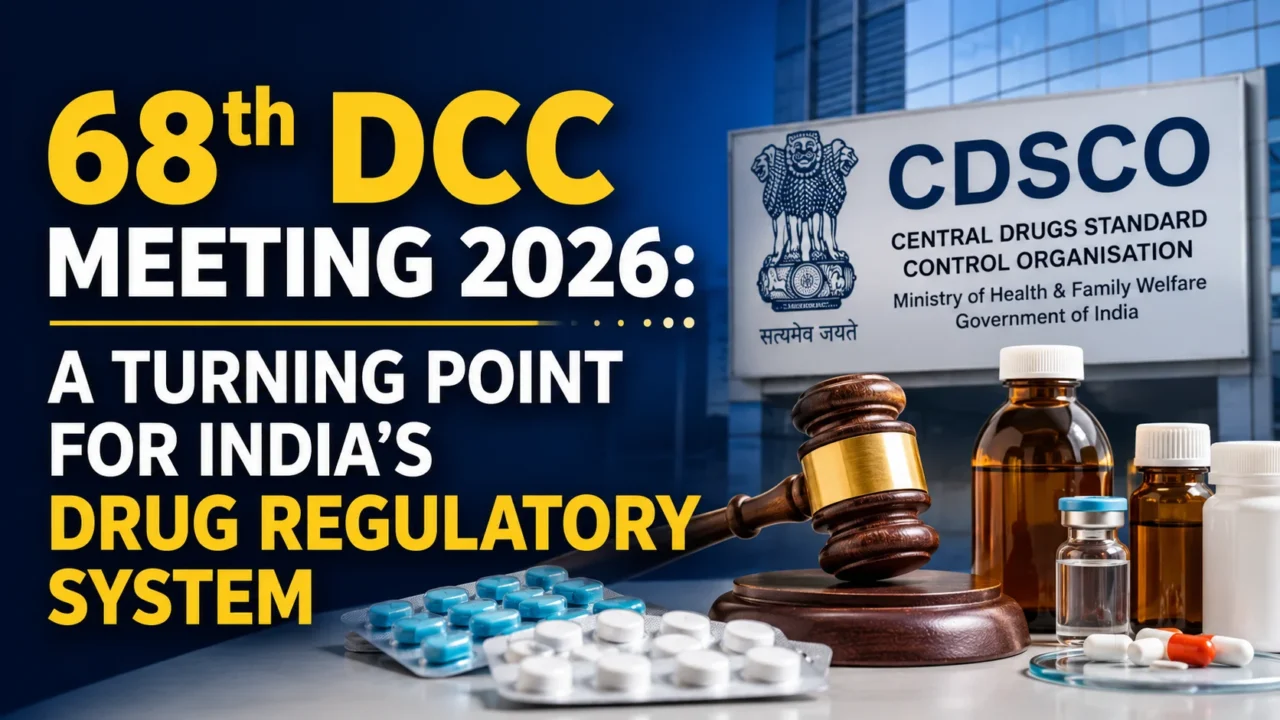

The 68th Drugs Consultative Committee (DCC) Meeting, organized by the Central Drugs Standard Control Organization (CDSCO) on 20 March 2026 in a hybrid mode, marked a significant milestone in strengthening India’s pharmaceutical regulatory framework. The meeting focused on improving drug quality, patient safety, regulatory efficiency, and digital transformation in the healthcare sector.

What is the Drugs Consultative Committee (DCC)?
The Drugs Consultative Committee (DCC) is a statutory body constituted under the Drugs and Cosmetics Act, 1940. It advises the Central and State Governments on matters related to the administration of the Act and ensures uniform implementation of drug regulations across India.
The 68th DCC meeting brought together regulators, policymakers, and stakeholders to discuss key reforms aimed at enhancing public health and ensuring the availability of safe and effective medicines.
Key Highlights of the 68th DCC Meeting
1. CCTV Cameras in Medical Stores May Become Mandatory
One of the major proposals discussed during the meeting was the mandatory installation of CCTV cameras in medical stores. The objective is to strengthen monitoring and verification of drug dispensing activities, improve transparency, and prevent the misuse of prescription medicines.
Expected Benefits:
- Better compliance with drug regulations
- Improved monitoring of Schedule H and Schedule X medicines
- Enhanced accountability in retail pharmacies
- Prevention of unauthorized sale of medicines
2. NDPS Drugs Real-Time Tracking Portal Approved
The committee approved the development of a real-time tracking portal for NDPS (Narcotic Drugs and Psychotropic Substances) drugs. This digital platform will help authorities monitor the movement of controlled substances from manufacturing to dispensing.
Advantages of the Portal:
- Real-time monitoring of NDPS drugs
- Reduction in diversion and illegal trafficking
- Improved inventory management
- Enhanced regulatory oversight
This initiative aligns with India’s growing focus on digital governance in healthcare regulation.
3. New Schedule H1 Inclusion Recommended
The DCC recommended the inclusion of additional medicines under Schedule H1, which requires stricter prescription-based dispensing and record maintenance.
The recommendation aims to:
- Reduce irrational use of medicines
- Combat antimicrobial resistance (AMR)
- Ensure responsible dispensing practices
- Strengthen patient safety
The final list of medicines will be notified after regulatory review and approval.
4. Stricter Action Against Surrogate Advertisements
The committee emphasized stronger regulatory measures against surrogate advertisements that indirectly promote medicines, health products, or restricted substances.
Authorities may initiate:
- Enhanced surveillance
- Faster regulatory action
- Penalties for violations
- Better coordination among enforcement agencies
This move is expected to curb misleading promotions and protect consumers from false health claims.
5. Patient-Centric Initiatives
The meeting also highlighted the importance of patient-focused regulatory reforms. Discussions included improving access to quality medicines, strengthening pharmacovigilance systems, and enhancing public awareness regarding safe medicine use.
The patient-centric approach reflects CDSCO’s commitment to building a safer and more transparent healthcare ecosystem.
Impact on Pharmacists and Healthcare Professionals
The decisions discussed in the 68th DCC Meeting will directly impact pharmacists, medical store owners, manufacturers, and healthcare providers.
For Pharmacists:
- Increased compliance requirements
- Better record-keeping practices
- Enhanced responsibility in dispensing medicines
- Adoption of digital regulatory systems
For Pharmaceutical Companies:
- Stronger monitoring of regulated products
- Improved supply chain transparency
- Compliance with evolving regulatory requirements
For Patients:
- Safer medicines
- Better protection against misuse and counterfeit products
- Improved healthcare outcomes
Conclusion
The 68th DCC Meeting 2026 represents a major step toward modernizing India’s drug regulatory framework. From CCTV monitoring in medical stores to real-time tracking of NDPS drugs and stricter control over medicine dispensing, the committee’s recommendations reflect a strong commitment to patient safety, transparency, and digital transformation.
As India continues to emerge as a global pharmaceutical powerhouse, such regulatory reforms will play a crucial role in ensuring that the healthcare system remains robust, accountable, and patient-centric.
Stay tuned for further updates as these recommendations move toward implementation and regulatory approval.
Recommended Products