


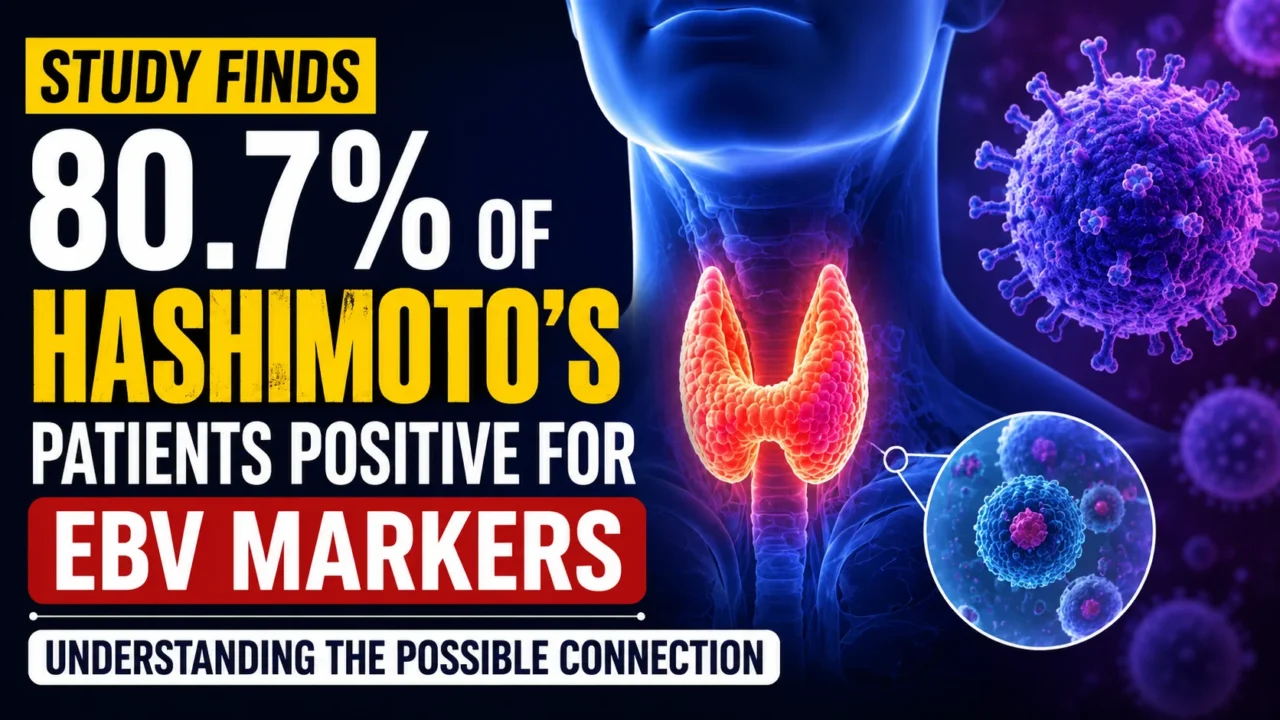

A recent study has drawn attention to a potential link between Epstein-Barr Virus (EBV) infection and Hashimoto’s Thyroiditis, one of the most common autoimmune thyroid disorders worldwide. According to the research, 80.7% of Hashimoto’s thyroiditis patients tested positive for EBV markers in thyroid tissue, raising important questions about the role of viral infections in autoimmune diseases.
While the findings do not prove that EBV directly causes Hashimoto’s disease, they add to the growing body of evidence suggesting that viral infections may contribute to immune system dysfunction and autoimmune responses.

What is Hashimoto’s Thyroiditis?
Hashimoto’s Thyroiditis is an autoimmune condition in which the body’s immune system mistakenly attacks the thyroid gland. Over time, this can lead to inflammation, thyroid damage, and reduced production of thyroid hormones.
Common Symptoms
- Fatigue and weakness
- Weight gain
- Cold intolerance
- Dry skin
- Hair loss
- Depression
- Constipation
- Enlarged thyroid gland (goiter)
Hashimoto’s disease is one of the leading causes of hypothyroidism worldwide.
What is Epstein-Barr Virus (EBV)?
Epstein-Barr Virus is a member of the herpesvirus family and is one of the most common human viruses. It is best known for causing infectious mononucleosis, often called the “kissing disease.”
Most people become infected with EBV at some point in their lives, and the virus can remain dormant within the body for years after the initial infection.
Key Findings of the Study
The study reported that:
- 80.7% of Hashimoto’s thyroiditis patients showed positive EBV markers in thyroid tissue.
- Researchers observed evidence of EBV presence within thyroid cells.
- The findings suggest a possible association between viral infection and autoimmune thyroid disease.
These results indicate that EBV may be involved in triggering or influencing immune responses within the thyroid gland.
How Could EBV Contribute to Autoimmune Disease?
Scientists have proposed several theories:
1. Molecular Mimicry
EBV proteins may resemble certain thyroid proteins. The immune system may mistakenly attack thyroid tissue while targeting the virus.
2. Chronic Immune Activation
Persistent viral infection may continuously stimulate the immune system, increasing the risk of autoimmune reactions.
3. Inflammation
EBV infection may promote inflammatory responses that damage thyroid tissue and contribute to disease progression.
Does This Mean EBV Causes Hashimoto’s?
No. The study demonstrates an association, not a direct cause-and-effect relationship.
Many individuals infected with EBV never develop Hashimoto’s thyroiditis, and many factors are believed to contribute to the disease, including:
- Genetic susceptibility
- Environmental triggers
- Hormonal influences
- Immune system abnormalities
- Other infections
Further research is needed to determine whether EBV plays a direct role in the development of Hashimoto’s disease.
Why Is This Research Important?
Understanding the relationship between viral infections and autoimmune diseases may help researchers:
- Improve early diagnosis
- Identify individuals at higher risk
- Develop targeted treatment approaches
- Better understand disease mechanisms
- Explore future preventive strategies
Future Directions
Researchers are continuing to investigate:
- How EBV interacts with thyroid cells
- Whether antiviral therapies could influence disease outcomes
- The role of other viruses in autoimmune disorders
- New biomarkers for earlier detection of thyroid disease
Conclusion
The finding that 80.7% of Hashimoto’s thyroiditis patients tested positive for EBV markers in thyroid tissue provides valuable insight into the complex relationship between infections and autoimmune diseases. Although the study does not establish that EBV causes Hashimoto’s thyroiditis, it strengthens the hypothesis that viral infections may contribute to autoimmune processes in susceptible individuals.
As research continues, a better understanding of these interactions could lead to improved diagnostic tools, more personalized treatments, and new approaches to managing autoimmune thyroid disorders.
Recommended Products