


Introduction
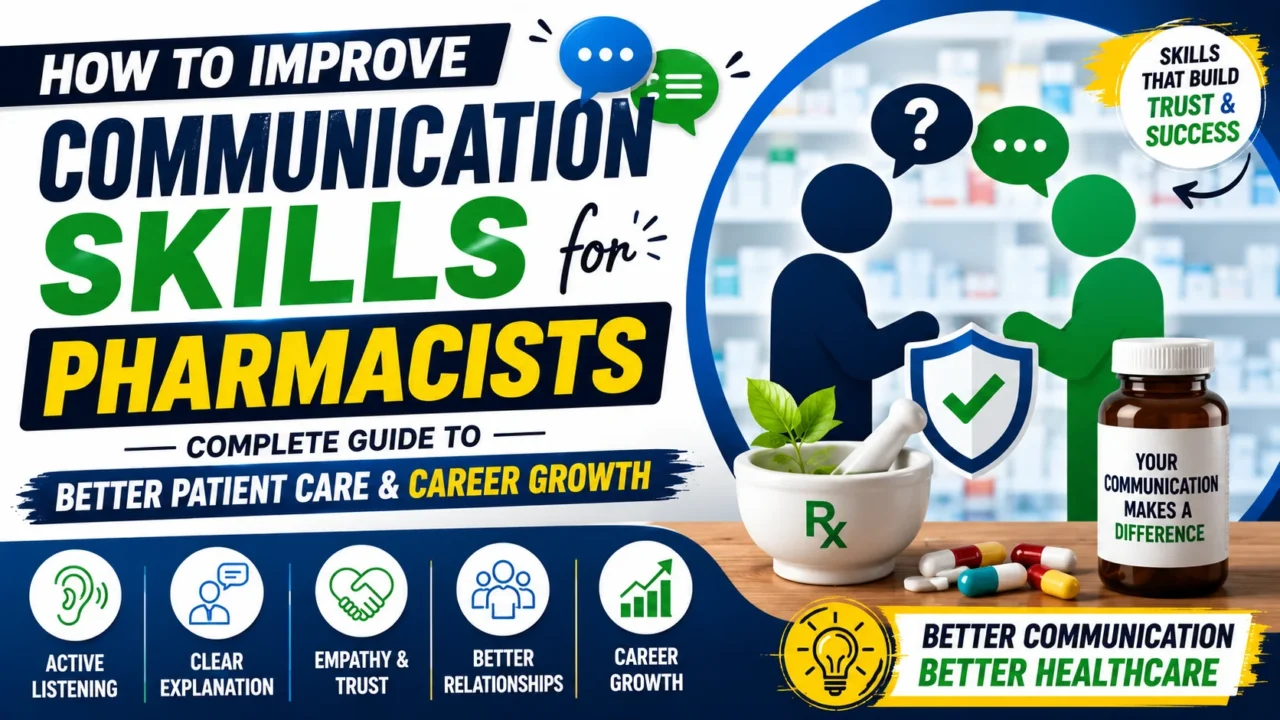
Communication is one of the most important skills for pharmacists. Whether you work in a retail pharmacy, hospital, clinic, pharmaceutical company, or healthcare organization, your ability to communicate effectively can directly impact patient safety, treatment outcomes, and professional growth.
A pharmacist is not only responsible for dispensing medicines but also for educating patients, counseling them about medications, explaining dosage instructions, and collaborating with healthcare professionals.
In this guide, you’ll learn practical strategies to improve communication skills as a pharmacist and become a trusted healthcare professional.
Why Communication Skills Matter for Pharmacists
| Benefit | Impact |
|---|---|
| Better Patient Care | Improves patient understanding of medications |
| Reduced Medication Errors | Ensures correct medicine usage |
| Higher Patient Satisfaction | Builds trust and confidence |
| Better Teamwork | Improves collaboration with doctors and nurses |
| Career Growth | Essential for leadership and management roles |
Essential Communication Skills Every Pharmacist Needs
| Skill | Purpose |
|---|---|
| Active Listening | Understanding patient concerns |
| Verbal Communication | Explaining medications clearly |
| Non-Verbal Communication | Building trust through body language |
| Empathy | Understanding patient emotions |
| Written Communication | Prescription notes, reports, emails |
| Professional Communication | Working with healthcare teams |
Common Communication Challenges Faced by Pharmacists
| Challenge | Example |
|---|---|
| Language Barriers | Patients speaking different languages |
| Medical Jargon | Using complex terminology |
| Nervousness | Lack of confidence while counseling |
| Difficult Patients | Handling complaints and frustration |
| Time Constraints | Busy pharmacy environment |

10 Practical Ways to Improve Communication Skills
1. Practice Active Listening
Many pharmacists focus on providing information but forget to listen.
Good Practice:
- Allow patients to finish speaking.
- Maintain eye contact.
- Ask follow-up questions.
| Active Listening Techniques |
|---|
| Maintain eye contact |
| Avoid interrupting |
| Repeat important points |
| Ask clarifying questions |
2. Use Simple Language
Patients may not understand medical terminology.
| Instead of Saying | Say This |
|---|---|
| Hypertension | High blood pressure |
| Analgesic | Pain-relief medicine |
| Antipyretic | Medicine to reduce fever |
| BID | Twice daily |
Example:
❌ “Take this antihypertensive medication BID.”
✅ “Take this medicine for blood pressure twice a day.”
3. Improve Your Vocabulary
Strong vocabulary improves professional communication.
| Daily Practice | Benefit |
|---|---|
| Read healthcare articles | Learn medical terms |
| Read newspapers | Improve general English |
| Watch educational videos | Improve pronunciation |
| Learn 5 new words daily | Better speaking confidence |
4. Develop Confidence in Patient Counseling
Patients trust confident pharmacists.
Tips:
- Practice in front of a mirror.
- Record your voice.
- Role-play counseling scenarios.
| Confidence Building Activities |
|---|
| Mirror practice |
| Group discussions |
| Mock counseling sessions |
| Public speaking |
5. Improve Non-Verbal Communication
Research shows that body language significantly influences communication.
| Positive Body Language | Negative Body Language |
|---|---|
| Eye contact | Looking away constantly |
| Smiling | Expressionless face |
| Open posture | Folded arms |
| Nodding | Appearing distracted |
6. Learn Patient Counseling Techniques
A pharmacist should explain:
| Counseling Topic | Information to Discuss |
|---|---|
| Dosage | When and how to take |
| Side Effects | Common side effects |
| Storage | Proper storage conditions |
| Precautions | Foods or medicines to avoid |
7. Improve Communication with Doctors and Nurses
Healthcare is a team effort.
| Professional Communication Tips |
|---|
| Be concise |
| Use accurate terminology |
| Document discussions |
| Respect professional boundaries |
8. Learn Public Speaking
Public speaking improves confidence and communication.
Activities:
- Join seminars
- Present case studies
- Conduct health awareness sessions
- Participate in workshops
| Public Speaking Benefits |
|---|
| Better confidence |
| Strong leadership |
| Improved patient education |
| Career advancement |
9. Use Digital Communication Skills
Modern pharmacists communicate through digital platforms.
| Digital Skill | Importance |
|---|---|
| Email Writing | Professional communication |
| LinkedIn Networking | Career growth |
| Telehealth Communication | Virtual patient support |
| Social Media Education | Public awareness |
10. Seek Feedback Regularly
Constructive feedback helps identify weaknesses.
Ask Feedback From:
| Person | What to Ask |
|---|---|
| Patients | Was the explanation clear? |
| Seniors | How can I improve? |
| Colleagues | Was my communication effective? |
| Mentors | Areas needing improvement |
Daily Communication Improvement Plan
| Time | Activity |
|---|---|
| 15 Minutes | Read healthcare news |
| 10 Minutes | Learn new vocabulary |
| 10 Minutes | Practice speaking |
| 15 Minutes | Watch healthcare presentations |
| 10 Minutes | Patient counseling practice |
Total Time Required: 60 Minutes Daily
Communication Mistakes Pharmacists Should Avoid
| Mistake | Why It Is Harmful |
|---|---|
| Using medical jargon | Confuses patients |
| Interrupting patients | Reduces trust |
| Speaking too fast | Information may be missed |
| Lack of eye contact | Appears uninterested |
| Not confirming understanding | Increases medication errors |
Role of Communication in Career Growth
Strong communication skills can help pharmacists become:
| Career Option | Communication Importance |
|---|---|
| Clinical Pharmacist | Patient counseling |
| Hospital Pharmacist | Team collaboration |
| Medical Representative | Product presentation |
| Pharmacovigilance Officer | Report writing |
| Pharmacy Manager | Leadership |
| Healthcare Educator | Public speaking |
Future of Communication Skills in Pharmacy
In 2026 and beyond, pharmacists will increasingly work in:
- Telemedicine
- Digital healthcare platforms
- Online pharmacies
- Healthcare content creation
- Patient education programs
Professionals with excellent communication skills will have a significant advantage in these growing fields.
Conclusion
Communication is not just a soft skill for pharmacists—it is a professional necessity. Effective communication improves patient safety, strengthens professional relationships, enhances career opportunities, and builds trust within the healthcare system.
By practicing active listening, simplifying medical information, improving confidence, and developing digital communication skills, pharmacists can become more effective healthcare professionals and leaders in the evolving healthcare landscape.
Key Takeaway
| Remember |
|---|
| Listen more |
| Speak clearly |
| Show empathy |
| Practice regularly |
| Keep learning |
The best pharmacists are not only medicine experts—they are excellent communicators who make healthcare easier for everyone to understand. 💊🗣️📈
Recommended Products