


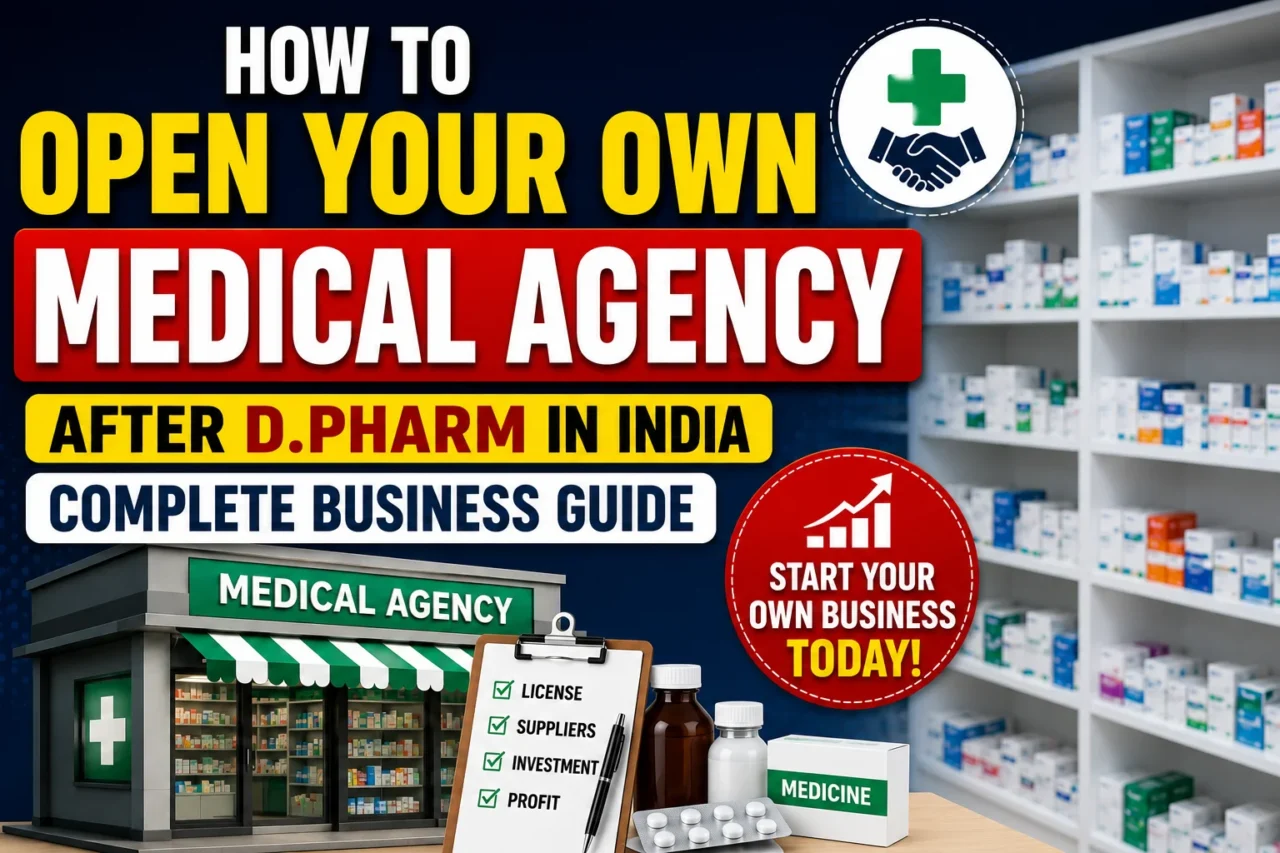

Starting your own medical agency is one of the most profitable career options after completing a Diploma in Pharmacy (D.Pharm). Instead of working as an employee, many pharmacists choose to become pharmaceutical distributors and supply medicines to hospitals, clinics, pharmacies, and healthcare institutions.
The Indian pharmaceutical market is growing rapidly, creating excellent opportunities for pharmacy professionals to establish successful medical agencies.
In this guide, you’ll learn everything about opening a medical agency after D.Pharm, including licenses, investment, profit potential, legal requirements, and business strategies.
What is a Medical Agency?
A medical agency, also known as a pharmaceutical distribution business, acts as a link between pharmaceutical companies and retail medical stores.
The agency purchases medicines directly from manufacturers and supplies them to:
- Retail Medical Stores
- Hospitals
- Nursing Homes
- Clinics
- Government Institutions
- Healthcare Centers
Can a D.Pharm Holder Open a Medical Agency?
Yes, Absolutely!
A D.Pharm holder is eligible to start a medical agency provided they meet the licensing requirements under the Drugs and Cosmetics Act.
Having a pharmacy qualification gives you a strong advantage because you already understand:
- Medicines
- Drug storage
- Prescription requirements
- Regulatory compliance
- Pharmacy operations
Why Start a Medical Agency After D.Pharm?
Advantages
✅ Be Your Own Boss
✅ High Growth Potential
✅ Recurring Income
✅ Expanding Pharmaceutical Market
✅ Opportunity to Build a Large Business
✅ No Fixed Salary Limit
Step 1: Gain Basic Industry Knowledge
Before starting a medical agency, understand:
- Pharmaceutical distribution channels
- Product categories
- Wholesale pricing
- Supply chain management
- GST and billing systems
Working for 1–2 years in a wholesale pharmacy can provide valuable experience.
Step 2: Choose a Business Structure
You can register your business as:
Proprietorship
Best for beginners.
Partnership Firm
Suitable when starting with partners.
LLP (Limited Liability Partnership)
Offers legal protection and credibility.
Private Limited Company
Recommended for larger businesses.
Step 3: Arrange Suitable Premises
For obtaining a wholesale drug license, you need commercial premises.
Requirements
- Minimum area generally around 10 square meters
- Proper ventilation
- Clean storage conditions
- Refrigerator for temperature-sensitive medicines
The premises can be:
- Owned property
- Rented property

Step 4: Obtain Drug License
A Drug License is the most important requirement.
Types of Licenses
Wholesale Drug License
Required for medicine distribution.
Issued by the State Drug Control Department.
Documents Required
- D.Pharm Certificate
- Pharmacist Registration Certificate
- Aadhaar Card
- PAN Card
- Property Documents
- Rent Agreement (if rented)
- Refrigerator details
- Affidavit and declarations
Step 5: GST Registration
GST registration is mandatory for pharmaceutical distribution businesses.
Benefits include:
- Legal invoicing
- Input tax credit
- Business credibility
Step 6: Open a Current Bank Account
A dedicated business account helps:
- Track transactions
- Manage payments
- Maintain financial records
Step 7: Contact Pharmaceutical Companies
After obtaining your license, approach:
- Pharmaceutical manufacturers
- Pharma marketing companies
- Generic medicine companies
Apply for:
- Stockistship
- Distributorship
- Super Stockist Opportunities
Step 8: Purchase Inventory
Initially focus on:
Fast-Moving Medicines
- Antibiotics
- Painkillers
- Diabetes medicines
- Cardiac medicines
- Vitamins
Avoid excessive inventory during the initial phase.
Step 9: Invest in Billing Software
Use pharmacy software such as:
- Marg ERP
- Pharmasoft
- RetailGraph
Benefits:
- Stock management
- GST billing
- Expiry tracking
- Purchase records
Investment Required
Small Medical Agency
| Expense | Approximate Cost |
|---|---|
| Drug License | ₹5,000–₹20,000 |
| GST Registration | ₹0–₹5,000 |
| Furniture | ₹20,000–₹50,000 |
| Refrigerator | ₹15,000–₹30,000 |
| Software | ₹10,000–₹30,000 |
| Initial Stock | ₹2–10 Lakh |
Total Investment
₹3 Lakh to ₹15 Lakh depending on scale.
Profit Margin in Medical Agency
Profit margins vary according to products.
Average Margins
| Product Type | Margin |
|---|---|
| Branded Medicines | 8–20% |
| Generic Medicines | 20–60% |
| Surgical Products | 15–40% |
| Healthcare Products | 20–50% |
Successful agencies can generate substantial monthly income once a strong customer network is established.
Challenges in Medical Agency Business
- Competition
- Credit management
- Stock expiry
- Regulatory compliance
- Delayed payments
Proper planning can minimize these challenges.
Tips for Success
Build Strong Relationships
Develop connections with:
- Doctors
- Hospitals
- Retail pharmacists
Maintain Stock Availability
Always keep fast-moving medicines available.
Focus on Service
Fast delivery helps retain customers.
Use Digital Marketing
Promote your business through:
- Google Business Profile
- WhatsApp Marketing
- Local SEO
Is Medical Agency Better Than a Pharmacist Job?
| Pharmacist Job | Medical Agency |
|---|---|
| Fixed Salary | Unlimited Growth Potential |
| Limited Promotions | Business Expansion Opportunities |
| Job Security | Business Ownership |
| Fixed Working Hours | Flexible Operations |
Both options have advantages, but medical agencies offer significantly higher earning potential for entrepreneurial pharmacists.
Future Scope of Medical Agency Business in India
India is one of the world’s largest pharmaceutical markets. With increasing healthcare awareness, hospital expansion, and rising medicine consumption, the pharmaceutical distribution sector is expected to grow strongly in the coming years.
For D.Pharm graduates who want financial independence and long-term business growth, opening a medical agency can be an excellent career choice.
Conclusion
A D.Pharm qualification not only opens doors to pharmacist jobs but also provides a strong foundation for entrepreneurship. By obtaining the necessary licenses, securing distributorships, and managing operations professionally, you can build a successful medical agency business with significant income potential.
If you have a passion for healthcare and business, starting your own medical agency after D.Pharm could be one of the best investments in your future.
Recommended Products