


Introduction
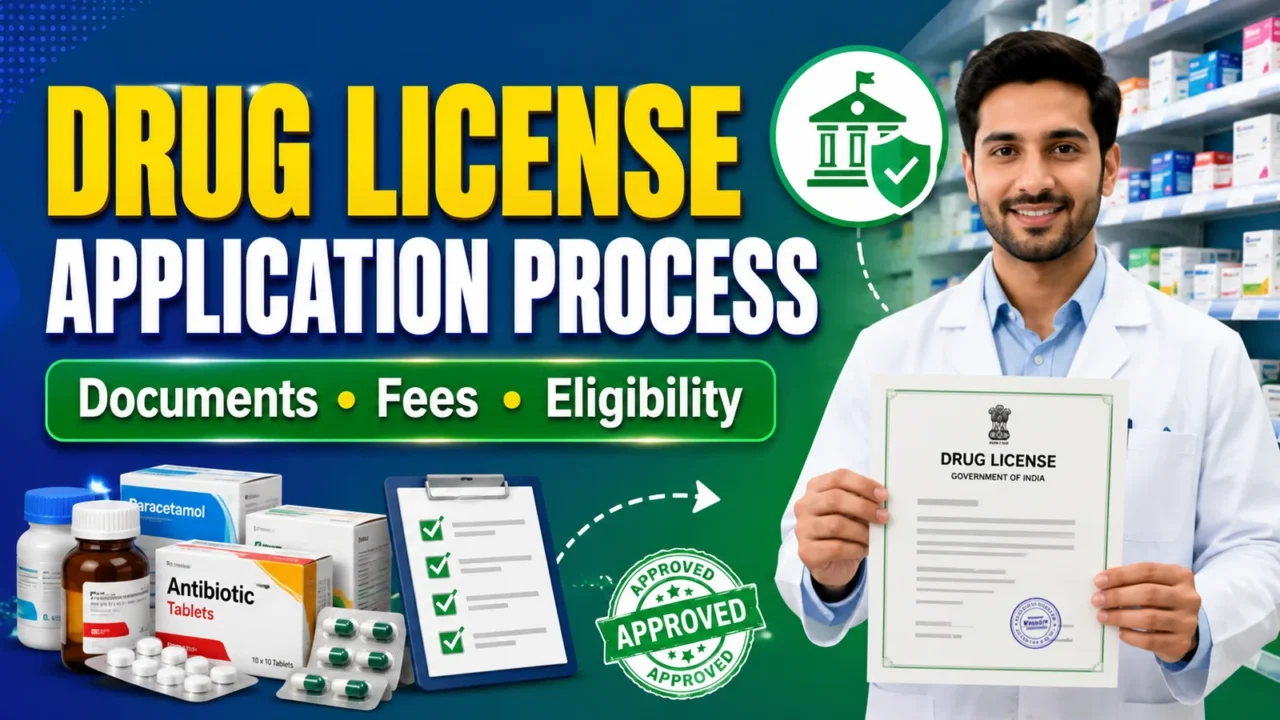
A Drug License is a mandatory legal authorization required for any person or business involved in the manufacturing, sale, stocking, distribution, or import of medicines in India. The license is issued under the Drugs and Cosmetics Act, 1940 and Drugs and Cosmetics Rules, 1945. Without a valid drug license, operating a pharmacy, medical store, wholesale drug business, or pharmaceutical company is illegal.
If you are planning to open a medical store, pharmacy shop, wholesale medicine business, or pharmaceutical distribution company, this guide will explain the complete application process, eligibility requirements, documents needed, fees, and approval procedure.
What is a Drug License?
A Drug License is an official permission granted by the State Drug Control Department or the Central Drugs Standard Control Organization (CDSCO) to ensure that medicines are stored, sold, and distributed safely according to government regulations.
Types of Drug Licenses in India
1. Retail Drug License (RDL)
A Retail Drug License is required for:
- Medical stores
- Pharmacy shops
- Chemist shops
- Hospital pharmacies
This license allows the sale of medicines directly to consumers.
2. Wholesale Drug License (WDL)
A Wholesale Drug License is required for:
- Medicine distributors
- Pharmaceutical wholesalers
- Stockists
- Drug supply agencies
This license permits the sale of medicines to retailers, hospitals, and other licensed businesses.
3. Manufacturing Drug License
Required for companies manufacturing pharmaceutical products. Approval generally involves CDSCO and state drug authorities.
4. Import Drug License
Required for importing drugs and pharmaceutical products into India.
Eligibility for Drug License
For Retail Drug License
The applicant must:
- Be a registered pharmacist or employ a registered pharmacist.
- Have a pharmacy premises meeting minimum area requirements.
- Provide proper storage facilities, including refrigeration where necessary.
For Wholesale Drug License
The applicant must:
- Be a qualified pharmacist or appoint a competent person.
- Have appropriate storage facilities.
- Possess a legally approved business premises.
Minimum Space Requirement
| License Type | Minimum Area |
|---|---|
| Retail Drug License | 10 sq. meters |
| Wholesale Drug License | 10–15 sq. meters |
| Retail + Wholesale Combined | 15 sq. meters or more |
The premises must have adequate storage and refrigeration facilities for temperature-sensitive medicines.

Documents Required for Drug License
Personal Documents
- Aadhaar Card
- PAN Card
- Passport-size photographs
- Mobile number and email ID
Premises Documents
- Rent Agreement or Ownership Proof
- Property Tax Receipt (if applicable)
- Electricity Bill
- Site Layout Plan
- Premises Blueprint
Pharmacist Documents
- D.Pharm/B.Pharm Certificates
- Pharmacist Registration Certificate
- Appointment Letter
- Affidavit of Pharmacist
Business Documents
- GST Registration (if applicable)
- Partnership Deed (for partnership firms)
- MOA and AOA (for companies)
- Business Registration Documents
Storage Facility Documents
- Refrigerator Invoice
- Air Conditioning Details (if required)
Step-by-Step Drug License Application Process
Step 1: Choose the Type of Drug License
Determine whether you need:
- Retail Drug License
- Wholesale Drug License
- Manufacturing License
- Import License
Step 2: Arrange Suitable Premises
Ensure the shop or office meets the minimum area and storage requirements.
Step 3: Appoint a Registered Pharmacist
For retail pharmacy operations, a registered pharmacist is mandatory.
Step 4: Gather Required Documents
Prepare all personal, premises, pharmacist, and business-related documents before applying.
Step 5: Apply Online
Submit the application through:
- State Drug Control Department portal
- ONDLS (Online National Drugs Licensing System)
- CDSCO portal (for specific categories)
Step 6: Pay Government Fees
The applicable fee depends on the type of license and state regulations.
Step 7: Inspection by Drug Inspector
A Drug Inspector may visit the premises to verify:
- Shop area
- Storage conditions
- Documents
- Pharmacist availability
Step 8: Approval and License Issuance
After successful verification and approval, the Drug License is issued.
Drug License Fees in India
Government fees vary by state and license type.
| License Type | Approximate Government Fee |
| Retail Drug License | ₹1,500 – ₹3,000 |
| Wholesale Drug License | ₹3,000 – ₹6,000 |
| Manufacturing License | ₹5,000+ |
Additional professional and documentation charges may apply.
How Long Does It Take to Get a Drug License?
Typically, approval may take:
- 15–45 days depending on the state
- Additional time if documents are incomplete
Common Reasons for Rejection
- Incomplete documentation
- Insufficient shop area
- Lack of registered pharmacist
- Improper storage facilities
- Incorrect application details
Benefits of Having a Drug License
- Legal operation of medical stores
- Ability to sell and distribute medicines
- Business credibility
- Compliance with government regulations
- Eligibility for pharmaceutical supply contracts
Frequently Asked Questions (FAQs)
Can a D.Pharm holder apply for a Drug License?
Yes. A registered D.Pharm pharmacist can apply for or manage a retail drug license subject to state regulations.
Is GST mandatory for a Drug License?
GST requirements depend on business structure and turnover, but many businesses obtain GST registration during setup.
Can I apply for a Drug License online?
Yes. Most states now provide online application facilities through state drug control portals and ONDLS.
What is the validity of a Drug License?
Current regulations generally provide perpetual validity subject to payment of retention fees and compliance requirements.
Conclusion
Obtaining a Drug License is the first and most important step for starting a pharmacy, medical store, wholesale medicine business, or pharmaceutical company in India. By fulfilling the eligibility requirements, arranging proper premises, appointing a registered pharmacist, and submitting the necessary documents, applicants can obtain a Drug License and legally operate their pharmaceutical business.
Recommended Products