
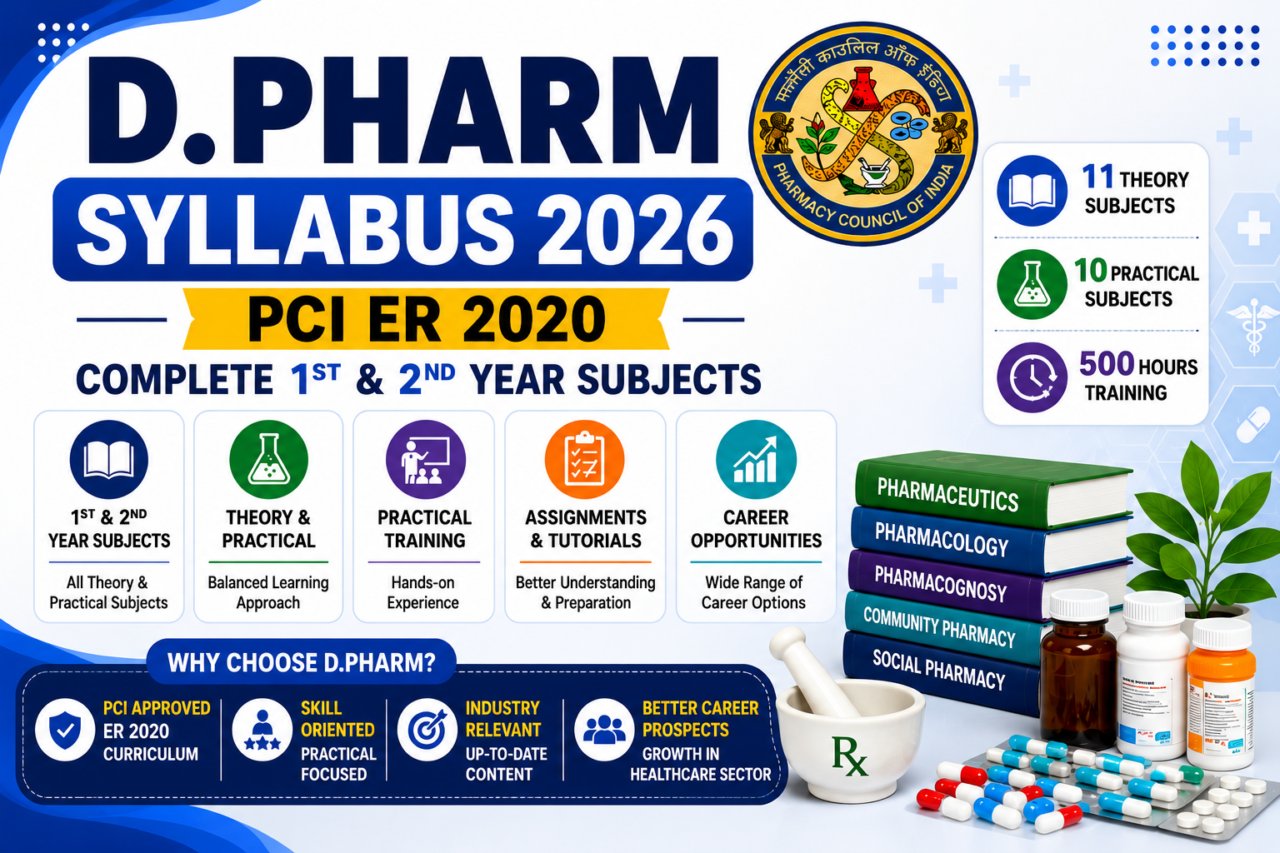

Diploma in Pharmacy (D.Pharm) is one of the most popular pharmacy courses in India. The program is regulated by the Pharmacy Council of India (PCI) and follows the Education Regulations 2020 (ER-2020). The updated syllabus focuses on practical learning, patient care, pharmaceutical sciences, and community healthcare.
What is D.Pharm?
D.Pharm (Diploma in Pharmacy) is a 2-year professional diploma course designed to prepare students for careers in community pharmacy, hospital pharmacy, pharmaceutical industries, and healthcare services. The curriculum combines theoretical knowledge with laboratory practicals and professional training.
D.Pharm Course Structure (PCI ER 2020)
The D.Pharm program is divided into:
- Part I (First Year)
- Part II (Second Year)
- Practical Training
The syllabus contains:
- 11 Theory Subjects
- 10 Practical Subjects
- 500 Hours of Practical Training
- Tutorial Sessions
- Assignments and Field Visits
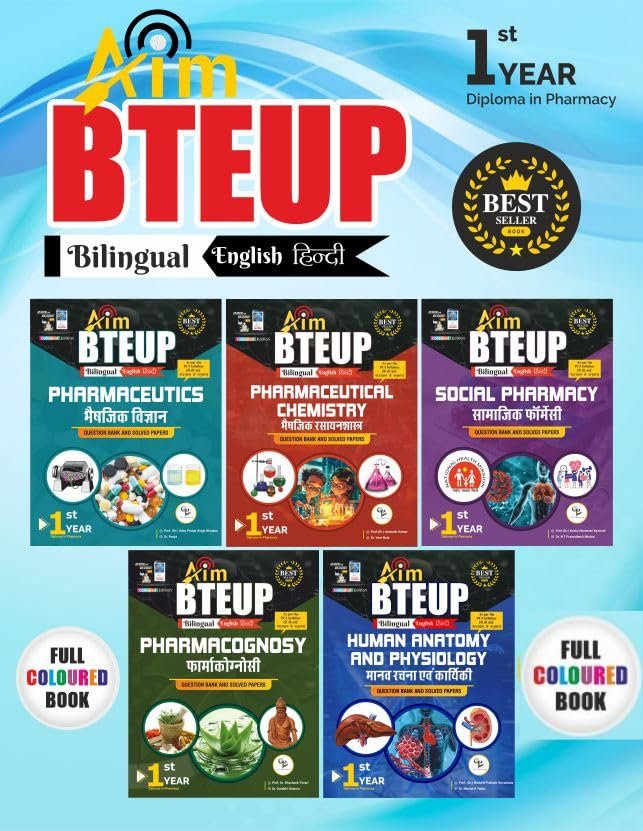
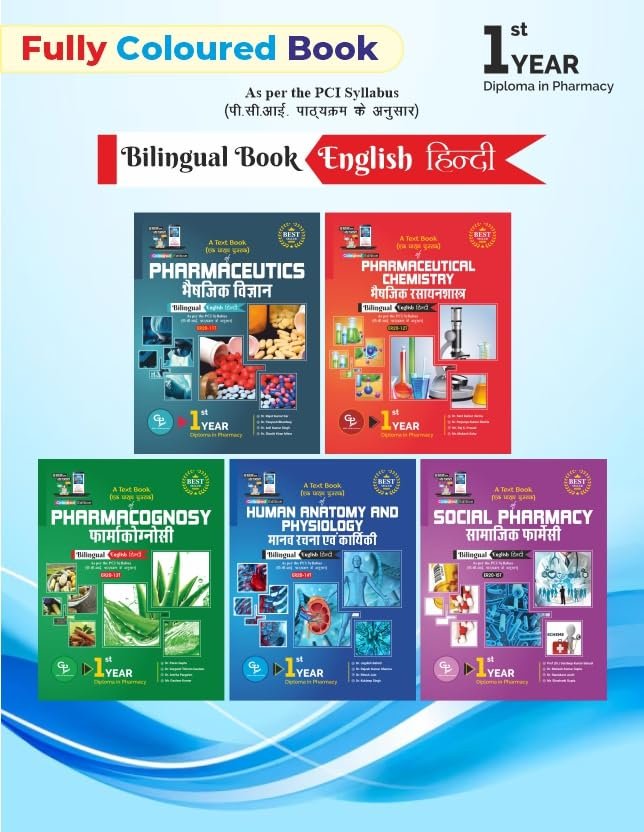
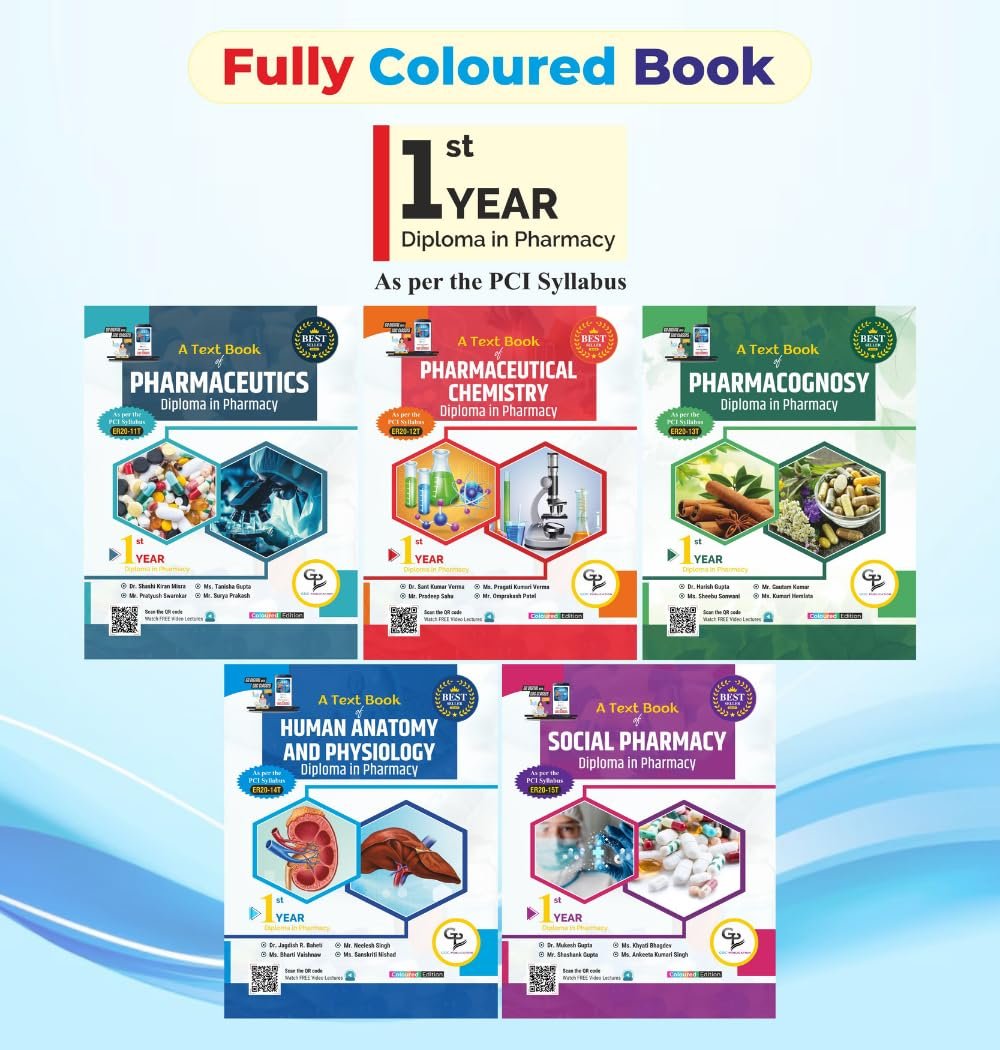
D.Pharm 1st Year Subjects
1. Pharmaceutics
Topics include:
- Pharmaceutical dosage forms
- Tablets, capsules, syrups, ointments
- Packaging materials
- Quality control
- Good Manufacturing Practices (GMP)
Practicals
- Preparation of syrups
- Emulsions
- Suspensions
- Ointments
- Capsules
- Tablets

2. Pharmaceutical Chemistry
Topics include:
- Inorganic pharmaceuticals
- Organic medicinal compounds
- Volumetric analysis
- Quality control tests
- Drug classification
Practicals
- Limit tests
- Assays
- Standardization
- Organic compound preparation

3. Pharmacognosy
Topics include:
- Medicinal plants
- Crude drugs
- Herbal medicines
- Nutraceuticals
- Herbal cosmetics
Practicals
- Identification of crude drugs
- Microscopy
- Evaluation of herbal drugs
4. Human Anatomy and Physiology
Topics include:
- Cell structure
- Blood and cardiovascular system
- Respiratory system
- Digestive system
- Nervous system
- Endocrine system
Practicals
- Blood examination
- Physiological measurements
- Organ identification
5. Social Pharmacy
Topics include:
- Public health
- National health programs
- Disease prevention
- Health education
- Pharmacist’s role in society
Practicals
- Health awareness activities
- Community healthcare surveys
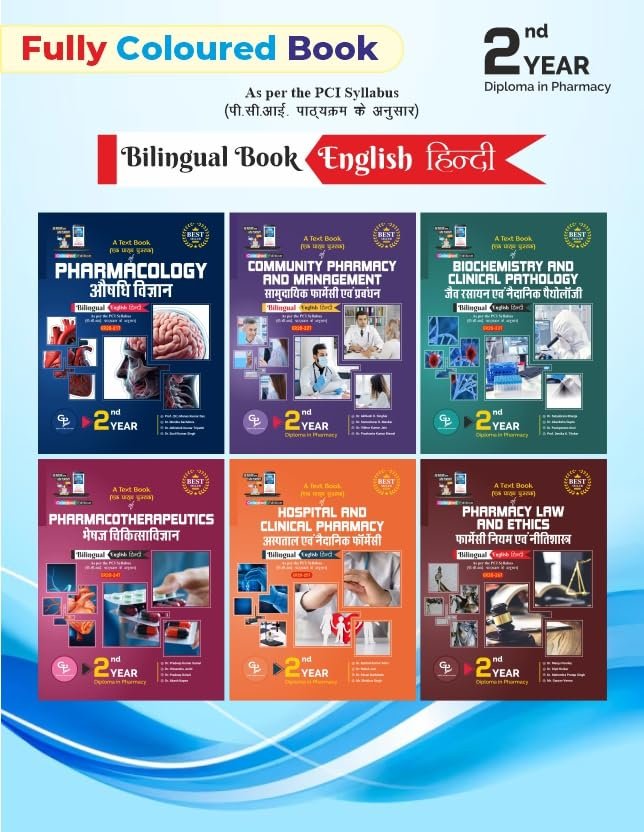
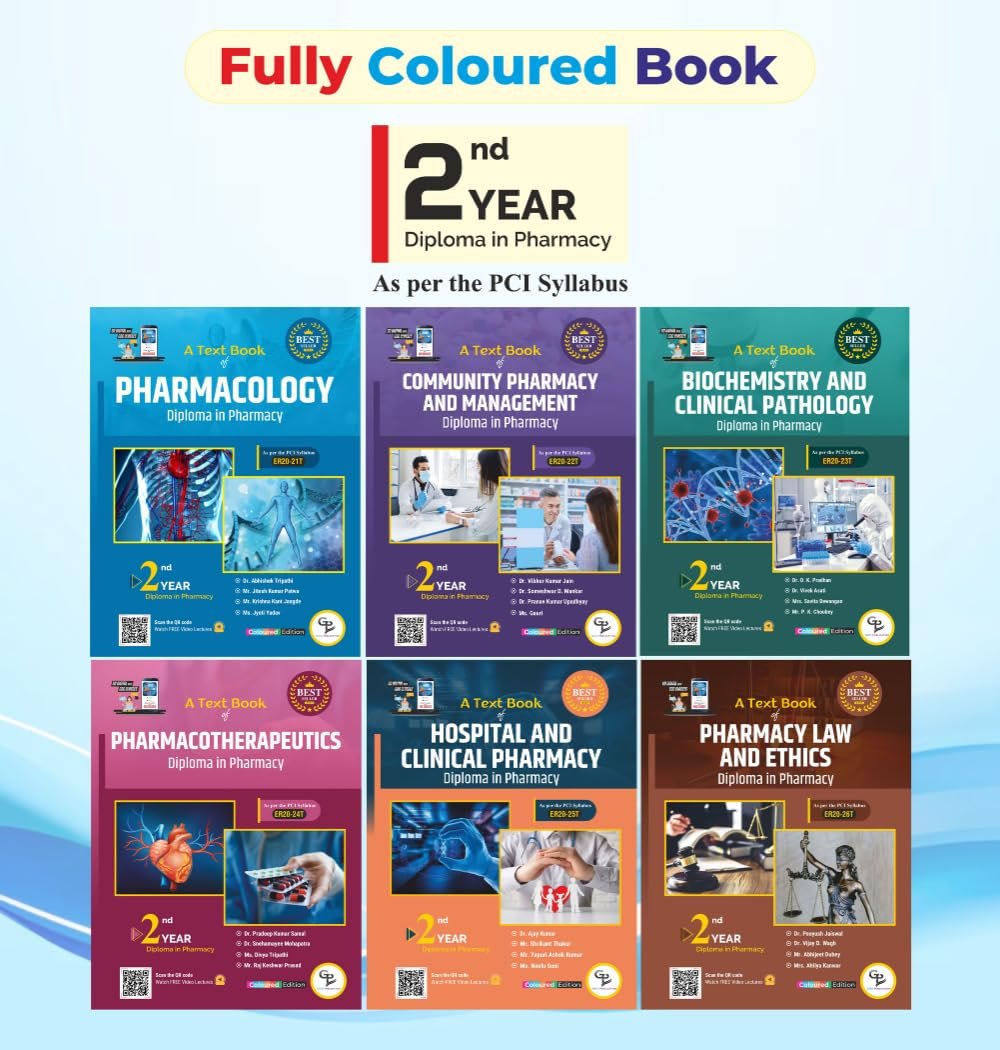
D.Pharm 2nd Year Subjects
1. Pharmacology
Study of:
- Drug actions
- Drug mechanisms
- Adverse effects
- Therapeutic uses
2. Community Pharmacy and Management
Topics include:
- Prescription handling
- Patient counseling
- Inventory management
- Community pharmacy services
3. Biochemistry and Clinical Pathology
Topics include:
- Biomolecules
- Enzymes
- Clinical laboratory tests
- Disease diagnosis
4. Pharmacotherapeutics
Topics include:
- Treatment of diseases
- Rational drug therapy
- Case studies
- Patient care
5. Hospital and Clinical Pharmacy
Topics include:
- Hospital pharmacy services
- Drug information services
- Medication management
- Clinical pharmacy practice
6. Pharmacy Law and Ethics
Topics include:
- Pharmacy Act
- Drugs and Cosmetics Act
- Legal requirements
- Professional ethics
Practical Training
After completion of academic studies, students undergo:
- Hospital Training
- Community Pharmacy Training
- Drug Dispensing Practice
- Prescription Handling
- Patient Counseling
Total Practical Training: 500 Hours
Major Skills Developed in D.Pharm
The PCI syllabus aims to develop competencies such as:
✅ Prescription Review
✅ Drug Dispensing
✅ Patient Counseling
✅ Hospital Pharmacy Management
✅ Community Pharmacy Management
✅ Pharmaceutical Knowledge
✅ Leadership and Entrepreneurship
✅ Primary Healthcare Delivery
✅ Ethical Pharmacy Practice
✅ Continuous Professional Development
Career Opportunities After D.Pharm
After completing D.Pharm, students can work as:
- Registered Pharmacist
- Hospital Pharmacist
- Community Pharmacist
- Medical Representative
- Drug Inspector (after further qualifications)
- Pharmaceutical Sales Executive
- Quality Control Assistant
- Production Executive
- Pharmacy Store Owner
Why PCI ER 2020 D.Pharm Syllabus is Important?
The new PCI syllabus emphasizes:
- More practical exposure
- Patient-centered care
- Clinical pharmacy concepts
- Community healthcare services
- Modern pharmaceutical practices
This makes D.Pharm graduates more industry-ready and healthcare-focused than previous curricula.
Conclusion
The D.Pharm Syllabus 2026 (PCI ER 2020) is designed to provide students with strong foundations in pharmaceutical sciences, practical laboratory skills, patient counseling, healthcare management, and professional ethics. With a balanced combination of theory, practicals, assignments, field visits, and training, D.Pharm remains one of the best career options for students interested in pharmacy and healthcare.
Recommended Products