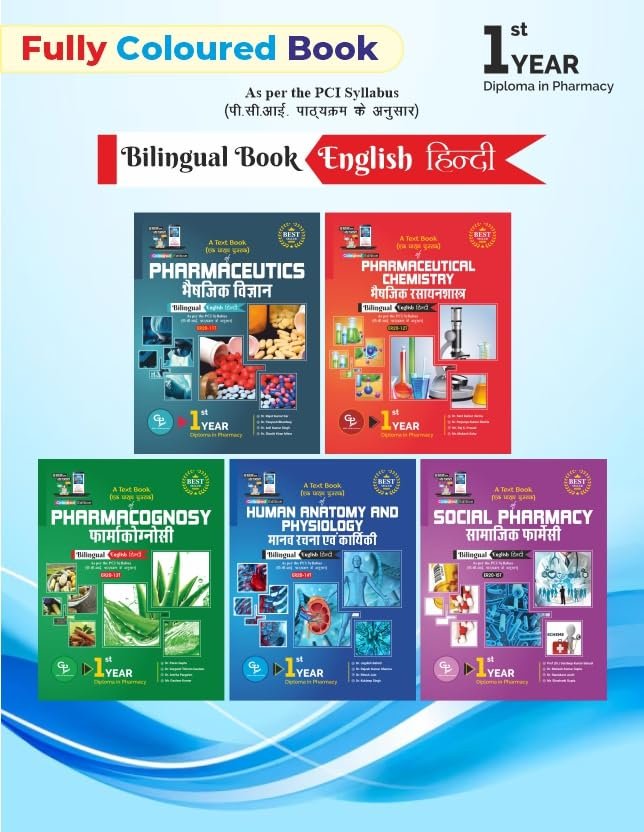



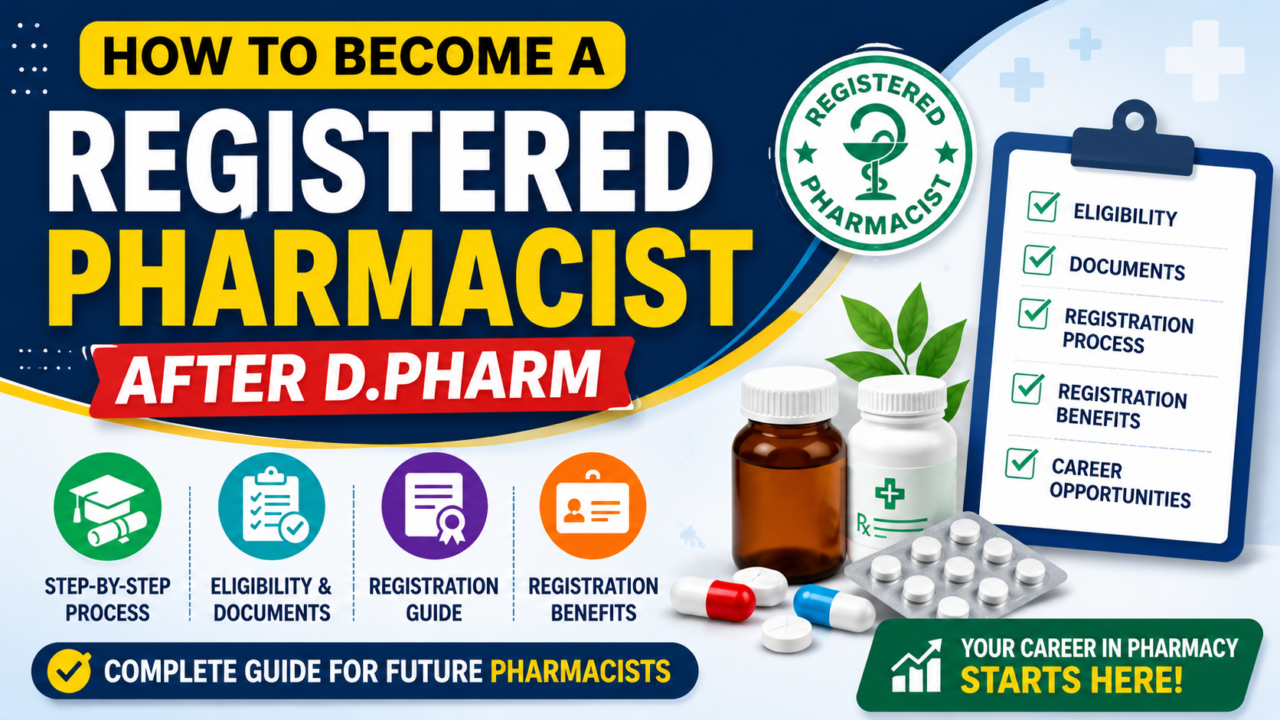

A Diploma in Pharmacy (D.Pharm) is one of the most popular qualifications for starting a career in the pharmacy profession. However, completing a D.Pharm alone does not automatically make you a registered pharmacist. To legally practice pharmacy, dispense medicines, and work as a pharmacist in India, you must obtain registration from the appropriate State Pharmacy Council.
This guide explains the complete process of becoming a registered pharmacist after D.Pharm.
What Is a Registered Pharmacist?
A registered pharmacist is a pharmacy professional whose name is officially entered in the register maintained by a State Pharmacy Council. Registration authorizes a person to:
- Dispense prescription medicines
- Work in retail and hospital pharmacies
- Provide pharmaceutical services
- Use the title “Pharmacist” legally
- Apply for pharmacy-related government and private sector jobs
Eligibility Requirements After D.Pharm
Before applying for registration, candidates must fulfill the following requirements:
| Requirement | Details |
|---|---|
| Educational Qualification | Passed D.Pharm from a recognized institution |
| Approval Status | Institute approved by relevant authorities |
| Examination Status | Successfully passed all semesters/annual examinations |
| Documents | Mark sheets, diploma certificate, identity proof, photographs, etc. |
| State Eligibility | Apply in the State Pharmacy Council where registration is sought |
Step-by-Step Process to Become a Registered Pharmacist
Step 1: Complete Your D.Pharm Course
The first requirement is successfully completing the two-year D.Pharm program along with any mandatory practical training prescribed by the institution.
| Course Component | Duration |
|---|---|
| First Year D.Pharm | 1 Year |
| Second Year D.Pharm | 1 Year |
| Practical Training (if applicable) | As per institution guidelines |
Step 2: Collect Required Documents
After receiving your final results, gather all necessary documents.
| Document | Purpose |
|---|---|
| D.Pharm Mark Sheets | Academic verification |
| D.Pharm Certificate | Qualification proof |
| Aadhaar Card/PAN Card | Identity proof |
| Passport-size Photographs | Registration records |
| Residence Proof | Address verification |
| Migration/Transfer Certificate (if required) | State-specific requirement |
| Affidavit (if applicable) | Name or document verification |
Step 3: Apply to the State Pharmacy Council
Submit an application to your respective State Pharmacy Council either online or offline, depending on the state’s registration process.
| Application Method | Description |
|---|---|
| Online Application | Upload documents and pay fees digitally |
| Offline Application | Submit physical forms and documents |
| Verification Process | Council verifies eligibility and documents |
Step 4: Pay Registration Fees
Each State Pharmacy Council charges a registration fee.
| Fee Type | Purpose |
|---|---|
| Registration Fee | Initial pharmacist registration |
| Processing Fee | Document verification |
| Certificate Fee | Issuance of registration certificate |
Note: Fees vary from state to state.
Step 5: Document Verification
The Pharmacy Council verifies:
| Verification Area | Details Checked |
|---|---|
| Educational Qualification | Authenticity of D.Pharm certificate |
| Identity | Aadhaar/PAN verification |
| Institution Recognition | Approved pharmacy institution |
| Personal Information | Name, address, date of birth |
Step 6: Obtain Pharmacist Registration Number
After successful verification, the State Pharmacy Council issues:
| Registration Benefit | Description |
|---|---|
| Registration Number | Unique pharmacist identification |
| Registration Certificate | Official proof of registration |
| Legal Authorization | Permission to practice pharmacy |
Registration Process Flow
| Stage | Status |
|---|---|
| Complete D.Pharm | ✓ |
| Collect Documents | ✓ |
| Apply to State Pharmacy Council | ✓ |
| Pay Registration Fees | ✓ |
| Document Verification | ✓ |
| Receive Registration Number | ✓ |
| Become Registered Pharmacist | ✓ |
Career Opportunities After Registration
Once registered, pharmacists can work in various sectors.
| Career Option | Work Area |
|---|---|
| Retail Pharmacist | Medical stores and pharmacies |
| Hospital Pharmacist | Government and private hospitals |
| Clinical Pharmacist | Healthcare institutions |
| Medical Representative | Pharmaceutical companies |
| Drug Inspector (after further qualifications/exams) | Government sector |
| Pharmacy Entrepreneur | Own medical store |
| Pharmaceutical Industry | Production and quality departments |
Benefits of Becoming a Registered Pharmacist
| Benefit | Explanation |
|---|---|
| Legal Practice Rights | Can legally dispense medicines |
| Better Employment Opportunities | Eligible for pharmacist positions |
| Professional Recognition | Recognized healthcare professional |
| Government Job Eligibility | Apply for pharmacist vacancies |
| Business Opportunities | Open and manage pharmacy establishments |
| Career Growth | Pathway to higher pharmacy careers |
Common Mistakes to Avoid
| Mistake | Consequence |
|---|---|
| Delaying registration | Missed job opportunities |
| Submitting incomplete documents | Application rejection |
| Providing incorrect information | Verification delays |
| Not renewing registration (where applicable) | Registration issues |
| Applying with unrecognized qualifications | Registration refusal |
Frequently Asked Questions (FAQs)
| Question | Answer |
|---|---|
| Can I work as a pharmacist immediately after D.Pharm? | No, registration with the State Pharmacy Council is required. |
| Is registration mandatory? | Yes, for legal pharmacy practice in India. |
| How long does registration take? | Usually a few weeks to a few months, depending on the state. |
| Can I open a medical store after D.Pharm registration? | Yes, subject to drug license and local regulations. |
| Can I pursue B.Pharm after D.Pharm? | Yes, many students take lateral entry into B.Pharm programs. |
Conclusion
Completing a D.Pharm is the first step toward a pharmacy career, but becoming a registered pharmacist requires registration with the appropriate State Pharmacy Council. By completing your D.Pharm, preparing the necessary documents, submitting your application, and obtaining your registration number, you can legally practice pharmacy and access a wide range of career opportunities in healthcare and the pharmaceutical industry.
A registered pharmacist enjoys professional recognition, legal authority to dispense medicines, and a strong foundation for long-term career growth in the pharmacy sector.
Recommended Products