


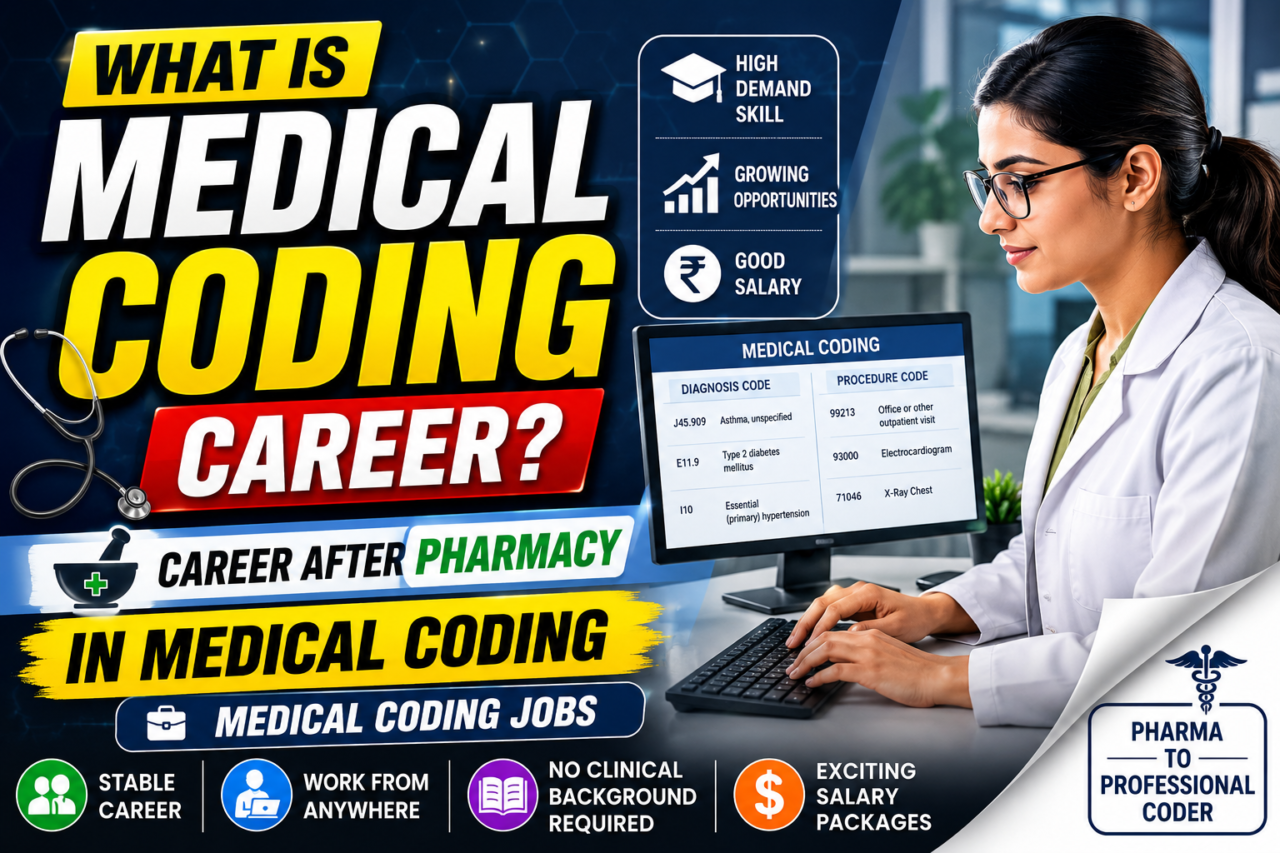

The healthcare industry is growing rapidly, and along with it, the demand for skilled medical coders is increasing every year. For Pharmacy, Life Sciences, Nursing, and Biotechnology graduates, medical coding has become one of the most popular non-clinical career options.
If you are a B.Pharm, M.Pharm, Pharm D, or Life Science student wondering about career opportunities outside traditional pharmacy jobs, then medical coding can be an excellent choice.
What is Medical Coding?
Medical coding is the process of converting medical diagnoses, treatments, procedures, and prescriptions into standardized alphanumeric codes. These codes are used by hospitals, insurance companies, and healthcare organizations for billing and documentation purposes.
Medical coders review:
- Patient records
- Doctor prescriptions
- Lab reports
- Treatment details
- Surgical procedures
and assign proper medical codes using coding systems like:
- ICD (International Classification of Diseases)
- CPT (Current Procedural Terminology)
- HCPCS Codes
Why Pharmacy Students Choose Medical Coding
Many pharmacy graduates choose medical coding because:
- No lab work or manufacturing shifts
- Good work-life balance
- Stable office job
- Fast-growing healthcare IT sector
- Opportunities in multinational companies
- Work from home opportunities in some companies
Pharmacy students already have strong knowledge of:
- Human anatomy
- Pharmacology
- Disease conditions
- Medical terminology
which gives them an advantage in medical coding training and interviews.
Eligibility for Medical Coding Jobs
Candidates from the following backgrounds are commonly eligible:
- B.Pharm
- M.Pharm
- Pharm D
- D.Pharm
- BSc Nursing
- BSc Biotechnology
- Life Sciences
- Physiotherapy
- Medical Laboratory Technology
Freshers are also eligible in many companies.
Skills Required in Medical Coding
To become a successful medical coder, you should have:
- Knowledge of medical terminology
- Understanding of anatomy & physiology
- Basic computer skills
- Good attention to detail
- Communication skills
- Analytical thinking
Medical Coding Job Roles
Popular job roles include:
- Medical Coder
- Coding Analyst
- Medical Coding Associate
- QA Medical Coder
- HCC Coder
- Risk Adjustment Coder
- Senior Coding Specialist
Salary in Medical Coding
Fresher Salary
Freshers can earn around:
- ₹2.5 LPA to ₹4.5 LPA
Experienced Professionals
With experience and certifications:
- ₹6 LPA to ₹12 LPA or more
Salary depends on:
- Company
- Certification
- Experience
- Specialty coding skills

Top Companies Hiring Medical Coders
Some major companies hiring pharmacy and life science graduates for medical coding include:
Is Certification Necessary?
Certification is not always mandatory for freshers, but it helps improve job opportunities and salary growth.
Popular certifications include:
- CPC (Certified Professional Coder)
- CCS (Certified Coding Specialist)
- CRC (Certified Risk Adjustment Coder)
Career Growth in Medical Coding
Medical coding offers long-term career growth:
- Team Leader
- Coding Auditor
- Quality Analyst
- Coding Trainer
- Healthcare Documentation Specialist
- Revenue Cycle Management Expert
Experienced coders can also move into:
- Healthcare analytics
- Clinical documentation
- Medical auditing
Is Medical Coding a Good Career After Pharmacy?
Yes, medical coding is one of the best non-clinical career options after pharmacy because:
- Easy entry for freshers
- Growing healthcare demand
- Stable career path
- Less stressful compared to some pharma production jobs
- Good salary growth with experience
For pharmacy graduates who want an office-based healthcare career, medical coding can be a smart and future-focused option.
Conclusion
Medical coding is becoming one of the most in-demand healthcare careers in India and globally. Pharmacy and Life Science graduates already possess medical knowledge that gives them an advantage in this field. With proper training and dedication, candidates can build a stable and rewarding career in medical coding.
Recommended Products