


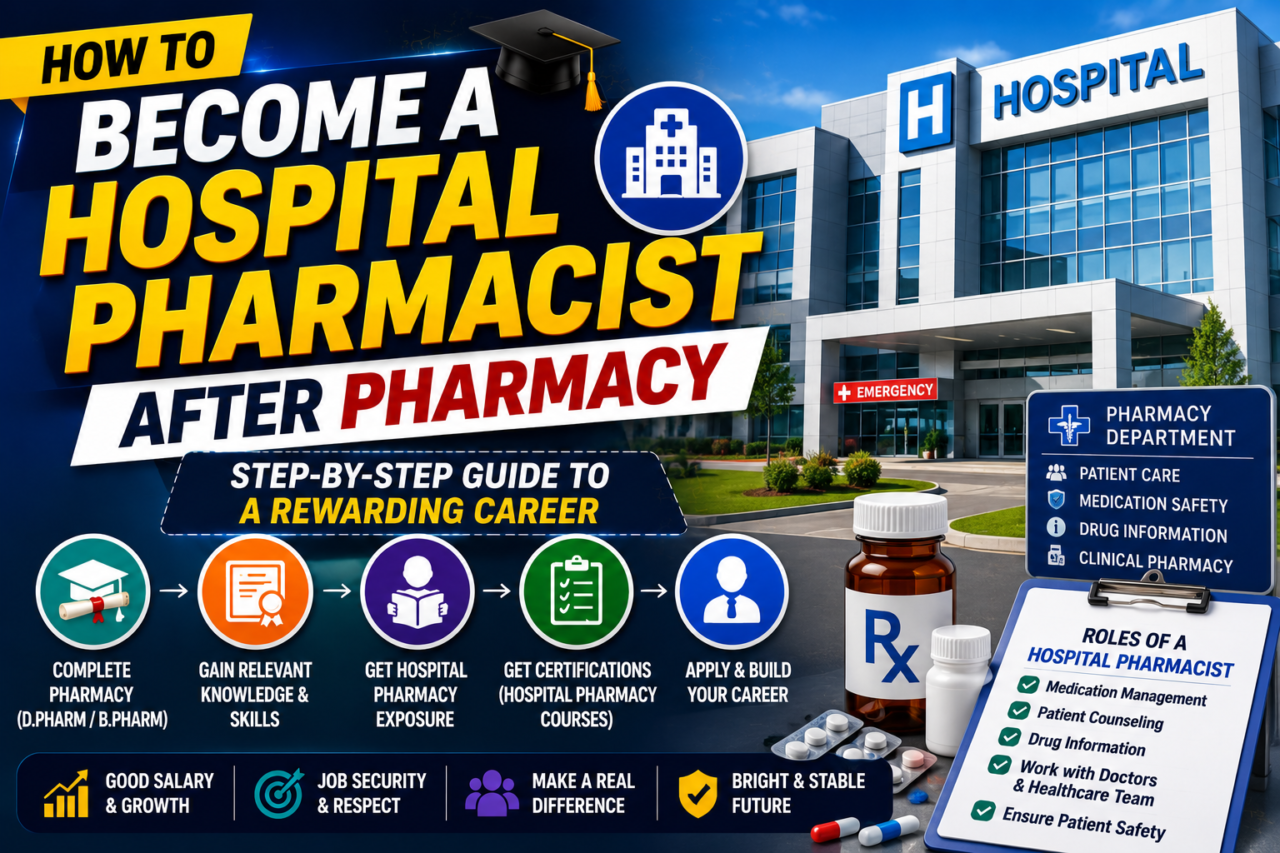

Hospital pharmacy is one of the most respected and stable career options for pharmacy students. A hospital pharmacist plays an important role in patient care by ensuring the safe and effective use of medicines in hospitals and healthcare centers.
If you are a D.Pharm, B.Pharm, or Pharm.D student and want to build a successful career in the healthcare sector, becoming a hospital pharmacist can be an excellent choice.
In this complete career guide, you will learn about eligibility, skills, responsibilities, salary, career scope, and how to become a hospital pharmacist after pharmacy.
Who is a Hospital Pharmacist?
A hospital pharmacist is a healthcare professional responsible for dispensing medicines, monitoring drug therapy, guiding patients, and supporting doctors and nurses in medication management.
Hospital pharmacists work directly in hospitals, clinics, healthcare centers, and medical institutions.
Main Responsibilities of a Hospital Pharmacist
A hospital pharmacist performs many important duties in healthcare settings.
Key Responsibilities:
- Dispensing prescribed medicines
- Checking prescriptions for accuracy
- Managing hospital pharmacy inventory
- Guiding patients about medicine usage
- Monitoring drug interactions and side effects
- Maintaining pharmacy records
- Supporting doctors during treatment planning
- Ensuring safe medication practices
Eligibility to Become a Hospital Pharmacist
To become a hospital pharmacist in India, you need a pharmacy qualification and registration with the pharmacy council.
Educational Qualification
1. D.Pharm (Diploma in Pharmacy)
- Minimum qualification for pharmacist registration
- Duration: 2 years + internship
2. B.Pharm (Bachelor of Pharmacy)
- Preferred qualification in many hospitals
- Better career growth opportunities
3. Pharm.D
- Highly beneficial for clinical pharmacy and hospital settings
Registration Requirement
After completing your pharmacy course, you must register with the State Pharmacy Council to legally work as a pharmacist.
You will receive:
- Registered Pharmacist Certificate
- Pharmacist Registration Number

Step-by-Step Guide to Become a Hospital Pharmacist
Step 1: Complete Pharmacy Education
Choose one of the following:
- D.Pharm
- B.Pharm
- Pharm.D
Step 2: Complete Internship or Training
Practical training helps improve:
- Prescription handling
- Patient communication
- Drug dispensing knowledge
- Hospital workflow understanding
Step 3: Register as a Pharmacist
Apply for registration through your State Pharmacy Council.
Step 4: Build Important Skills
Develop both technical and communication skills.
Important Skills:
- Medicine knowledge
- Communication skills
- Attention to detail
- Computer knowledge
- Prescription reading
- Inventory management
- Patient counseling
Step 5: Apply for Hospital Pharmacist Jobs
You can apply in:
- Government hospitals
- Private hospitals
- Medical colleges
- Clinics
- Healthcare chains
- Community health centers
Skills Required for Hospital Pharmacists
Technical Skills
- Pharmacology knowledge
- Drug interaction understanding
- Prescription handling
- Dosage calculations
- Inventory management
Soft Skills
- Communication
- Teamwork
- Patience
- Problem-solving
- Time management
Hospital Pharmacist Salary in India
Salary depends on qualification, hospital type, and experience.
| Qualification | Average Starting Salary |
|---|---|
| D.Pharm | ₹15,000 – ₹25,000/month |
| B.Pharm | ₹20,000 – ₹35,000/month |
| Pharm.D | ₹30,000 – ₹50,000/month |
Experienced pharmacists can earn much higher salaries in reputed hospitals.
Career Scope of Hospital Pharmacists
The healthcare industry is growing rapidly, increasing demand for qualified pharmacists.
Career Opportunities:
- Hospital Pharmacist
- Clinical Pharmacist
- Pharmacy In-Charge
- Drug Information Pharmacist
- Medical Coding Specialist
- Pharmacovigilance Associate
Government Hospital Pharmacist Jobs
Government pharmacist jobs are highly popular because they offer:
- Job security
- Good salary
- Pension benefits
- Work stability
Common Government Recruiters:
- AIIMS
- Railways
- ESIC Hospitals
- State Government Hospitals
- CGHS

Difference Between Hospital Pharmacist and Retail Pharmacist
| Hospital Pharmacist | Retail Pharmacist |
|---|---|
| Works in hospitals | Works in medical stores |
| Handles patient prescriptions in hospitals | Dispenses medicines to customers |
| Works with doctors and nurses | Mostly customer interaction |
| Focus on patient care | Focus on medicine sales |
Best Courses to Improve Hospital Pharmacy Career
Additional certifications can improve your career opportunities.
Recommended Courses:
- Clinical Pharmacy
- Pharmacovigilance
- Hospital Management
- Drug Safety
- Medical Coding
Interview Tips for Hospital Pharmacist Jobs
Prepare These Topics:
- Basic pharmacology
- Prescription reading
- Drug interactions
- Hospital pharmacy workflow
- Patient counseling
Common Interview Questions:
- Tell me about yourself
- Why do you want to become a hospital pharmacist?
- How do you handle prescription errors?
- What are Schedule H drugs?
Advantages of Becoming a Hospital Pharmacist
Benefits:
- Stable career
- Respect in healthcare sector
- Good growth opportunities
- Direct patient interaction
- Multiple job opportunities
Challenges in Hospital Pharmacy
Like every profession, hospital pharmacy also has challenges.
Common Challenges:
- Shift duties
- Work pressure
- Emergency responsibilities
- Accuracy requirements
However, proper training and experience help manage these challenges effectively.
Future Scope of Hospital Pharmacy
The future of hospital pharmacy is very bright due to:
- Growing hospitals
- Increased healthcare awareness
- Expansion of clinical pharmacy services
- Demand for patient safety
Hospital pharmacists are becoming more important in modern healthcare systems.
Final Words
Hospital pharmacy is an excellent career option for pharmacy students who want to work in the healthcare sector and directly help patients.
With the right qualification, registration, practical skills, and confidence, you can build a successful and rewarding career as a hospital pharmacist.
Start learning today, improve your communication skills, gain practical experience, and prepare yourself for exciting opportunities in the healthcare industry.
Recommended Products