

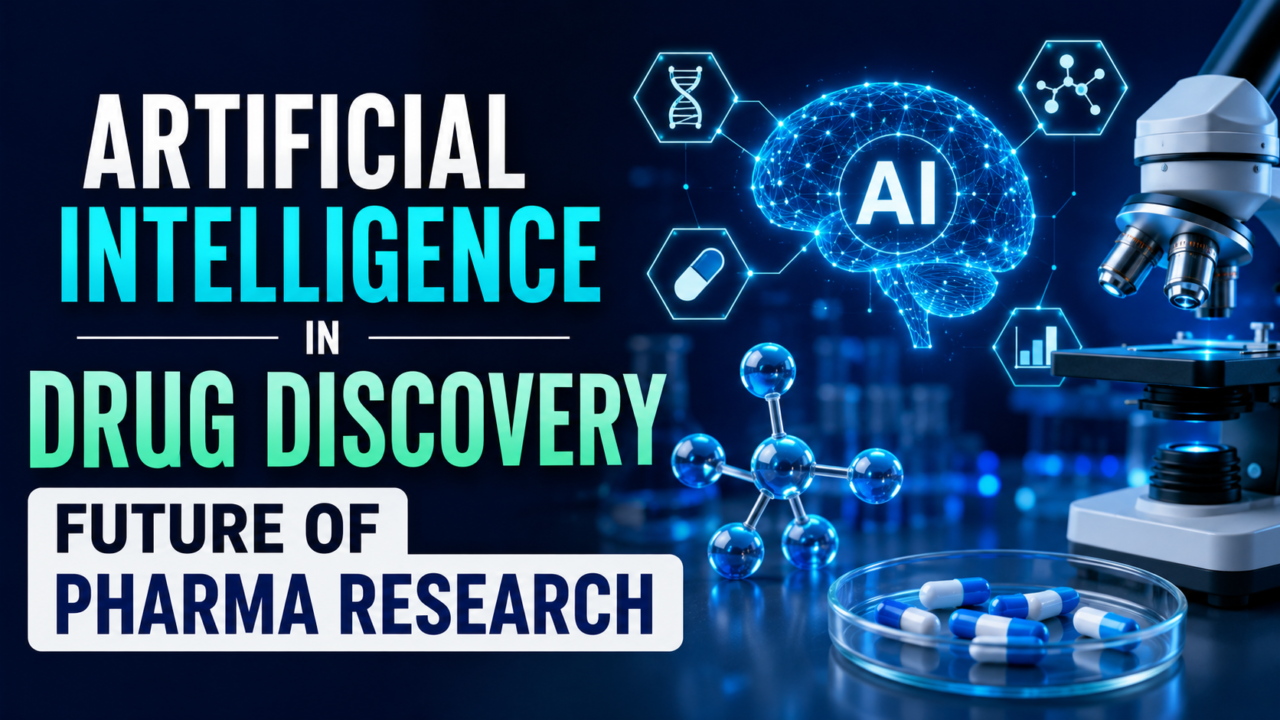

Artificial Intelligence (AI) is rapidly transforming the pharmaceutical industry and revolutionizing the way new medicines are discovered. Traditional drug discovery is a long, expensive, and complex process that often takes more than 10 years and billions of dollars to develop a single successful drug. Today, AI is helping researchers accelerate this process and improve the future of pharmaceutical research.
From analyzing huge biological datasets to predicting drug behavior, AI has become one of the most powerful technologies in modern healthcare and medicine development.

What is Artificial Intelligence in Drug Discovery?
Artificial Intelligence refers to computer systems that can perform tasks requiring human intelligence such as:
- Learning from data
- Problem-solving
- Pattern recognition
- Decision-making
- Predictive analysis
In drug discovery, AI systems analyze massive amounts of scientific and medical data to identify potential drug candidates faster and more accurately than traditional methods.
Traditional Drug Discovery Challenges
The conventional drug development process faces many challenges:
- High research costs
- Long development timelines
- Low success rates
- Complex clinical trials
- Difficulty in predicting side effects
Many drug candidates fail during clinical testing, resulting in huge financial losses for pharmaceutical companies.
AI is helping overcome many of these challenges.
How AI is Changing Drug Discovery
1. Faster Identification of Drug Targets
AI can quickly analyze genetic and biological data to identify disease-causing proteins and potential drug targets.
This helps researchers:
- Understand diseases better
- Find suitable treatment pathways
- Reduce early-stage research time
2. Screening Millions of Chemical Compounds
Traditionally, scientists manually test thousands of chemical compounds in laboratories.
AI-powered systems can:
- Analyze millions of compounds rapidly
- Predict which compounds may become effective drugs
- Reduce unnecessary laboratory experiments
This significantly speeds up the discovery process.
3. Predicting Drug Effectiveness
Machine learning algorithms can predict:
- Drug safety
- Toxicity
- Side effects
- Effectiveness in the human body
This helps researchers identify promising medicines before expensive clinical trials begin.
4. AI in Clinical Trials
Clinical trials are one of the most time-consuming stages of drug development.
AI helps by:
- Selecting suitable patients
- Monitoring patient responses
- Predicting trial outcomes
- Improving data analysis
This increases trial efficiency and reduces development costs.
5. Personalized Medicine
AI enables pharmaceutical companies to develop personalized treatments based on:
- Genetics
- Lifestyle
- Medical history
- Disease patterns
Personalized medicine improves treatment success and reduces adverse effects.
Benefits of AI in Pharma Research
Reduced Research Time
AI can complete data analysis tasks within hours that may take humans months or years.
Lower Drug Development Costs
Automation and prediction reduce failed experiments and financial risks.
Improved Accuracy
AI minimizes human error and improves research precision.
Faster Drug Availability
Patients may receive life-saving medicines more quickly.
Better Disease Understanding
AI helps researchers study complex diseases like cancer, Alzheimer’s, and rare genetic disorders.
AI and Major Pharmaceutical Companies
Many leading pharmaceutical companies are investing heavily in AI-based research.
Companies are using AI for:
- Cancer drug research
- Vaccine development
- Rare disease treatment
- Antibiotic discovery
AI played an important role during the COVID-19 pandemic by helping researchers accelerate vaccine and medicine development.
Challenges of AI in Drug Discovery
Despite its advantages, AI also faces certain limitations:
- High technology costs
- Data privacy concerns
- Need for skilled professionals
- Regulatory and ethical issues
- Dependence on quality datasets
Human expertise still remains essential in pharmaceutical research and clinical decision-making.
Future of AI in Pharma Research
Experts believe AI will become even more advanced in the coming years. Future developments may include:
- Fully AI-designed medicines
- Digital laboratories
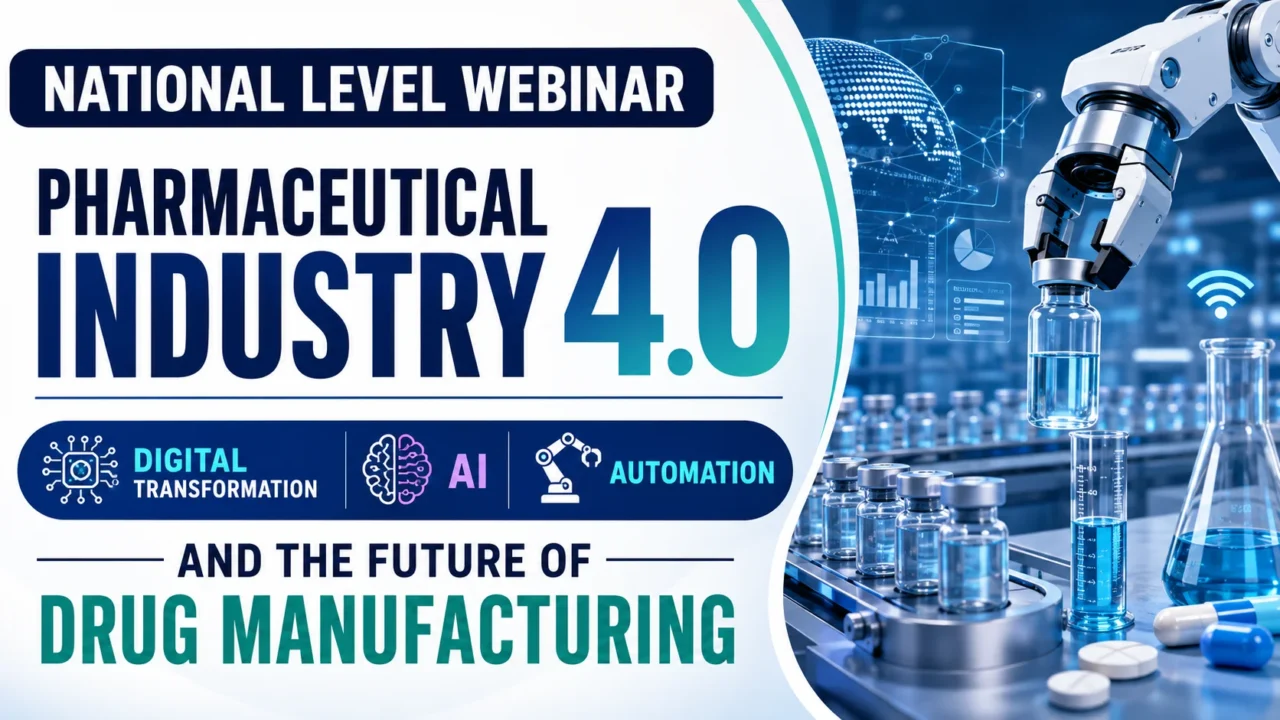
- Smart robotic research systems
- Faster rare disease treatments
- Advanced predictive healthcare
The combination of AI, biotechnology, and pharmaceutical science is expected to transform global healthcare.
Career Opportunities in AI and Pharmacy
The rise of AI is creating new career paths for pharmacy and life science students such as:
- Pharmaceutical Data Analyst
- AI Research Associate
- Clinical Informatics Specialist
- Drug Safety Analyst
- Bioinformatics Scientist
Students with knowledge of both pharmacy and technology may have excellent career opportunities in the future.
Conclusion
Artificial Intelligence is revolutionizing drug discovery and shaping the future of pharmaceutical research. By reducing research time, improving accuracy, and lowering costs, AI is helping pharmaceutical companies develop safer and more effective medicines faster than ever before.
As technology continues to evolve, AI is expected to become one of the most important tools in healthcare innovation and modern medicine development.
Recommended Products