


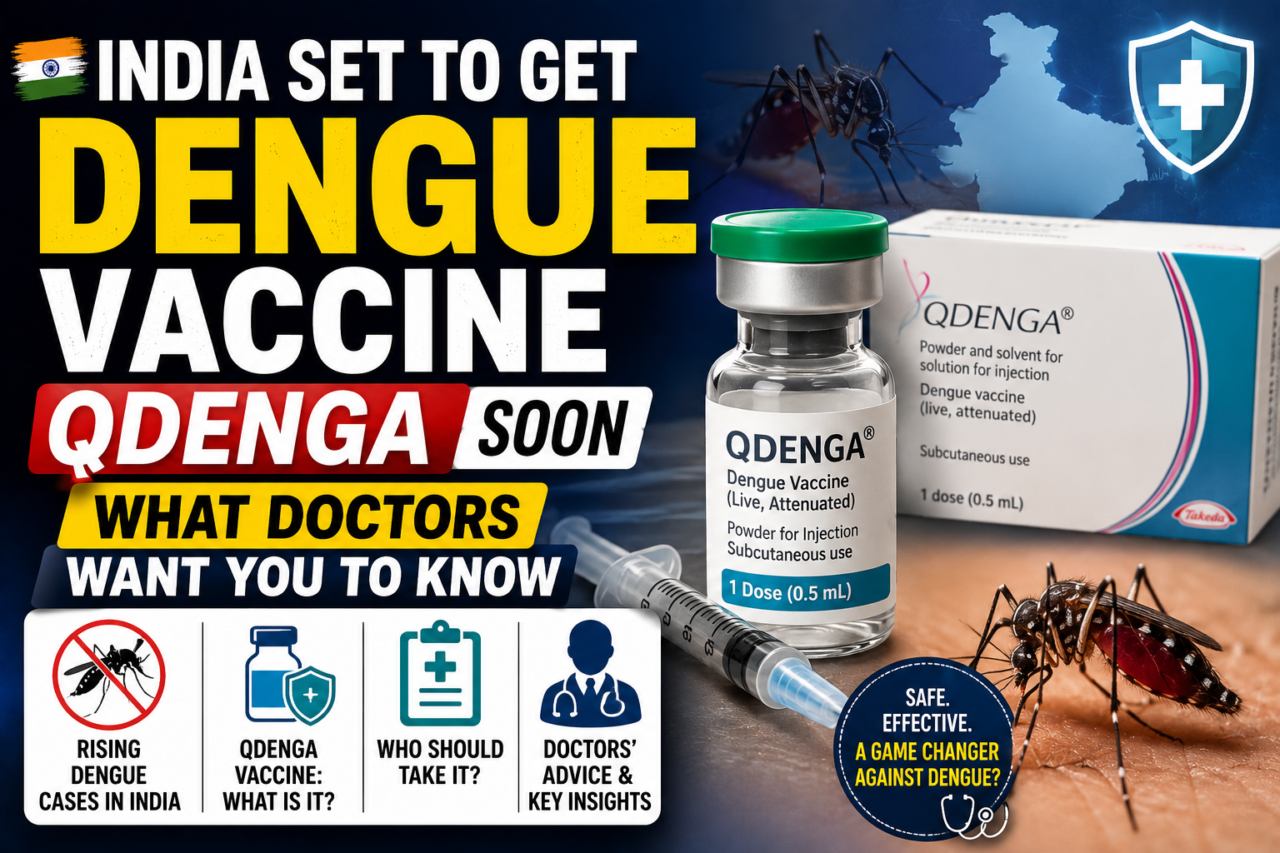

Dengue cases continue to rise every year across many parts of India, especially during and after the monsoon season. Now, there is growing attention around Qdenga, a dengue vaccine developed by Takeda Pharmaceutical Company, which may soon become available in India. Health experts believe this could become an important step in reducing severe dengue infections and hospitalizations in the country.
Here’s a complete breakdown of what Qdenga is, how it works, who may benefit from it, and what Indian doctors are expecting once the vaccine becomes available.
What Is Qdenga?
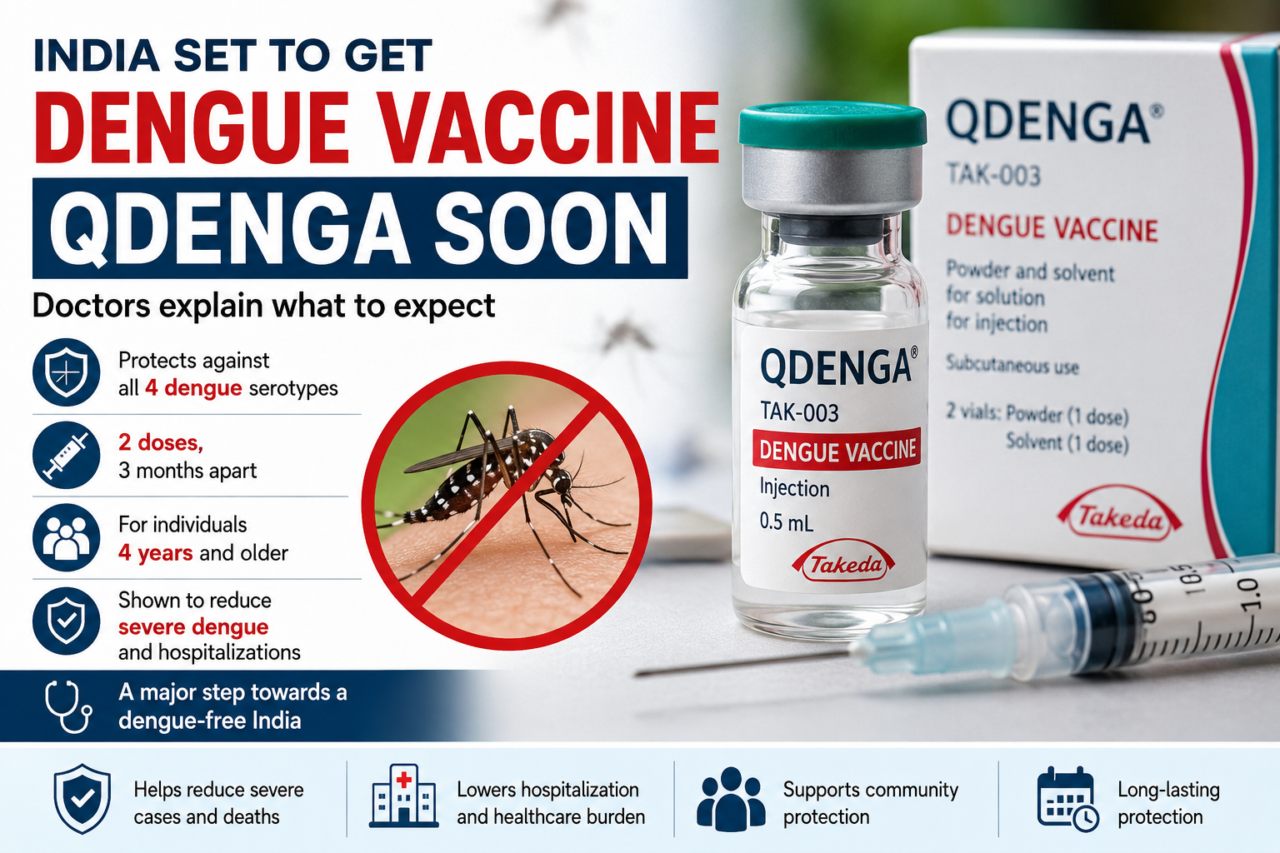
Qdenga is a dengue vaccine designed to protect against all four dengue virus serotypes — DENV-1, DENV-2, DENV-3, and DENV-4. It has already been approved in several countries and regions, including parts of Europe, Asia, and Latin America.
The vaccine is scientifically known as TAK-003 and is administered in two doses, usually spaced three months apart.
Unlike earlier dengue vaccines that had limitations for people who had never previously been infected, Qdenga has shown promising results for both previously infected and non-infected individuals, although recommendations may vary by country.
Why India Needs a Dengue Vaccine
India reports lakhs of dengue cases every year, with outbreaks becoming more frequent due to:
- Urbanization
- Water stagnation during monsoon
- Climate change
- Mosquito breeding in densely populated areas
The disease is caused by the Aedes mosquito, mainly Aedes aegypti, which bites during daytime hours.
Common dengue symptoms include:
- High fever
- Severe headache
- Muscle and joint pain
- Skin rash
- Nausea and vomiting
- Extreme fatigue
In severe cases, dengue can lead to:
- Internal bleeding
- Low platelet count
- Shock syndrome
- Organ failure
Doctors believe vaccination could significantly reduce severe infections, ICU admissions, and dengue-related deaths.
What Doctors Say About Qdenga
Many infectious disease specialists and public health experts are optimistic about the vaccine’s arrival in India.
According to doctors, the vaccine may help:
- Reduce severe dengue complications
- Lower hospitalization rates
- Provide long-term community protection
- Support public health efforts during monsoon outbreaks
However, experts also emphasize that the vaccine is not a replacement for mosquito control. Preventive measures such as avoiding stagnant water, using mosquito repellents, and wearing protective clothing will still remain important.
How Effective Is Qdenga?
Clinical trials conducted in multiple countries showed encouraging results.
Doctors explain that Qdenga demonstrated:
- Strong protection against hospitalization
- Good protection against symptomatic dengue
- Long-term immune response in many participants
Studies have shown especially strong protection against severe dengue cases, which is considered one of the vaccine’s biggest advantages.
Researchers are continuing to monitor long-term effectiveness across different age groups and geographic regions.
Who May Be Eligible?
Final eligibility guidelines in India will depend on approval from Indian health authorities and regulatory bodies.
Globally, Qdenga has been considered for:
- Children and adolescents
- Adults living in dengue-endemic regions
- People at higher risk during outbreaks
Doctors expect Indian authorities to release detailed recommendations regarding:
- Age groups
- Dosage schedules
- Availability in private and government sectors
- Safety protocols
Is the Vaccine Safe?
So far, international studies suggest that Qdenga has a generally acceptable safety profile.
Reported side effects are usually mild and temporary, such as:
- Injection site pain
- Mild fever
- Headache
- Fatigue
Doctors recommend that individuals consult healthcare professionals before vaccination, especially if they have:
- Severe allergies
- Immune system disorders
- Chronic illnesses
When Could Qdenga Launch in India?
India is currently evaluating the vaccine through regulatory and clinical review processes. Experts believe that approval and rollout discussions are progressing, though an official nationwide launch timeline may vary.
Once approved, availability may initially begin in:
- Major private hospitals
- Vaccination centers
- Urban healthcare facilities
Later, wider public health distribution could follow depending on government policies and pricing strategies.
Will the Vaccine End Dengue Completely?
Doctors clearly state that vaccination alone cannot eliminate dengue.
India will still need:
- Mosquito control campaigns
- Clean drainage systems
- Public awareness programs
- Early testing and diagnosis
- Community sanitation efforts
However, experts believe Qdenga could become a major tool in reducing severe disease burden across the country.
Final Thoughts
The possible arrival of Qdenga in India marks an important development in the fight against dengue fever. While experts are hopeful, they also stress the importance of realistic expectations.
Vaccines work best when combined with preventive public health measures and early medical care. If approved widely in India, Qdenga may help protect millions of people living in dengue-prone regions and reduce the pressure on hospitals during outbreak seasons.
As more official updates become available, doctors recommend staying informed through trusted healthcare sources and continuing mosquito prevention practices year-round.
Recommended Products