


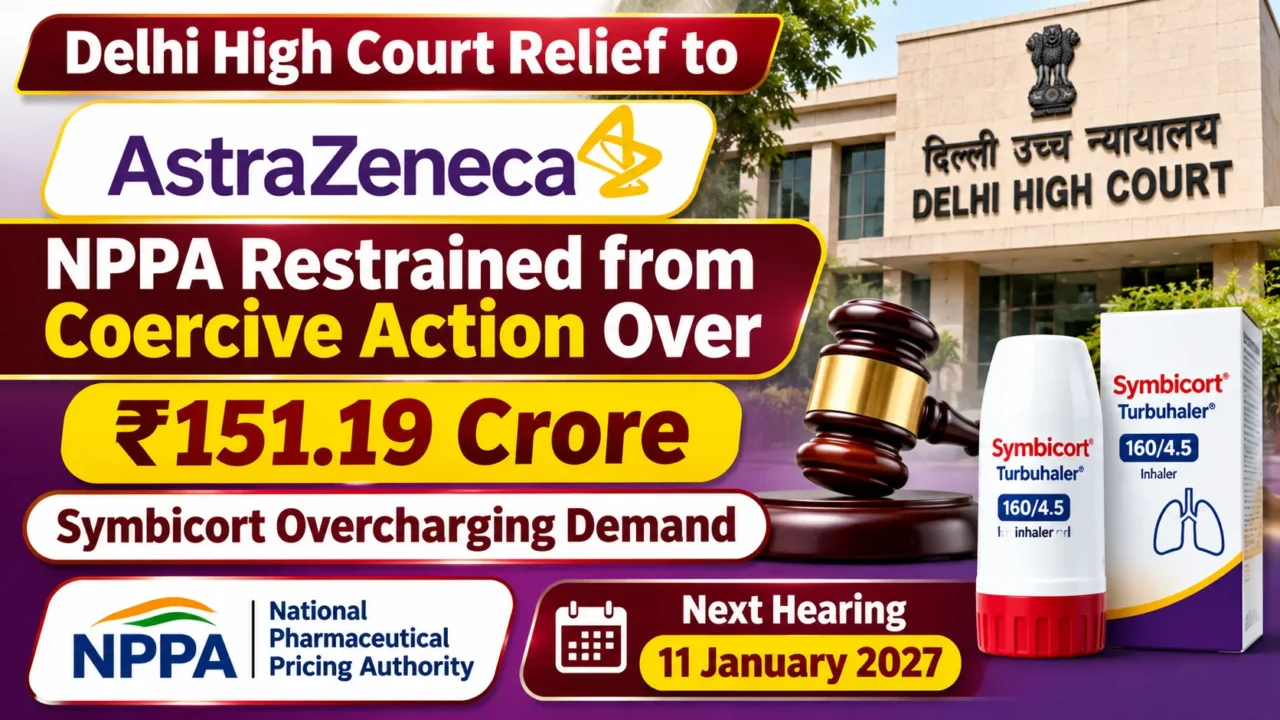

The Delhi High Court has granted interim relief to AstraZeneca Pharma India Limited, directing the National Pharmaceutical Pricing Authority (NPPA) not to take any coercive action against the company in connection with an alleged overcharging demand of approximately ₹151.19 crore involving its respiratory medicine, Symbicort Turbuhaler 160/4.5.
In an order dated 29 October 2026, the Court directed NPPA to refrain from taking coercive steps until the next hearing, scheduled for 11 January 2027.
The matter concerns alleged violations of the Drugs (Prices Control) Order, 2013 (DPCO), relating to the sale of Symbicort Turbuhaler 160/4.5 during the period from May 2016 to November 2025.
According to AstraZeneca’s regulatory disclosure dated 2 November 2026, the company challenged the NPPA demand before the Delhi High Court.
AstraZeneca NPPA Case 2026: Key Highlights
| Particulars | Details |
|---|---|
| Company | AstraZeneca Pharma India Limited |
| Regulatory Authority | National Pharmaceutical Pricing Authority (NPPA) |
| Court | Delhi High Court |
| Drug Involved | Symbicort Turbuhaler 160/4.5 |
| Alleged Overcharging Demand | Approximately ₹151.19 Crore |
| Applicable Regulation | Drugs (Prices Control) Order, 2013 |
| NPPA Notice Date | 29 July 2026 |
| Earlier Show-Cause Notice | 11 September 2025 |
| Court Order Date | 29 October 2026 |
| Company Disclosure Date | 2 November 2026 |
| Next Hearing Date | 11 January 2027 |
What Is the ₹151.19 Crore NPPA Demand Against AstraZeneca?
The case relates to an NPPA demand of approximately ₹151.19 crore concerning the alleged overcharging of Symbicort Turbuhaler 160/4.5.
The regulatory authority issued a notice on 29 July 2026 alleging overcharging under the Drugs (Prices Control) Order, 2013.
The allegations cover the period between May 2016 and November 2025.
The matter involves the pricing compliance of the company’s Symbicort Turbuhaler 160/4.5 inhaler under India’s drug price control framework.
Delhi High Court Grants Interim Relief to AstraZeneca

The Delhi High Court, through its order dated 29 October 2026, directed NPPA not to take any coercive action against AstraZeneca Pharma India Limited in connection with the disputed demand.
The direction will remain effective until the next date of hearing, scheduled for 11 January 2027.
This interim protection provides temporary relief to the company while the legal proceedings continue.
However, the order should not be interpreted as a final decision on the alleged overcharging or the validity of the NPPA demand.
Timeline of the AstraZeneca-NPPA Dispute
The major developments in the case are as follows:
| Date | Development |
|---|---|
| 11 September 2025 | AstraZeneca received an earlier show-cause notice from NPPA. |
| May 2016 – November 2025 | Period covered by the alleged overcharging claims. |
| 29 July 2026 | NPPA issued a notice relating to the alleged overcharging demand. |
| 29 October 2026 | Delhi High Court directed NPPA not to take coercive action until the next hearing. |
| 2 November 2026 | AstraZeneca disclosed the development through a regulatory disclosure. |
| 11 January 2027 | Next scheduled date of hearing. |
What Is the Drugs (Prices Control) Order, 2013?
The Drugs (Prices Control) Order, 2013, commonly known as DPCO 2013, is an important regulatory framework governing the pricing of medicines in India.
It provides the framework for controlling prices of scheduled formulations and regulating the pricing of certain pharmaceutical products.
The National Pharmaceutical Pricing Authority (NPPA) is responsible for implementing and monitoring drug price control provisions.
The framework aims to ensure that medicines remain available to consumers at regulated prices and that pharmaceutical companies comply with applicable pricing requirements.
What Is the Role of NPPA in Drug Price Regulation?
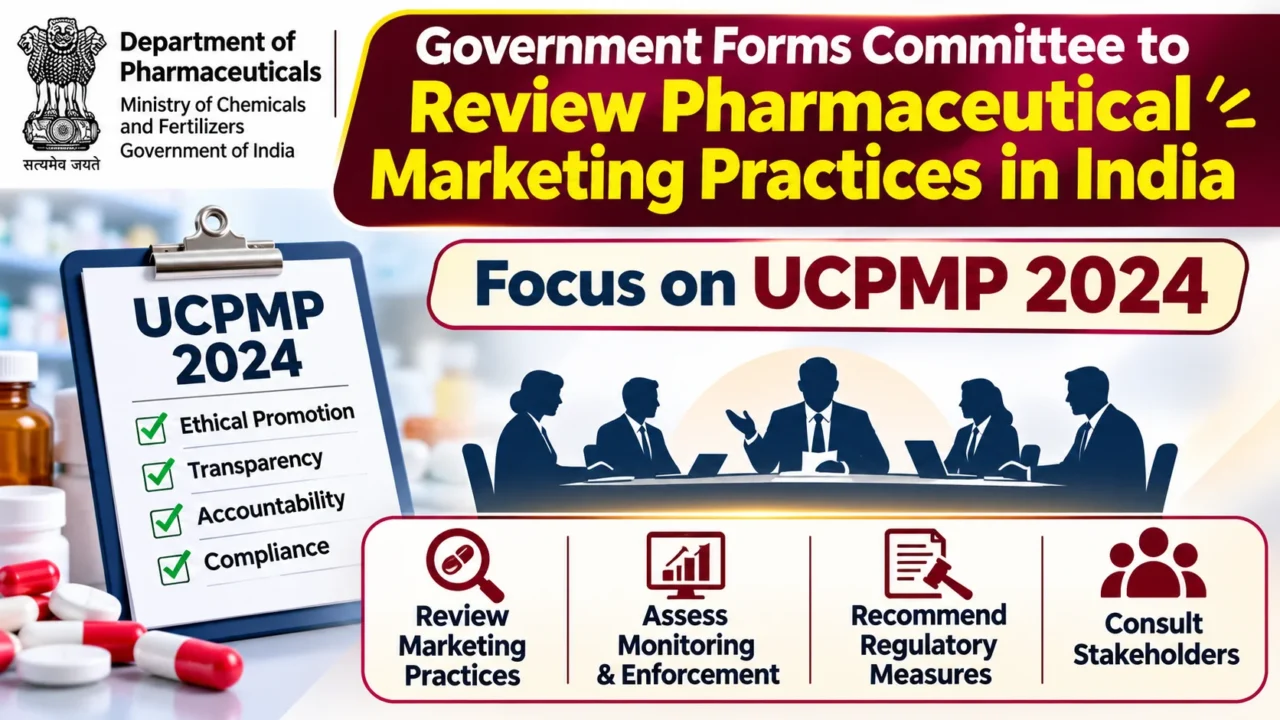
The National Pharmaceutical Pricing Authority (NPPA) operates under the Department of Pharmaceuticals, Ministry of Chemicals and Fertilizers, Government of India.
Its major responsibilities include:
- Implementing and enforcing drug price control provisions.
- Monitoring the prices of pharmaceutical formulations.
- Ensuring compliance with applicable DPCO provisions.
- Monitoring the availability of medicines at regulated prices.
- Taking regulatory action in cases of alleged overcharging.
The AstraZeneca matter highlights the role of NPPA in monitoring pharmaceutical pricing compliance in India.

What Happens Next in the AstraZeneca Case?
The next hearing before the Delhi High Court is scheduled for 11 January 2027.
Until then, NPPA has been directed not to take coercive action against AstraZeneca in connection with the disputed demand.
Further developments will depend on the proceedings before the Court.
The final outcome of the dispute and the validity of the alleged overcharging demand remain subject to the legal proceedings.
Conclusion
The Delhi High Court’s interim direction provides temporary relief to AstraZeneca Pharma India Limited in its dispute with NPPA over an alleged ₹151.19 crore overcharging demand involving Symbicort Turbuhaler 160/4.5.
Recommended Products