



Introduction
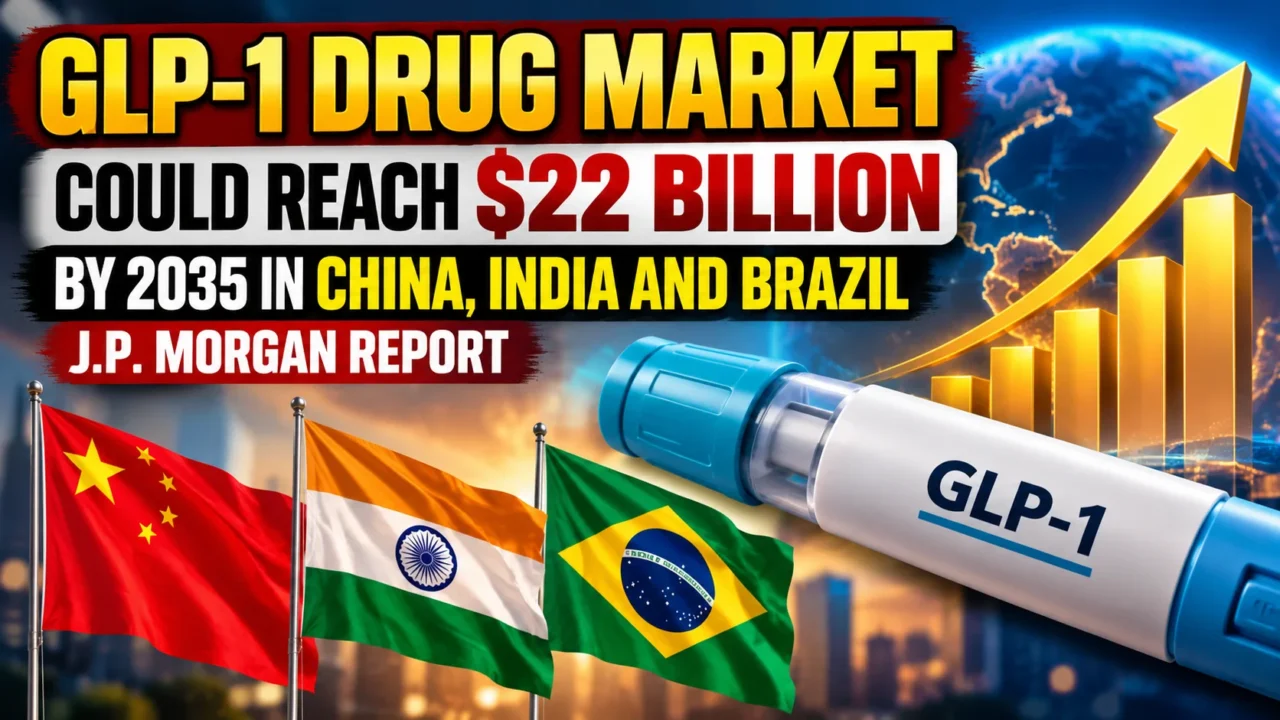
The GLP-1 drug market by 2035 could reach $22 billion across China, India and Brazil, according to a J.P. Morgan estimate reported in October 2026. The combined market for GLP-1 medicines used for diabetes and weight management is projected to grow from $6.6 billion currently to $22 billion by 2035.
Rising diabetes cases, growing demand for weight-management treatments, improved affordability and wider access to medicines could support this growth. The forecast also highlights potential opportunities for pharmaceutical companies involved in drug development, active pharmaceutical ingredient (API) manufacturing and contract manufacturing.
For the Indian pharmaceutical industry, this trend could create new business opportunities while increasing the importance of affordability, regulatory compliance and patient safety.
Quick Summary
J.P. Morgan estimates that the combined GLP-1 drug market in China, India and Brazil could grow from $6.6 billion to $22 billion by 2035. Demand for diabetes and weight-management medicines, improved affordability and wider treatment access could drive expansion. The forecast may create opportunities for pharmaceutical manufacturers, API suppliers and drug developers, although actual growth remains uncertain.

GLP-1 Drug Market Forecast: Overview
GLP-1 medicines have attracted significant attention because of their role in managing type 2 diabetes and, for certain products, chronic weight management.
The forecast for China, India and Brazil reflects the commercial potential of these therapies in markets with substantial patient populations and evolving healthcare needs.
Key Market Highlights
| Market indicator | Details |
|---|---|
| Report source | J.P. Morgan |
| Reported forecast date | October 2026 |
| Countries covered | China, India and Brazil |
| Current combined market estimate | $6.6 billion |
| Projected market by 2035 | $22 billion |
| Approximate annual growth rate | 15%, according to the reported estimate |
| Main growth drivers | Diabetes, obesity, affordability and treatment access |
| Potential industry opportunities | Drug development, API manufacturing and contract manufacturing |
Note: The figures are forecasts reported in the news, not confirmed future market values. The exact market definition, valuation methodology and country-level estimates should be checked against the original report.
What Are GLP-1 Drugs?
GLP-1 stands for glucagon-like peptide-1, a hormone involved in blood glucose regulation, appetite and digestion.
GLP-1 receptor agonists mimic the action of this hormone. Depending on the medicine and its approved indication, these treatments can improve blood glucose control and help eligible patients manage their weight.
Some medicines also act on additional metabolic pathways. Therefore, not all drugs commonly discussed alongside GLP-1 therapies belong to exactly the same pharmacological class.
Examples of GLP-1 and Related Medicines
| Medicine | Active ingredient | Main approved uses in relevant markets |
|---|---|---|
| Ozempic | Semaglutide | Type 2 diabetes |
| Wegovy | Semaglutide | Chronic weight management in eligible patients |
| Zepbound | Tirzepatide | Chronic weight management in eligible patients |
Tirzepatide acts on both GIP and GLP-1 receptors, so it is more precisely described as a dual GIP/GLP-1 receptor agonist.
Product indications, availability and regulatory approvals vary by country. These medicines should be used under appropriate medical supervision.
Why Could the GLP-1 Drug Market Reach $22 Billion by 2035?
Several factors could contribute to the projected growth of the GLP-1 drug market in China, India and Brazil.
1. Rising Burden of Diabetes
Diabetes is a major public health concern in all three countries.
According to figures attributed to J.P. Morgan in the reported news, China accounts for more than 25% of global diagnosed diabetes cases, while India accounts for more than 15%. Approximately 12% of Brazilian adults have diabetes.
These figures highlight the potential demand for effective diabetes treatments. However, not every patient with diabetes is a candidate for GLP-1 therapy.
2. Growing Demand for Weight-Management Treatments
Obesity and related metabolic conditions have increased interest in medicines that support weight management.
Some GLP-1-based treatments can help eligible patients achieve clinically meaningful weight loss when used as prescribed, alongside appropriate lifestyle interventions.
Growing awareness, improved diagnosis and access to medical care could support demand for these treatments.
3. Improved Affordability
Cost remains a major barrier to accessing many GLP-1 medicines, particularly in price-sensitive markets.
Several developments could influence future prices:
- Competition between pharmaceutical manufacturers.
- Potential entry of lower-cost alternatives where legally and technically feasible.
- Changes in pricing and reimbursement policies.
- Improved manufacturing capacity and supply.
- Broader healthcare coverage, where available.
However, lower prices are not guaranteed. Manufacturing complexity, patent protection, regulatory requirements and local market conditions will influence affordability.
4. Wider Access to Treatment
Greater awareness among healthcare professionals and patients could increase the appropriate use of GLP-1 therapies.
Insurance coverage, reimbursement arrangements, medicine availability and healthcare infrastructure may also influence adoption.
The scale of future growth will depend on how effectively these factors improve access to suitable treatment.
GLP-1 Market Opportunities in China, India and Brazil
The three countries represent important potential growth markets, but their commercial outlooks differ.
China: A Potential $13.7 Billion Market by 2035
China has a substantial diagnosed diabetes population and a large potential market for diabetes and weight-management medicines.
According to the reported J.P. Morgan forecast, China could overtake Brazil by 2027, with its GLP-1 market potentially reaching $13.7 billion by 2035.
Factors that could support growth include:
- Demand for diabetes treatments.
- Increasing interest in weight management.
- Changes in medicine affordability.
- Wider treatment access and reimbursement.
Actual market growth will depend on competition, regulatory decisions, healthcare policies and patient access.

India: Opportunities for the Pharmaceutical Industry
India is an important potential growth market because of its large diabetes patient population and established pharmaceutical manufacturing sector.
Demand for GLP-1 therapies could create opportunities for companies involved in drug development, API production, formulation development and contract manufacturing.
However, several factors could influence adoption:
- Treatment affordability.
- Availability of suitable medicines.
- Awareness and diagnosis.
- Patient preferences and treatment adherence.
- Regulatory and intellectual property requirements.
J.P. Morgan has identified Indian pharmaceutical companies such as Divi’s Laboratories and Torrent Pharmaceuticals among companies of interest in this market theme, according to the reported coverage.
This does not guarantee that these companies will benefit financially or that their shares will deliver positive investment returns.
Important: A separate India-specific market valuation was not provided in the supplied report summary.
Brazil: A Projected $8 Billion Market by 2035
Brazil is described as the largest of the three markets at present in the reported coverage.
J.P. Morgan projects that Brazil’s GLP-1 market could reach $8 billion by 2035.
Potential growth drivers include demand for diabetes treatments, interest in weight management and changes in treatment accessibility.
Affordability, reimbursement policies, medicine supply and competition will remain important factors in determining future adoption.
Country-Wise GLP-1 Market Comparison
| Country | Reported market outlook | Key consideration |
|---|---|---|
| China | Projected to reach $13.7 billion by 2035 | Diabetes treatment demand and access |
| India | Identified as a potential growth market | Affordability and pharmaceutical manufacturing opportunities |
| Brazil | Projected to reach $8 billion by 2035 | Treatment access and reimbursement |
| Combined markets | Projected to reach $22 billion by 2035 | Demand, competition and improved access |
The individual country figures and combined total are estimates. The figures should not be treated as independently verified market values, and the original report should be consulted for its precise definitions and assumptions.
What Does GLP-1 Market Growth Mean for the Indian Pharmaceutical Industry?
The projected expansion could create opportunities across several parts of the pharmaceutical value chain.
1. Active Pharmaceutical Ingredient (API) Manufacturing
Growing demand for GLP-1-based medicines could increase interest in suppliers capable of producing suitable active ingredients.
Manufacturing these products can require specialised capabilities, stringent quality controls and compliance with applicable regulatory standards.
Companies would need to meet the technical and commercial requirements of individual products before entering this market.
2. Generic Pharmaceutical Development
As relevant patents and other intellectual property protections expire, eligible manufacturers may explore lower-cost alternatives.
However, generic entry depends on the individual medicine’s patent status, regulatory pathway, formulation complexity and manufacturing requirements.
Patent expiry alone does not automatically permit immediate commercial launch.
3. Contract Development and Manufacturing
Contract development and manufacturing organisations (CDMOs) may have opportunities to support pharmaceutical companies with development and production activities.
Potential benefits will depend on manufacturing capacity, technical expertise, quality systems and customer demand.
4. Drug Research and Development
Pharmaceutical companies may continue investing in medicines for diabetes and obesity, including improved formulations, delivery systems and alternative therapeutic approaches.
Research and development can also focus on treatment tolerability, patient convenience and manufacturing efficiency.
5. Quality Assurance and Regulatory Affairs
Expanding pharmaceutical production can increase the importance of quality assurance, quality control, regulatory affairs and validation.
Professionals with relevant technical knowledge may find opportunities as companies develop capabilities and meet applicable compliance requirements. Actual hiring demand will vary by employer and market conditions.
Challenges That Could Affect GLP-1 Market Growth
Despite the positive forecast, several challenges could affect the speed and scale of expansion.
| Challenge | Potential impact |
|---|---|
| High treatment costs | May restrict access for eligible patients |
| Patent protection | Can delay entry of competing products |
| Manufacturing complexity | May limit the number of capable suppliers |
| Regulatory requirements | Can affect development timelines and market entry |
| Patient acceptance | Can influence treatment uptake and continuation |
| Reimbursement limitations | May reduce access for some patient groups |
| New competing therapies | Could change demand and market share |
| Supply constraints | May affect availability and commercial growth |
These challenges mean that the projected $22 billion market should be viewed as a forecast rather than a guaranteed outcome.
What Should Pharmacy Students and Pharma Job Aspirants Know?
For B.Pharm, D.Pharm and M.Pharm students, the GLP-1 market is a useful example of how pharmaceutical research, public health needs and commercial opportunities can influence one another.
Students interested in the sector can explore relevant areas of pharmaceutical education and career development.
- Pharmaceutics: Drug formulation, delivery systems and pharmaceutical manufacturing.
- Pharmacology: Mechanisms of action, therapeutic uses and adverse effects of medicines.
- Pharmaceutical analysis: Analytical methods, quality testing and validation.
- Quality assurance and quality control: Pharmaceutical quality systems and compliance.
- Regulatory affairs: Product registration and regulatory requirements.
- Research and development: Drug discovery, development and evaluation.
- Pharmacovigilance: Monitoring and assessment of medicine safety.
The market forecast does not establish how many jobs will be created or which employers will recruit. Students should use it as industry context rather than a guarantee of employment.
Frequently Asked Questions (FAQs)
1. What is the projected GLP-1 drug market size by 2035?
J.P. Morgan estimates that the combined GLP-1 diabetes and weight-management drug market in China, India and Brazil could reach $22 billion by 2035, up from $6.6 billion currently.
2. What is driving GLP-1 market growth?
The main potential drivers include demand for diabetes treatments, growing interest in weight management, improved affordability and wider access to suitable medicines.
3. Which countries are included in the $22 billion forecast?
The forecast covers China, India and Brazil.
4. What are GLP-1 medicines used for?
Depending on the product and its approved indication, GLP-1-based medicines are used to improve blood glucose control in type 2 diabetes and/or support chronic weight management in eligible patients.
5. Will GLP-1 medicines become cheaper in India?
Prices could become more accessible if competition, eligible lower-cost alternatives and pricing policies change. However, future prices will depend on individual products, intellectual property rights, regulatory approvals and market conditions.
6. What opportunities could the GLP-1 market create for Indian pharmaceutical companies?
Potential opportunities include API manufacturing, pharmaceutical research and development, eligible generic medicines, formulation development and contract manufacturing. Commercial success is not guaranteed.
7. How can pharmacy students prepare for opportunities in this sector?
Students can develop relevant knowledge in pharmaceutics, pharmacology, pharmaceutical analysis, quality assurance, regulatory affairs and drug development. Practical skills and employer requirements will also influence career opportunities.
8. Is the $22 billion GLP-1 market forecast guaranteed?
No. It is a projection based on assumptions about future demand and market conditions. Actual market size in 2035 could be higher or lower.
Conclusion
The projected growth of the GLP-1 drug market by 2035 highlights an important development in the global pharmaceutical industry. According to J.P. Morgan, the combined market in China, India and Brazil could rise from $6.6 billion currently to $22 billion by 2035.
Demand for diabetes treatments, weight-management medicines, improved affordability and wider treatment access could support this expansion. For pharmaceutical companies, potential opportunities include API manufacturing, drug development, contract manufacturing and quality-related services.
For India, the long-term opportunity will depend on the industry’s ability to develop and manufacture suitable medicines while maintaining quality, affordability, regulatory compliance and patient safety.
Recommended Products