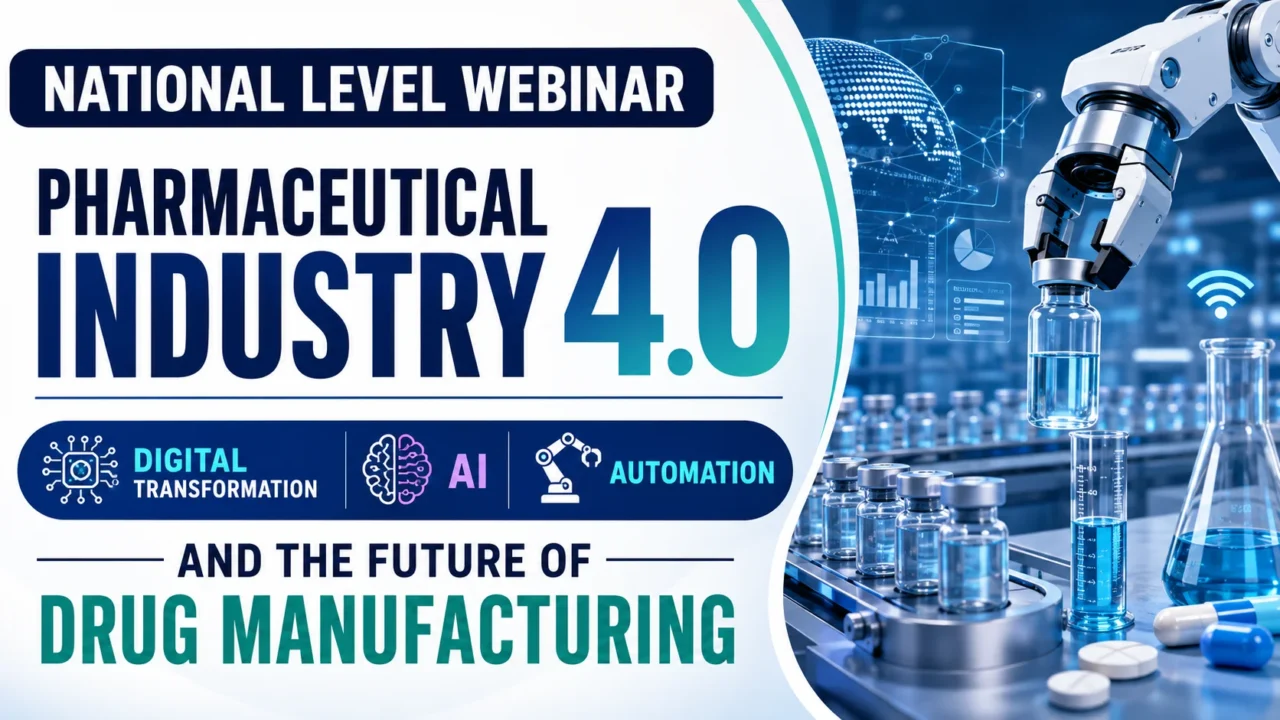



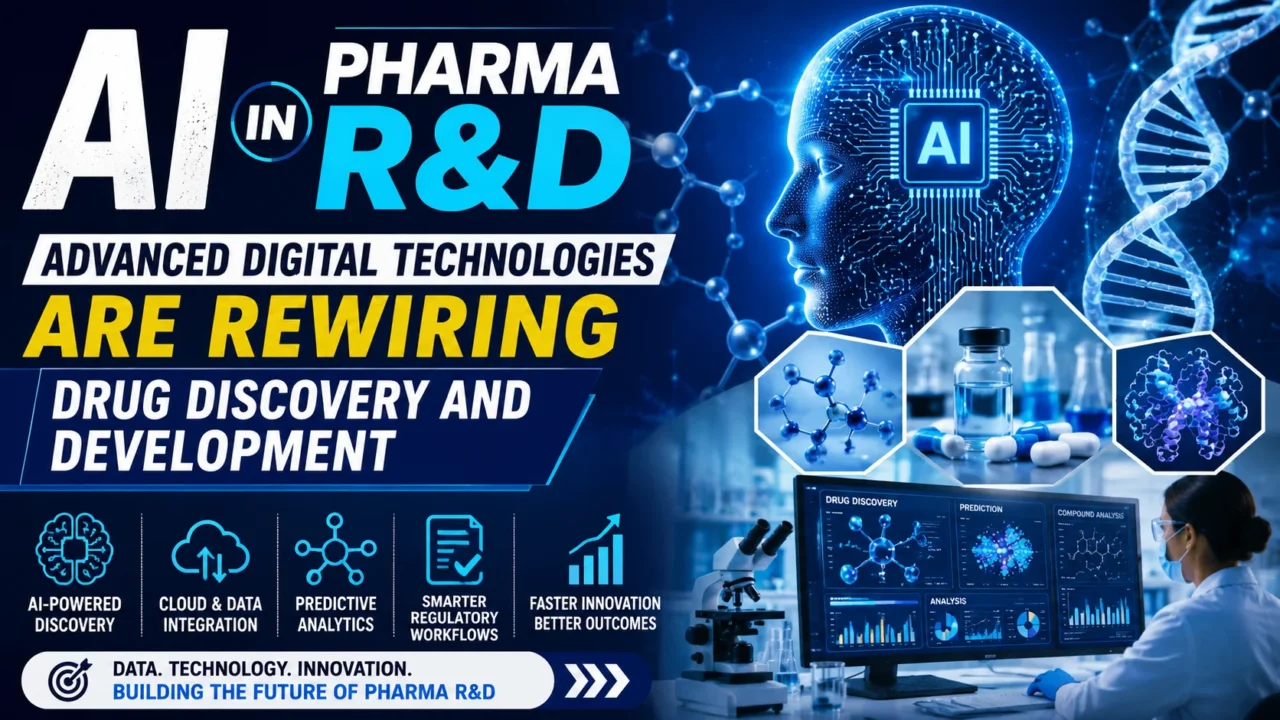

The adoption of AI in Pharma R&D is accelerating as pharmaceutical companies increasingly integrate artificial intelligence (AI), machine learning (ML), cloud computing, and advanced data analytics into research and development workflows. These digital technologies are helping organizations modernize traditional R&D processes, improve scientific decision-making, strengthen regulatory compliance, and accelerate drug discovery.
The growing role of AI in pharmaceutical innovation was highlighted during the industry roundtable discussion, “Lab of the Future: How Close Are We to a Fully Digitized R&D Workflow?”, where experts explored the opportunities and challenges of building fully connected digital laboratories.
Quick Summary
Artificial intelligence is rapidly transforming pharmaceutical R&D by improving drug discovery, regulatory documentation, formulation development, and product lifecycle management. Industry experts believe AI, cloud computing, and advanced analytics will play a major role in creating faster, smarter, and more connected research environments while complementing scientific expertise.
What Happened?
Pharmaceutical companies are investing heavily in digital technologies to improve research productivity and reduce development timelines. As drug development becomes more complex, AI-powered tools are supporting researchers in analyzing large datasets, automating documentation, and improving collaboration across research teams.
Industry leaders noted that digital transformation is no longer a future concept—it is becoming an essential part of modern pharmaceutical research and development.

Key Highlights
- Artificial intelligence is becoming a core technology in pharmaceutical R&D.
- Digital laboratories are replacing traditional siloed research systems.
- AI is improving drug discovery, formulation development, and regulatory documentation.
- Cloud computing enables better collaboration and secure data sharing.
- Advanced analytics support faster scientific decision-making.
- Human expertise remains essential despite increasing AI adoption.
Why Digital Transformation Matters
Research and development remains one of the most expensive and time-consuming stages of pharmaceutical innovation.
Digital transformation helps companies:
- Accelerate drug discovery
- Improve data-driven decision-making
- Reduce manual documentation
- Enhance regulatory compliance
- Improve collaboration between departments
- Shorten development timelines
These improvements can help pharmaceutical companies bring innovative medicines to patients more efficiently.
AI Is Expanding Across Drug Development
Artificial intelligence is now supporting multiple stages of pharmaceutical development.
Key Applications
| Area | AI Contribution |
|---|---|
| Drug Discovery | Faster identification of drug candidates |
| Formulation Development | Optimization of excipients and formulations |
| Regulatory Affairs | Automated documentation and report generation |
| Manufacturing | Process optimization and quality improvement |
| Product Lifecycle Management | Predictive analytics and continuous improvement |
| Analytical Development | Data analysis and method optimization |
AI Is Improving Regulatory Operations
Regulatory teams are increasingly using AI-powered tools to streamline documentation and submission processes.
Examples include:
- Intelligent document analysis
- Automated filing management
- Scientific report generation
- Context-aware document search
- Digital submission review
These technologies help reduce review time while improving document quality and consistency.
Smarter Formulation Development
Artificial intelligence is also supporting pharmaceutical formulation research by helping scientists:
- Select suitable excipients
- Identify optimal solvents
- Predict formulation performance
- Improve product stability
- Optimize development strategies
Interactive dashboards and AI-driven analytics further enhance collaboration among research teams.

Challenges Still Remain
Despite significant progress, experts identified several challenges that continue to slow AI adoption across the pharmaceutical industry.
Major Challenges
- Data privacy concerns
- Cybersecurity risks
- Protection of confidential research data
- Regulatory uncertainty
- Validation of AI models
- Legacy IT infrastructure
- Need for skilled digital professionals
Addressing these challenges will be critical for the successful implementation of AI-powered R&D systems.
Human Expertise Continues to Play a Vital Role
Industry experts emphasized that AI should enhance—not replace—scientific expertise.
Researchers remain responsible for:
- Evaluating AI-generated insights
- Applying scientific judgment
- Designing experiments
- Making critical development decisions
The future of pharmaceutical R&D is expected to combine human knowledge with intelligent digital technologies.
Future Outlook
Experts believe the next generation of pharmaceutical research laboratories will feature:
- Fully connected digital laboratories
- AI-powered scientific assistants
- Cloud-based research platforms
- Automated regulatory documentation
- Predictive analytics
- Faster technology transfer
- Integrated product lifecycle management
These innovations have the potential to improve research efficiency, product quality, and regulatory compliance while accelerating drug development.
Why This News Matters for Pharmacy Students & Professionals
The rapid adoption of AI is changing the skills required across the pharmaceutical industry.
This development is particularly relevant for:
- B.Pharm Students
- D.Pharm Students
- M.Pharm Students
- Pharm.D Students
- GPAT Aspirants
- NIPER Aspirants
- Clinical Research Professionals
- Regulatory Affairs Professionals
- Pharmaceutical Scientists
- Drug Development Researchers
Understanding digital transformation can help future professionals prepare for emerging opportunities in pharmaceutical research and innovation.
Key Takeaways
| Topic | Summary |
|---|---|
| Main Development | AI is transforming pharmaceutical R&D workflows |
| Key Technologies | AI, Machine Learning, Cloud Computing, Data Analytics |
| Primary Benefits | Faster research, smarter documentation, improved efficiency |
| Industry Challenge | Data security, regulation, and legacy systems |
| Future Direction | Intelligent, connected digital laboratories |
Conclusion
Artificial intelligence is rapidly transforming pharmaceutical R&D into a more connected, efficient, and data-driven ecosystem. From drug discovery and formulation development to regulatory documentation and product lifecycle management, AI is helping pharmaceutical companies accelerate innovation while improving operational efficiency.
Although challenges related to cybersecurity, validation, and regulatory acceptance remain, experts agree that the future of pharmaceutical research will be built on collaboration between human expertise and advanced digital technologies.
Frequently Asked Questions (FAQs)
Q1. What is AI in Pharma R&D?
AI in Pharma R&D refers to the use of artificial intelligence to improve pharmaceutical research, drug discovery, formulation development, and regulatory processes.
Q2. How is AI changing drug discovery?
AI analyzes large datasets, identifies promising drug candidates, predicts biological activity, and accelerates research workflows.
Q3. Why is digital transformation important in pharmaceutical research?
Digital transformation improves efficiency, reduces manual work, enhances collaboration, and supports faster drug development.
Q4. What are the biggest challenges of AI adoption?
Key challenges include data privacy, cybersecurity, regulatory uncertainty, AI validation, and integration with legacy systems.
Q5. Can AI replace pharmaceutical scientists?
No. AI supports research by providing insights and automation, but scientific expertise and human decision-making remain essential.
Q6. What technologies are driving digital pharmaceutical laboratories?
Artificial intelligence, machine learning, cloud computing, predictive analytics, and advanced data management platforms.
Q7. Why should pharmacy students learn about AI?
AI is becoming increasingly important in pharmaceutical research, manufacturing, regulatory affairs, and drug development, creating new career opportunities.
Q8. What is the future of pharmaceutical R&D?
Experts expect future R&D laboratories to be fully connected, AI-enabled, cloud-based, and driven by data-supported scientific decision-making.
Recommended Products