

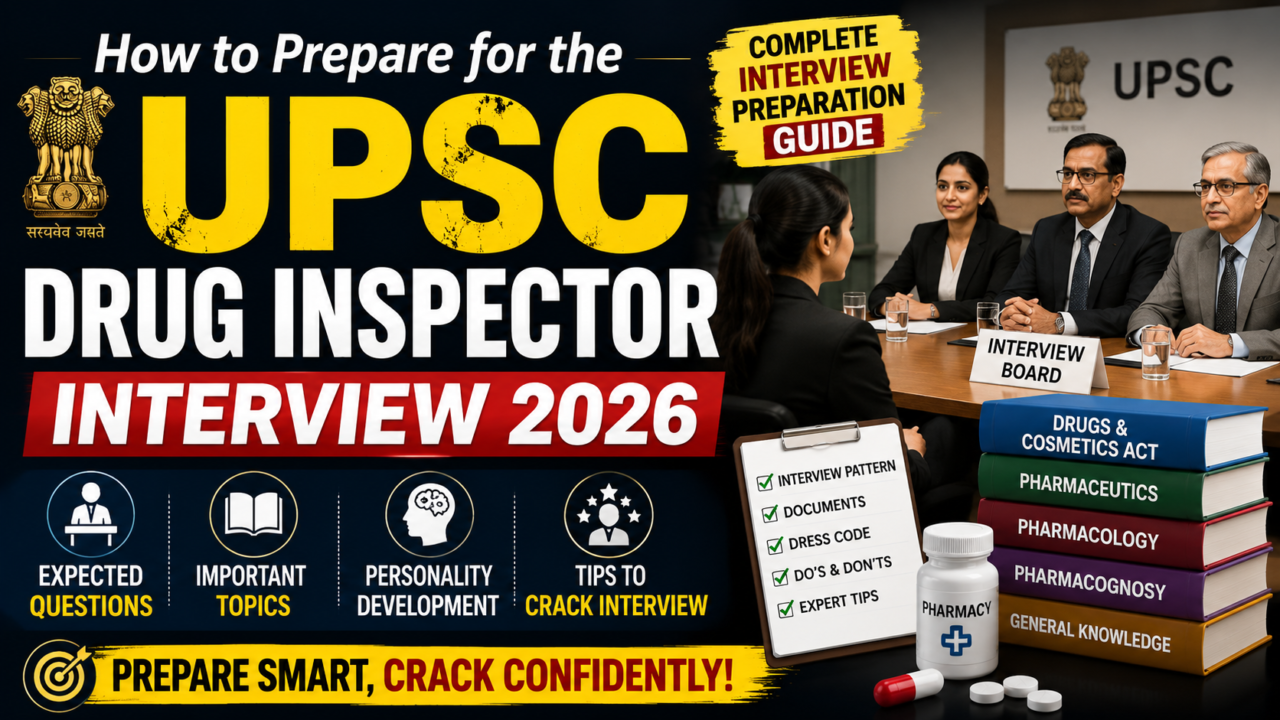

The UPSC Drug Inspector Interview is the final stage of the selection process. While your written examination tests your technical knowledge, the interview evaluates your personality, communication skills, confidence, practical understanding of pharmaceutical regulations, decision-making ability, and awareness of current healthcare issues.
The interview is not just about answering questions—it is about demonstrating that you can perform the responsibilities of a Drug Inspector with professionalism and integrity.
Understand the Role of a Drug Inspector
Before attending the interview, understand what a Drug Inspector actually does.
Responsibilities include:
- Inspecting pharmaceutical manufacturing units
- Ensuring compliance with the Drugs & Cosmetics Act
- Collecting drug samples for testing
- Investigating complaints related to medicines
- Checking GMP compliance
- Monitoring pharmacies and medical stores
- Preventing the sale of spurious and adulterated drugs
- Protecting public health
Candidates who understand the job profile usually perform better during interviews.
Revise Core Pharmacy Subjects
The interview panel often asks conceptual questions from pharmacy subjects.
Focus on:
- Pharmacology
- Pharmaceutics
- Pharmaceutical Analysis
- Pharmaceutical Chemistry
- Pharmacognosy
- Microbiology
- Biopharmaceutics
- Industrial Pharmacy
- Quality Assurance
- Quality Control
Master Pharmaceutical Laws
This is one of the most important interview areas.
Prepare thoroughly:
- Drugs & Cosmetics Act, 1940
- Drugs Rules, 1945
- Pharmacy Act, 1948
- NDPS Act
- Medical Devices Rules
- GMP
- GLP
- Schedule M
- Schedule H
- Schedule H1
- Schedule X
- CDSCO Guidelines
Stay Updated with Current Affairs
Read daily about:
- New drug approvals
- CDSCO updates
- WHO guidelines
- National Health Programmes
- Pharmaceutical industry news
- Vaccine developments
- Drug recalls
- Public health initiatives
Prepare Your Personal Introduction
Be ready to answer:
“Tell us about yourself.”
Include:
- Educational background
- Pharmacy specialization
- Experience (if any)
- Achievements
- Why you want to become a Drug Inspector
Keep your introduction within 1–2 minutes.

Prepare HR-Based Questions
Common questions include:
- Why do you want to become a Drug Inspector?
- Why should we select you?
- What are your strengths?
- What are your weaknesses?
- Describe a challenging situation you handled.
- What are your career goals?
- Why did you choose pharmacy?
- What motivates you?
Practice Situation-Based Questions
The panel may ask how you would handle real-life situations.
Examples:
- What would you do if you found a pharmacy selling expired medicines?
- How would you handle an uncooperative manufacturer?
- What steps would you take after receiving a complaint about a counterfeit drug?
- How would you inspect a pharmaceutical manufacturing unit?
- How would you deal with ethical dilemmas during inspections?
Answer logically, legally, and professionally.
Improve Communication Skills
During the interview:
- Speak clearly and confidently.
- Listen carefully before answering.
- Be honest if you don’t know an answer.
- Avoid guessing.
- Support answers with reasoning whenever possible.
Practice Mock Interviews
Mock interviews help improve:
- Confidence
- Body language
- Communication
- Time management
- Answer structure
Practice with mentors, faculty, or fellow aspirants.
Important Technical Questions to Prepare
- What is GMP?
- Difference between QA and QC.
- Explain bioavailability and bioequivalence.
- What is a Schedule H drug?
- What are Schedule M requirements?
- What is validation?
- Explain HPLC.
- Difference between generic and branded medicines.
- What is a spurious drug?
- Explain stability studies.
- How is a drug sample collected for testing?
- What are the duties and powers of a Drug Inspector?
Interview Day Tips
- Wear formal attire.
- Reach the venue early.
- Carry all required documents.
- Maintain eye contact.
- Stay calm and confident.
- Be polite and respectful.
- Answer honestly and concisely.
- Thank the panel before leaving.
Common Mistakes to Avoid
- Memorizing answers without understanding.
- Giving overly long responses.
- Arguing with the interview panel.
- Speaking too fast.
- Showing overconfidence.
- Ignoring current pharmaceutical affairs.
- Not revising pharmaceutical laws.
Final Preparation Checklist
✔ Revise all pharmacy subjects.
✔ Study the Drugs & Cosmetics Act and related regulations.
✔ Read daily pharmaceutical and healthcare news.
✔ Practice personal and HR questions.
✔ Prepare for situation-based scenarios.
✔ Attend multiple mock interviews.
✔ Improve communication and presentation skills.
✔ Stay confident, calm, and professional.
Conclusion
Success in the UPSC Drug Inspector Interview depends on a combination of technical knowledge, awareness of pharmaceutical laws, communication skills, confidence, and ethical decision-making. Revise your pharmacy fundamentals, stay updated on current developments, practice mock interviews, and present yourself professionally. With consistent preparation and a positive attitude, you can confidently face the interview panel and move one step closer to becoming a Drug Inspector.
Recommended Products