




If you have completed the first year of Diploma in Pharmacy (D.Pharm) and are entering the second year, you might be wondering how many subjects you need to study and what each subject is about.
In this article, we explain all the D.Pharm 2nd Year subjects in simple and easy language so that every pharmacy student can understand them without confusion.

How Many Subjects Are There in D.Pharm 2nd Year?
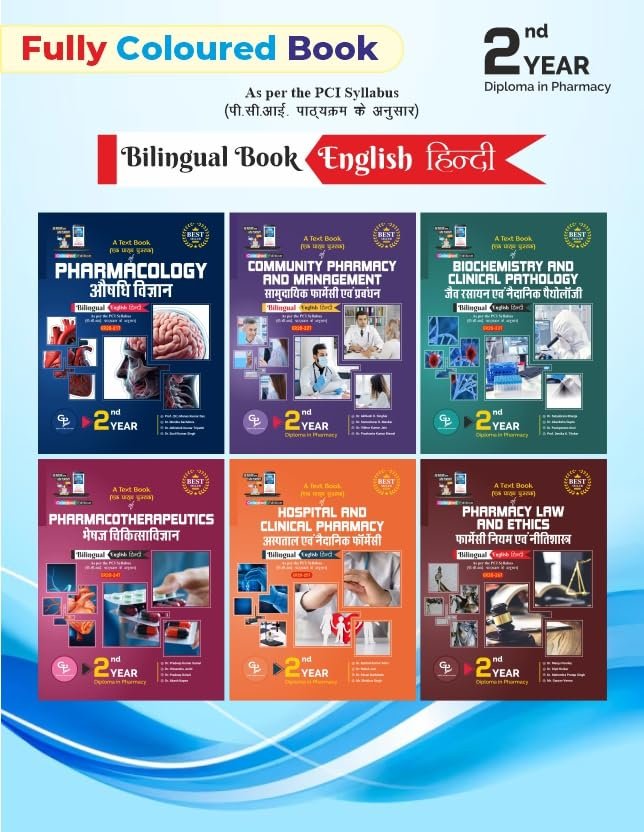
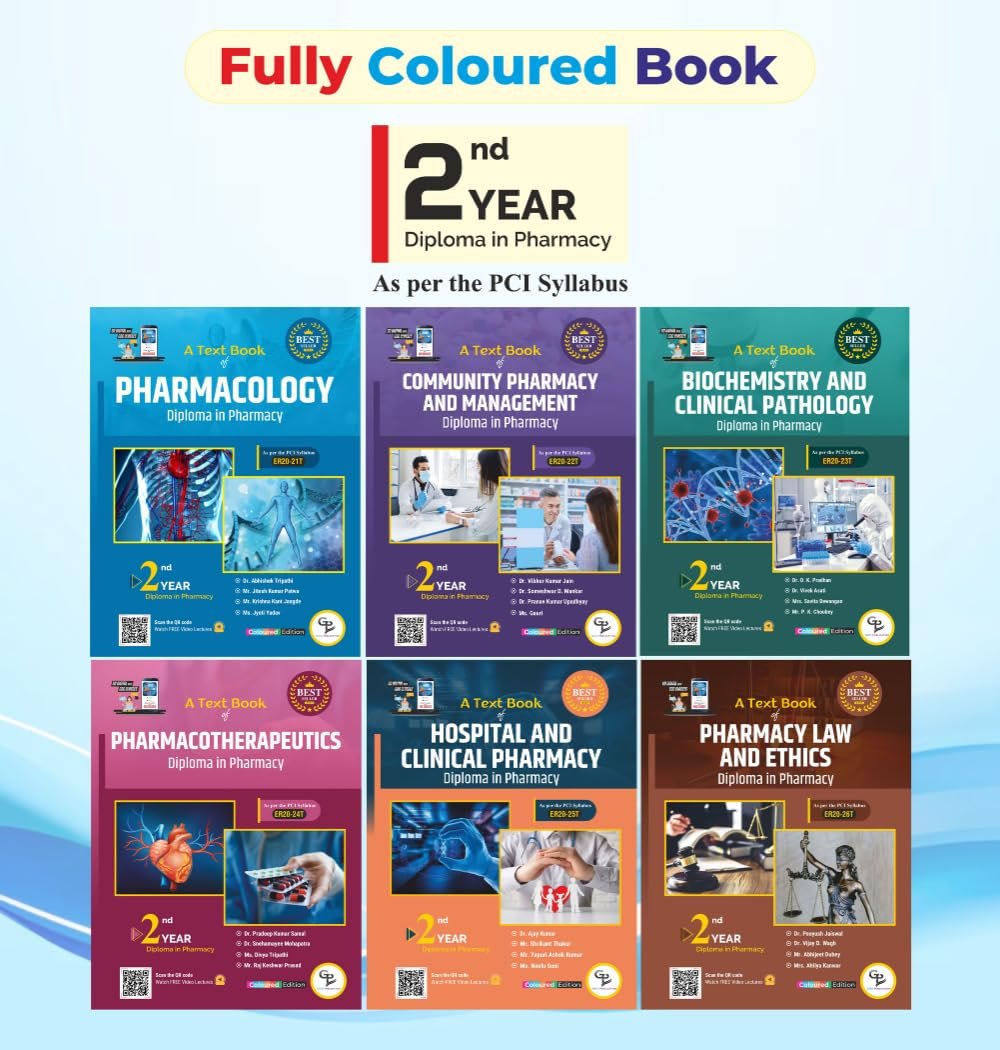
According to the Education Regulations (ER 2020) of the Pharmacy Council of India (PCI), there are six major theory subjects along with practicals in the second year.
D.Pharm 2nd Year Subject List
- Pharmacology & Toxicology
- Community Pharmacy & Management
- Biochemistry & Clinical Pathology
- Pharmacotherapeutics
- Hospital & Clinical Pharmacy
- Pharmacy Law & Ethics
1. Pharmacology & Toxicology
What You Will Study
This subject teaches how medicines work inside the human body.
You will learn:
- Mechanism of drug action
- Drug uses
- Side effects
- Adverse drug reactions
- Drug interactions
- Toxic effects of medicines
- Poisoning and antidotes
Why This Subject Is Important
Every pharmacist should know:
- Which medicine is used for which disease.
- Correct dosage.
- Possible side effects.
- Safe use of medicines.
2. Community Pharmacy & Management
What You Will Study
This subject focuses on the role of a pharmacist in society.
Topics include:
- Community pharmacy services
- Patient counselling
- Health education
- Pharmacy management
- Inventory control
- Drug storage
- Communication skills
Why This Subject Is Important
It helps pharmacists:
- Manage a pharmacy efficiently.
- Educate patients.
- Improve medication safety.
- Build good communication skills.
3. Biochemistry & Clinical Pathology
What You Will Study
This subject explains the chemical processes occurring inside the human body.
Topics include:
- Carbohydrates
- Proteins
- Lipids
- Vitamins
- Enzymes
- Blood tests
- Urine examination
- Liver function tests
- Kidney function tests
Why This Subject Is Important
Understanding laboratory reports helps pharmacists provide better patient care.
4. Pharmacotherapeutics
What You Will Study
This subject teaches the treatment of diseases using medicines.
Diseases covered include:
- Hypertension
- Diabetes
- Asthma
- Tuberculosis
- Heart diseases
- Infections
- Arthritis
- Gastric disorders
Why This Subject Is Important
Students learn:
- Which medicine should be used.
- Why it is used.
- How long treatment should continue.
- Patient counselling.
5. Hospital & Clinical Pharmacy
What You Will Study
This subject explains how pharmacists work in hospitals.
Topics include:
- Hospital pharmacy organization
- Drug distribution systems
- Prescription review
- Medication errors
- Drug information services
- Clinical pharmacy
- Pharmacovigilance
- Patient safety
Why This Subject Is Important
Hospital pharmacists play a major role in ensuring safe and effective medication use.
6. Pharmacy Law & Ethics
What You Will Study
This subject covers the legal and ethical responsibilities of pharmacists.
Topics include:
- Drugs and Cosmetics Act
- Pharmacy Act
- NDPS Act
- Medical Termination of Pregnancy (MTP) Act
- Consumer Protection Act
- Professional ethics
- Patient confidentiality
Why This Subject Is Important
Every pharmacist must understand the laws governing the sale, storage, dispensing, and handling of medicines.
Practical Subjects
Along with theory, students also perform practicals in:
- Pharmacology
- Community Pharmacy
- Biochemistry
- Hospital Pharmacy
- Clinical Pharmacy
- Pharmacotherapeutics
These practical sessions help students develop real-world pharmacy skills.
Which Subject Is the Most Important?
Although every subject is important, students often focus more on:
- Pharmacology & Toxicology
- Pharmacotherapeutics
- Hospital & Clinical Pharmacy
- Pharmacy Law & Ethics
These subjects are highly useful for competitive exams like:
- GPAT
- Drug Inspector
- Government Pharmacist Recruitment
- AIIMS Pharmacist
- ESIC Pharmacist
- Railway Pharmacist
- State Pharmacist Exams
Tips to Score Good Marks in D.Pharm 2nd Year
- Attend all lectures regularly.
- Make short notes for quick revision.
- Understand concepts instead of memorizing.
- Practice diagrams and flowcharts.
- Solve previous year question papers.
- Revise important drug classifications.
- Focus on practical knowledge.
Career Opportunities After D.Pharm
After completing D.Pharm, students can:
- Work as a Registered Pharmacist.
- Join Retail or Community Pharmacy.
- Work in Hospital Pharmacy.
- Join Pharmaceutical Companies.
- Prepare for Government Pharmacist Jobs.
- Pursue B.Pharm through lateral entry.
- Build a career in Clinical Pharmacy or Regulatory Affairs.
Conclusion
The D.Pharm 2nd Year curriculum is designed to strengthen your knowledge of medicines, disease treatment, patient care, pharmacy management, and pharmaceutical laws. By understanding each subject in a simple and practical way, students can perform well in examinations and build a strong foundation for a successful pharmacy career. Mastering these six subjects will not only help you score good marks but also prepare you for higher studies and government pharmacy examinations.
Recommended Products